
Tanner Greer in The Scholar’s Stage:
 In last month’s post on Chinese attitudes towards Hong Kong I had cause to mention Dan Sperber and Hugo Mercier’s book The Enigma of Reason. At some point I probably ought to devote an entire post to a review of the book; its ideas are subtler and logic more involved than one paragraph glosses (or even most of its newspaper reviews) can give justice to. A running theme throughout the book, is that in experimental settings and in “real life” human capacity for reason is not optimized for the pursuit of abstract truth. Mercier and Sperber suggest that this is because reason did not evolve for that end. Reasoning’s role is essentially a social one—at the level of the individual it is not about deciding what to do, but about justifying what we do.
What we decide to do is for the most part entirely intuitive. As Mercier and Sperber see it, our decisions are the products of mental subsystems as opaque to us as the mysterious mechanisms that classify what we see as “beautiful” or “ugly,” determine what we are doing as “boring” or “fun,” and judge what others are doing as “admirable” or “disgusting.” Although his brain will supply the child with reasons for why he likes to watch Star Wars, the teenager with reasons for why she favors purple eye-liner, and the lover with reasons for doting upon his beloved, these thoughts are not the actual cause of the behavior in question. They are justifications. They are seized upon and articulated by the brain not to make us aware of why we make our decisions, but to make it possible for us to justify and explain our behavior to others.
Sperber and Mercier confirm this general thesis through dozens of experiments and lots of clever thinking.
More here.
 Most people rarely deal with irrational numbers—it would be, well, irrational, as they run on forever, and representing them accurately requires an infinite amount of space. But irrational constants such as π and √2—numbers that cannot be reduced to a simple fraction—frequently crop up in science and engineering. These unwieldy numbers have plagued mathematicians since the ancient Greeks; indeed, legend has it that Hippasus was
  Across the world, the right has, for the past decades, celebrated a remarkable string of successes. Far-right populists are now in power in countries from the United States to India, and from Turkey to Brazil. Even most of the democracies in which right-wing extremists remain comparatively weak are ruled by right-of-center, or at most centrist, leaders: Angela Merkel is now in the 14th year of her chancellorship in Germany, Scott Morrison was recently reelected in Australia, and Emmanuel Macron is the President of France.
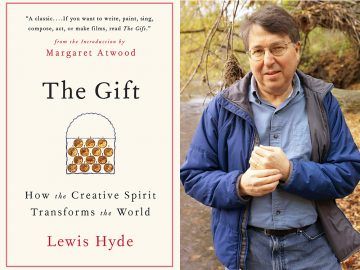 The Gift has never been out of print; it moves like an underground current among artists of all kinds, through word of mouth and bestowal. It is the one book I recommend without fail to aspiring writers and painters and musicians, for it is not a how-to book—there are many of these—but a book about the core nature of what it is that artists do, and also about the relation of these activities to our overwhelmingly commercial society. If you want to write, paint, sing, compose, act, or make films, read The Gift. It will help to keep you sane.
 Mainstream media outlets tend to skip those details when they talk about privatization, as if a corporation is a sentient monolith and not run by individual human beings like McKesson chief executive officer John H. Hammergren, who in 2011 was paid more money than any other CEO in America. He retired at the end of March and will reportedly receive a $114 million pension, in addition to other benefits worth nearly $25 million. While vets struggle to get competent treatment for depression and service members live in houses with mice and mold, Hammergren’s home, until recently, was a 23,000-square-foot compound in Contra Costa County that included a rock climbing wall; courts for tennis, bocce ball, racquetball, and squash; a car wash; and a yoga center. He sold it last year for three times the $3 million he bought it for in 1996. (He had been hoping to sell it for seven times as much.)
 And it’s his music, and his equally affecting artwork, that Johnston should be remembered for. That’s why I’ve resisted till now touching upon what the word “outsider” really means when we speak of him. It’s a euphemism, a somewhat awkward way of acknowledging his schizophrenia and bipolar disorder. Since Jeff Feuerzeig’s powerful 2005 documentary The Devil and Daniel Johnston, the singer’s mental health issues have been central to his myth, to the point that the knowledge of them threatens to overshadow his accomplishments. What I mean is that “True Love Will Find You in the End” is a great song – not just “great for a crazy guy”. I think Wilco’s Jeff Tweedy said it best a couple of years ago in an interview with the New York Times: “Daniel has managed to create in spite of his mental illness, not because of it. He’s been honest in his portrayal of what he’s been struggling with without overtly drawing attention to it.”
 Exoplanet science has literally opened new worlds to study, with planets populating the galaxy unlike anything in our small solar system. Hot Jupiters whip around their stars in just days, burning at thousands of degrees. Super Earths—rocky planets that are more massive than our own—offer intriguing targets to study for signs of life. One planet, called K2-18b, sits approximately 110 light-years away from Earth. It’s larger than our planet, about 8.6 times the mass, and bigger in size at about 2.7 times the radius. These types of planets are commonly referred to as mini-Neptunes, thought to have rocky or icy cores surrounded by expansive atmospheres, and in recent years, scientists have found that they are extremely common across the galaxy.
 I went to a school in Pakistan’s Punjab province called government primary school, Chak 2/4-L. Chak means village; 2/4-L is the name of my village, 2/4 the number of the canal feed that irrigates it, and L because it’s on the left side of the canal. Most villages along the canal had named themselves after a local legend or a landmark. We never bothered. I always assumed that our people were so hardworking they forgot to name where we lived.
 The Earth is heating up, and it’s our fault. But human beings are not always complete idiots (occasional contrary evidence notwithstanding), and sometimes we can even be downright clever. Dare we imagine that we can bring our self-inflicted climate catastrophe under control, through a combination of technological advances and political willpower? Ramez Naam is optimistic, at least about the technological advances. He is a technologist, entrepreneur, and science-fiction author, who has been following advances in renewable energy. We talk about the present state of solar, wind, and other renewable energy sources, and what our current rate of progress bodes for the near and farther future. And maybe we sneak in a little discussion of brain-computer interfaces, a theme of the Nexus trilogy.
 The first murder came as a shock; the second suggested there might be a larger plot; by the third there was talk of government collusion; and when the fourth happened one felt it would not be the last. The victims—Narendra Dabholkar, Govind Pansare, M.M. Kalburgi, and Gauri Lankesh—were all killed in the same way, shot point-blank with a 7.65mm pistol by a gunman who came and fled on a two-wheeler. All beloved activists and thinkers, who wrote in the vernacular press, they had been vocal opponents of the BJP and its brand of Hindu nationalism. Their assassinations were meant to send a message, and far-right trolls on social media duly rejoiced. “One bitch died a dog’s death,” a man from Gujarat wrote on Twitter, referring to Lankesh; his account was followed by Prime Minister Narendra Modi.
 Kanders’s role as vice chairman of the Whitney’s board became a subject of intense agitation in the run-up to the show. In November, nearly a hundred Whitney staff members submitted a letter asking for his resignation, a demand later amplified by a petition signed by critics (including myself), academics, and artists (many of them Biennial participants); between January and March, the art activist group Decolonize This Place led weekly demonstrations at the museum. The curators directly addressed the controversy through their inclusion of the interdisciplinary research group Forensic Architecture’s much-written-about video Triple-Chaser, 2019, which also implicates Kanders through another of his holdings, Sierra Bullets, in child deaths and other war crimes in Israeli-occupied Palestinian territories. Superimposed on this debate over funding structures and museum ethics were a series of online skirmishes over art criticism, identity, and representation, touched off by Simone Leigh’s Instagram-based challenge to unnamed white critics who had characterized the Biennial as safe or lacking in “radicality” to question their narrow, racially conditioned frames of reference. In July, three black critics, Ciarán Finlayson, Tobi Haslett, and Hannah Black (who was a key polemicist in the representation-oriented clashes around the 2017 Biennial) coauthored a clear and powerful statement calling on Biennial artists to push for Kanders’s resignation by removing their work from the show. The statement, titled “The Tear Gas Biennial” and published on artforum.com, sharpened the contradictions between “the disembodied, declarative politics of art” and the material politics of its production, patronage, and circulation. “The ease with which left rhetoric flows from art is matched by a real poverty of conditions,” they wrote, “in which artists seem convinced they lack power in relation to the institutions their labor sustains. Now the highest aspiration of avowedly radical work is its own display.”
 The most buried things about us, apart from our self-deceits, our dreams are what we nevertheless do not shrink from sharing with strangers. They remain for us the strangest and most fascinating things about ourselves. We share them because of their striking originality, of which we hesitate to claim authorship.
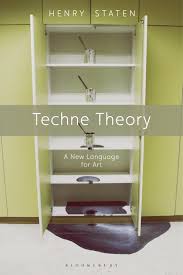 This is a book about creativity in the arts. Its thesis is opposed to the Romantic view of the artist as a lone genius who creates completely original works in flashes of inspired insight from the depths of his soul or deeply personal emotion. For the Romantic, the true genius’s work will violate all past conventions and practices in embodying a radically new concept. She creates this work in a moment of divine-like inspiration ex nihilo.
 W
W Twenty years ago, the fight against cancer seemed as if it were about to take a dramatic turn.