
Nargol Aran in The Point:
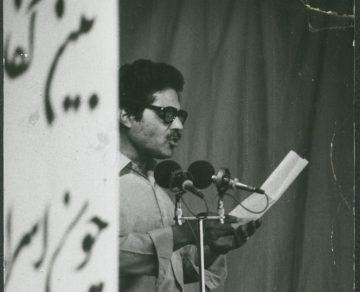 In December 2005, in his fourth month as president of Iran, Mahmoud Ahmadinejad called the Holocaust a myth. This was during an interview with Al-Alam, an Arabic-language channel broadcast from Tehran. The interview wasn’t an outlier. A year earlier, under new leadership, Islamic Republic of Iran Broadcasting, the state-owned TV network that operates Al-Alam, broadcast a number of programs that described the Holocaust as a “made-up story,” a fiction or a myth. IRIB has always been hostile to what it calls the “Zionist Regime,” but prior to 2004 there had been no orchestrated campaign to cast the Holocaust as a lie.
Haroun Yashayaie is a past head of the Tehran Jewish Committee, an umbrella organization that oversees the administration of the city’s Jewish schools, kosher butcher shops and synagogues. A former film executive and newspaper editor, Yashayaie, who is 84, has always kept an eye on the media. When an IRIB channel labeled the Holocaust a fiction, he wrote an open letter in condemnation. When Ahmadinejad repeated the claim, he wrote another: “The Holocaust is, in fact, an open wound on the hands of Western civilization. … The Holocaust is not a myth in the same way that the massacre at Sabra and Shatila is not a myth.” After distributing the second letter to the media, Yashayaie personally delivered it to Ahmadinejad at a summit for religious minorities. The new president and his key cultural advisers were conflating criticisms of Israel with Holocaust denial, Yashayaie contended, and thereby whitewashing the crimes of fascism.
More here.
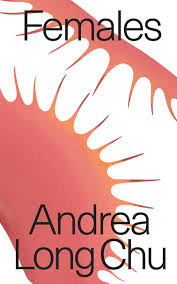 TS: Lines from Valerie Solanas’s play Up Your Ass open each chapter of Females. How did this choice help determine the book’s structure?
 THE MOST PLEASANT WAY
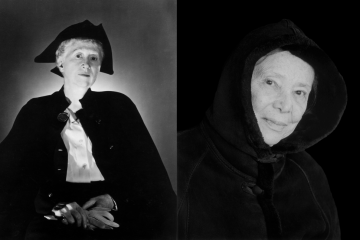 If you place their bodies of work end to end chronologically,
 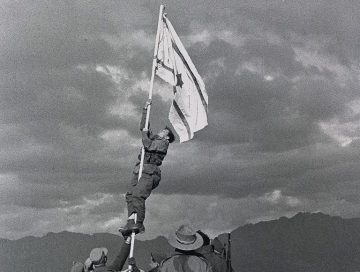 Israel’s champions owe us an explanation. First, they insist that Israel is and always must be a Jewish state, by which most of them mean not religiously Jewish but of the “Jewish People” everywhere, including Jews who are citizens of other states and not looking for a new country. To be Jewish, according to the prevailing view, it is enough to have a Jewish mother (or to have been converted by an approved Orthodox rabbi). Belief in one supreme creator of the universe, in the Torah as the word of God, and in Jewish ritual need have nothing whatever to do with Jewishness. (We ignore here the many problems with
  There are some crimes that are almost impossible to forget. For me, they include the death in 1999 of Kendra Webdale, an aspiring young journalist who was pushed in front of a New York subway train by a 29-year-old man with schizophrenia who had stopped taking his medication. That same year, two mentally ill teenage boys massacred 12 students and one teacher at Columbine High School in Colorado. Thirteen years later, a seriously emotionally disturbed 20-year-old man murdered 20 young children and six adults at Sandy Hook Elementary School in Connecticut. This year, a homeless 24-year-old man bludgeoned four men to death while they slept on the streets of my city. Although New York is now far safer than when I was a child in the 1940s and ’50s who walked to and from school unescorted, like most big cities, it still harbors untold numbers of men and women with known or undiagnosed severe mental illness that can and should be treated before yet another personal or societal tragedy occurs.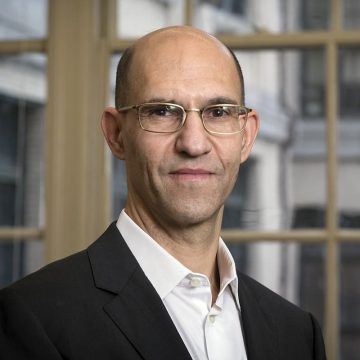
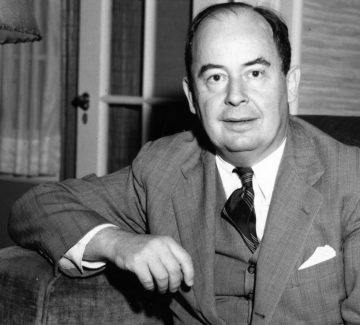 It is indeed supremely difficult to effectively refute the claim that John von Neumann is likely the most intelligent person who has ever lived. By the time of his death in 1957 at the modest age of 53, the Hungarian polymath had not only revolutionized several subfields of mathematics and physics but also made foundational contributions to pure economics and statistics and taken key parts in the invention of the atomic bomb, nuclear energy and digital computing.
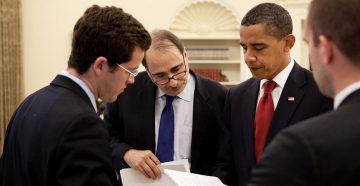 After the 2008 election, the New Yorker’s Ryan Lizza reported that Obama had told his incoming political director, Patrick Gaspard, “I think that I’m a better speechwriter than my speechwriters. I know more about policies on any particular issue than my policy directors. And I’ll tell you right now that I’m going to think I’m a better political director than my political director.”
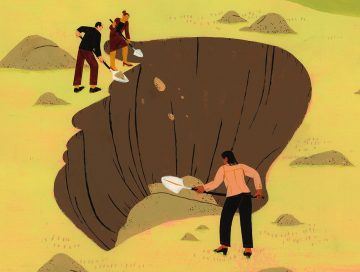 President Trump has far surpassed Nixon in his zeal to ignore, jettison or rewrite the nation’s norms. Even his allies in the Republican Party, in which Trump still has
 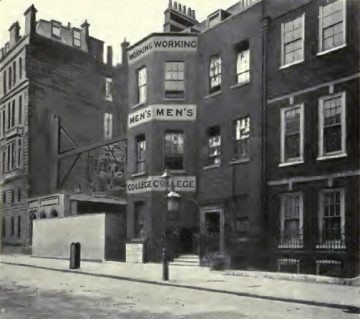 The hero of Thomas Hardy’s tragic novel Jude the Obscure (1895) is a poor stonemason living in a Victorian village who is desperate to study Latin and Greek at university. He gazes, from the top of a ladder leaning against a rural barn, on the spires of the University of Christminster (a fictional substitute for Oxford). The spires, vanes and domes ‘like the topaz gleamed’ in the distance. The lustrous topaz shares its golden colour with the stone used to build Oxbridge colleges, but it is also one of the hardest minerals in nature. Jude’s fragile psyche and health inevitably collapse when he discovers just how unbreakable are the social barriers that exclude him from elite culture and perpetuate his class position, however lovely the buildings seem that concretely represent them, shimmering on the horizon. By Hardy’s time, the trope of the exclusion of the working class from the classical cultural realm, especially from access to the ancient languages, had become a standard feature of British fiction. Charles Dickens probes the class system with a tragicomic scalpel in David Copperfield (1850). The envious Uriah sees David as a privileged young snob, but he refuses to accept the offer of Latin lessons because he is ‘far too umble. There are people enough to tread upon me in my lowly state, without my doing outrage to their feelings by possessing learning.’
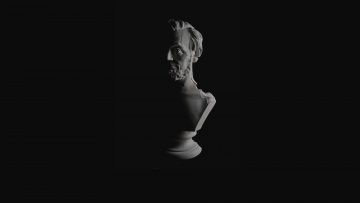 Democracy depends
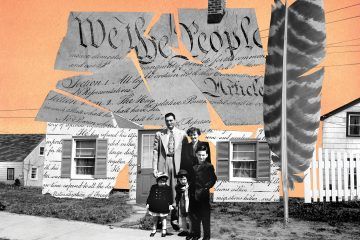 Jedediah Britton-Purdy in New Republic:
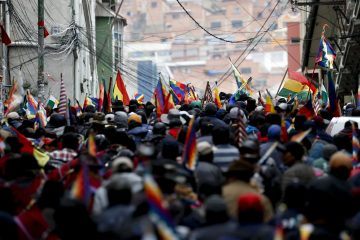 Erica Chenoweth, Sirianne Dahlum, Sooyeon Kang, Zoe Marks, Christopher Wiley Shay and Tore Wig in The Washington Post:
 Adam Tooze in Social Europe:
 Jay Caspian Kang in The New Yorker: