Damian Garde in STAT Newss:
 Scientists have come up with a drug, injected once a day, that appears to make children’s bones grow. To many, it’s a wondrous invention that could improve the lives of thousands of people with dwarfism. To others, it’s a profit-driven solution in search of a problem, one that could unravel decades of hard-won respect for an entire community. In the middle are families, doctors, and a pharmaceutical company, all dealing with a philosophically fraught question: Is it ethical to make a little person taller? The most common cause of dwarfism is known as achondroplasia. People with the condition, caused by a rare genetic mutation, have shorter limbs and shorter stature than those without it, and they deal with a lifetime of skeletal issues that often require a battery of corrective surgeries.
For years a U.S. company called BioMarin Pharmaceutical (BMRN) has been developing a drug that targets the genetic roots of achondroplasia, a mutation that stops cartilage from turning into bone. The goal, according to the company, is to prevent the medical complications associated with achondroplasia, which include sleep apnea, hearing loss, and spinal problems. But proving the drug’s long-term skeletal benefits would require a decades-long study, which is an expensive and, to BioMarin, impractical proposition. Instead, the company is measuring the the most immediate byproduct of bone growth: height. And that’s where the philosophical schism begins. For thousands of little people, the short stature that comes with achondroplasia is not a disability in need of treatment but a difference to be celebrated. Organizations like Little People of America have spent years dispelling stereotypes, advocating for fairness, and pointing out that having achondroplasia doesn’t preclude anyone from a fulfilling life. Dwarf pride means flourishing because of one’s body, not in spite of it.
Through that lens, the drug looks to some like a threat of erasure, a so-called cure for people who are not sick. Furthermore, about 80% of babies with achondroplasia are born to parents of average height. That means, if the drug goes on to win Food and Drug Administration approval, the decision of whether to give it to a child would often be made by people with no exposure to little people culture, who know nothing of dwarf pride. “People feel like this is an effort to eliminate the dwarfism community,” said Becky Curran Kekula, a disability advocate and motivational speaker who was born with achondroplasia.
More here.

 The technique, officially called emergency preservation and resuscitation (EPR), is being carried out on people who arrive at the University of Maryland Medical Centre in Baltimore with an acute trauma – such as a gunshot or stab wound – and have had a cardiac arrest. Their heart will have stopped beating and they will have lost more than half their blood. There are only minutes to operate, with a less than 5 per cent chance that they would normally survive.
 In India today, a shadow world is creeping up on us in broad daylight. It is becoming more and more difficult to communicate the scale of the crisis even to ourselves. An accurate description runs the risk of sounding like hyperbole. And so, for the sake of credibility and good manners, we groom the creature that has sunk its teeth into us—we comb out its hair and wipe its dripping jaw to make it more personable in polite company. India isn’t by any means the worst, or most dangerous, place in the world—at least not yet—but perhaps the divergence between what it could have been and what it has become makes it the most tragic.
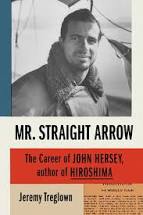 Hiroshima ran to 31,000 words. The original article filled the entire edition of the New Yorker on 31 August 1946, the first time in the magazine’s history that this had ever happened. It was serialised in full in eighty other publications around the world and eventually even in Japan. Subsequently republished in book form, it has been in print ever since and has sold more than three million copies. And yet, unusually for a work of journalism, it appeared more than a year after the events it described. There were reasons for the delay. One was the difficulty of accessing Hiroshima and the severity of postwar censorship. Another was the effect of the demonisation of the Japanese people in the American media after the attack on Pearl Harbor. It took an original mind and an eloquent pen to portray them as victims as well as aggressors. Hersey possessed both. Among his peers, in my view, he was rivalled only by the late and great James Cameron of the equally late and great News Chronicle.
 Few composers—in his time and in the centuries since—have been as deft as Purcell at marrying text and sound. His opera Dido and Aeneas is a seminal work, the most important of his compositions for the stage, and his songs, of which he wrote more than 100, are exemplary (such 20th-century English composers as Benjamin Britten and Michael Tippett would pay brilliant homage to them in their own ways). Between 1692 and 1695, Purcell composed three settings of Colonel Heveningham’s poem, all of them beautiful. The first two are more or less similar, but the third is a different work altogether, more florid, more darkly evocative.
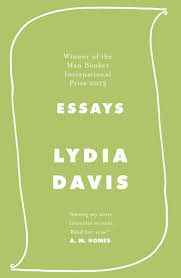 Revising One Sentence” is the title of one of the essays in Lydia Davis’s masterful, lucid collection. No single piece could capture the essence of this extraordinary writer, but a new reader might wish to start here. This is the sentence in question, in its final version: “She walks around the house balancing on the balls of her feet, sometimes whistling and singing, sometimes talking to herself, sometimes stopping dead in a fencing position.” Nothing to see here, you might think. But think again.
 In 1940, Ernest Hemingway wrote of the Spanish Civil War and the Guadarrama Mountains of Spain: “The Guadarrama Mountains of Spain run from northeast to southwest across the central plains of Castille. They are ancient mountains, formed of pale granite and gneiss, their slopes densely wooded with pines of several species: black pines, maritime pines, sentry pines, Scots pines. To visit them is to be able to recall the scents of those days and nights, even years on: ‘the piney smell of … crushed needles’, as Ernest Hemingway puts it in for Whom the Bell Tolls, ‘and the sharper odour of … resinous sap’.
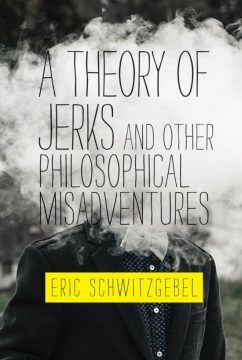 The opposite of the jerk is the sweetheart. The sweetheart sees others around him, even strangers, as individually distinctive people with valuable perspectives, whose desires and opinions, interests and goals, are worthy of attention and respect. The sweetheart yields his place in line to the hurried shopper, stops to help the person who has dropped her papers, calls an acquaintance with an embarrassed apology after having been unintentionally rude. In a debate, the sweetheart sees how he might be wrong and the other person right.
 Like cosmic hard drives, black holes pack troves of data into compact spaces. But ever since Stephen Hawking
 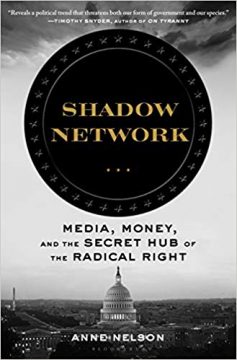 At his first official press conference in 2017, Press Secretary Sean Spicer made a telling choice. After giving the first question to the New York Post, he then called on Jennifer Wishon, who was sitting at the back, in the seventh row. He didn’t mention the news organization she represented, but it was no secret: since 2011 she had served as the White House correspondent for the Christian Broadcasting Network.
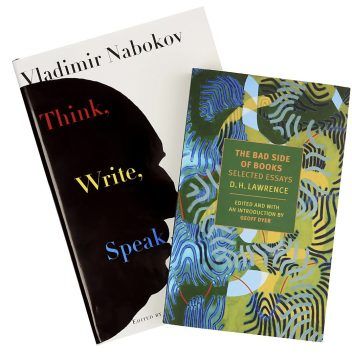 Vladimir Nabokov and D. H. Lawrence each wrote a major novel (“Lolita,” “Lady Chatterley’s Lover”) that was banned and unbanned and banned again before being cut free.
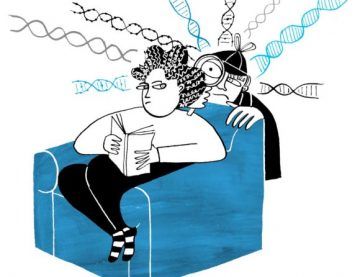 As a story-loving child more likely to be found playing detectives than the now-suspect doctors and nurses, I yearned for a family secret. My parents had both been raised with them: in my mother’s case, her dad’s Jewishness was kept hidden from her; in my father’s, paternity remained an unsolved mystery (Pétainist French Catholic priest or local milkman?).
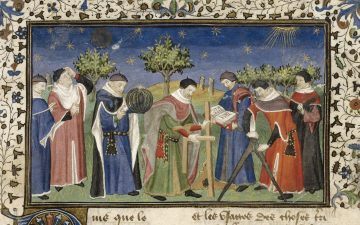 To riff on the opening lines of Steven Shapin’s
 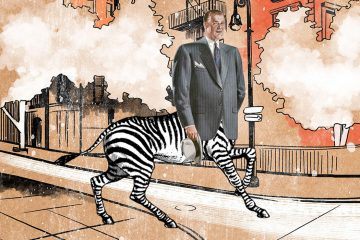 Urban Dictionary
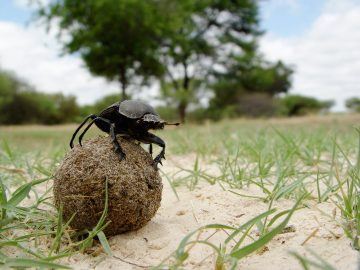 The tiny
 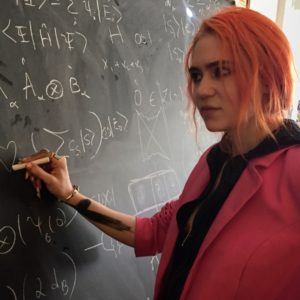 Changing technologies have always affected how we produce and enjoy art, and music might be the most obvious example. Radio and recordings made it easy for professional music to be widely disseminated, but created a barrier to its creation. Nowadays computers are helping to reverse that trend, allowing casual users to create slick songs of their own. Not everyone is equally good at it, however; Grimes (who currently goes by c, the symbol for the speed of light) is a wildly successful electronic artist who writes, produces, performs, and sings her own songs. We dig into how music is made in the modern world, but also go well beyond that, into artificial intelligence and the nature of digital/virtual/online personae. We talk about the birth of a new digital avatar — who might be called “War Nymph”? — and how to navigate the boundaries of art, technology, fashion, and culture. Her new album