
Andrew Anthony in The Guardian:
 Azra Raza is an oncologist, and professor of medicine and director of the Myelodysplastic Syndrome Center at Columbia University, New York. She was married to Harvey Preisler, another eminent oncologist, who died of lymphoma in 2002. Her new book, The First Cell, argues against the current preoccupations of cancer research and treatment. Instead of trying to destroy the last cancer cell, says Raza, we should invest more money in preventive treatments that enable us to detect the first cancer cell.
What made you decide to become an oncologist?
I have been interested instinctively in natural things since as long as I can remember. As I grew older, I really wanted to study Darwinian evolutionary biology. Then I wanted to study molecular biology. But there was no way for me to study science in Pakistan, where I grew up, so the only entry into science was through medicine, and I went to medical school. Once I had a clinical experience with patients, I knew this was something I would have to dedicate my life to.
More here.
 After the 2008 financial mess, austerity was touted as an economic cure-all. Deep budget cuts were forced upon nations and their citizens as a prerequisite for bailout loans. Now, we’re seeing the fallout. Anti-austerity protests have gripped countries around the world,
  Scientists have confirmed every society on the planet makes music and it is used in “strikingly similar ways,” from lullabies to love songs.
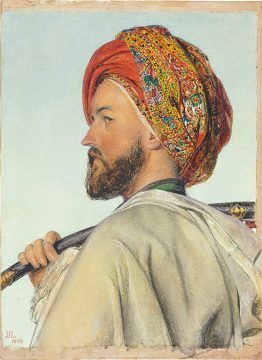 Like many students of the Middle East, I am still haunted by Edward Said 41 years after he wrote “Orientalism”. The seminal book argued that Western academics, writers, artists and journalists had been agents of European soft power for over two centuries, constructing an image of the East that was exotic and therefore in need of taming. Orientalists’ art, literature, maps and artefacts reinforced the superior mindset of colonialists and whetted the appetite of Western governments to invade and possess Eastern nations, according to Said. His ideas shook up coverage of the Middle East years before I began working as a journalist in the region, but I wrote racked with guilt. On one of my first assignments in Egypt, the British embassy in Cairo flew me with the then British prime minister, John Major, to visit the war cemeteries that Britain tends for soldiers killed fighting in the deserts of El Alamein during the second world war. It was a privilege rarely afforded to a young reporter and they expected a puff piece. I returned with a report about irate locals demanding Britain give up control of a site commemorating battles between two invading European armies on Egyptian soil. I titled it “Egypt for the Egyptians”.
 Dozens nationwide have shuttered in the past decade, and a quarter of the estimated 1,100 that remain are projected to follow by 2022, opening large swaths of empty space. “We built too many malls, and we built them too cheaply,” said Amanda Nicholson, a professor of retail practice at Syracuse University. “Only the strong will survive, while the weaker ones idle and fold.” The die-off has created challenges for the municipalities and developers tasked with repurposing millions of square feet of vacant retail space and parking lots. But the successes have taken multiple forms: community colleges, public preschools, churches and libraries. Some old malls have turned into micro-apartments or microbreweries, and at least one abandoned shopping mall is now an Amazon fulfillment center, offering a glimpse into consumers’ shifting habits and priorities.
 Adam Shatz in The New Yorker:
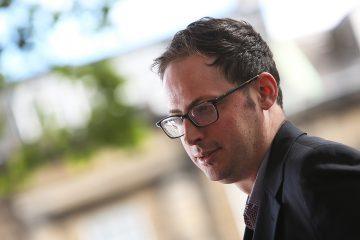 Aaron Timms in The New Republic:
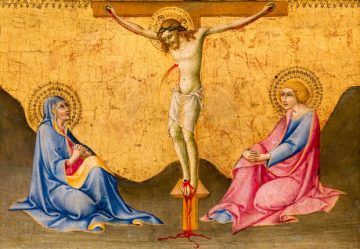 Other intriguing details abound. When Notre Dame was being built in medieval Paris, a collective of prostitutes offered to pay for one of its windows and dedicate it to the Virgin Mary. Followers of Satan around the same time were obliged to suck on the tongue of a giant toad and lick the anus of a black cat. Galileo had a craving for celebrity and was an inveterate social climber. Yet, though the book is full of such titbits, there is a seriousness at its heart. Holland argues that all “western” moral and social norms are the product of the Christian revolution. He is haunted by St Paul’s claim that God chose the weak and foolish things of the world to shame the strong, and to drive the point home he might have looked at the beginning of Luke’s gospel. We encounter there an obscure young Jewish woman called Mary who is pregnant with Jesus, and Luke puts into her mouth a cry of praise that some scholars believe is a Zealot chant. It speaks of how you will know who God is when you see the poor coming to power and the rich sent empty away. It is this which must be weighed in the balance against the killing fields of Christendom.
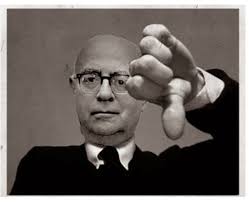 Adorno was known for his skill at anticipating apparent contradictions, gymnastically reframing objections to his theses as their necessary conclusions, and he would not have been shocked by the cultural capital afforded his byline any more than the
  A
A Hala, the new film from the writer-director Minhal Baig, is a study in contrasts. The coming-of-age story follows its titular protagonist, a Pakistani American teenager played by Geraldine Viswanathan, as she navigates the confusion of adolescence in the United States. The divides she encounters are apparent almost immediately: parents versus classmates; Pakistan versus America; Islamic tenets versus romantic freedom. Hala skateboards to school and writes poetry. She also clashes with her strict mother and father, who chide her relentlessly for any number of activities her white friends speak about with casual disregard.
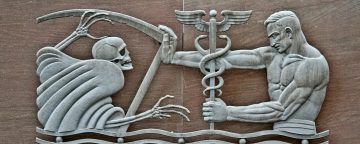 On June 9, 2016, a law permitting physician-assisted suicide went into effect in California. The same day, Dr. Lonny Shavelson, an emergency medicine physician, opened the Bay Area End of Life Options clinic to provide the newly legal service. A longtime activist for the cause, Shavelson’s interest began in adolescence. In
  I have recently been informed that I am “outside of the sociology” of academic philosophy. (The person who said this of me is someone I like and admire, and whose presence on the scene I value, very much.) I think this means, for one thing, that I do not display a number of the shibboleths that are commonly used by members of the clan to identify other members, like Vikings with their brooches. Sometimes this is because I refuse to display them, and sometimes this is because I am unaware that they exist.