
Rafia Zakaria in The Baffler:
 IT IS A TRUTH universally accepted that any columnist who travels to a foreign country to write will be, eventually, in search of a cab. If the entire Middle East has been made intelligible to New York Times readers by the inveterate interviewer of taxi drivers Thomas Friedman, then so too with the fate of Near-Brexit Britain. It follows that when I got to London on Election Day (December 12) I immediately got into the taxi line at Heathrow airport. Soon, I figured, an insightful and expert cab driver who I would dub Niles or Julian in my ensuing column, would deliver me the gems that make for good punditry. It was, predictably, a rainy and blustery day in London, and I scurried to the cab to which I had been pointed as fast as I could. The driver, however, was not so inclined; not, in fact, inclined at all. A white man, he sat in his black cab and looked straight ahead. I kept banging at the door until finally the attendant sidled over and said “Take the next one.” I did and as I did, I saw from the corner of my eye a white woman who had stood behind me in line get into the cab that had been unavailable to me. The cab driver so immoveable to my entreaties readily got out and loaded her suitcases for her.
I did get into the next cab, whose driver, thankfully, was an elderly Jamaican-British man. Then it sunk in: I was a brown person in London on a day when there was a reckoning, in some significant part, on the acceptability of brown and black others. My new cab-driver expert affirmed this. “It’s all about the immigrants,” he said as the cab sped past surly London suburbs, rain soaked and wan. “All the jobs here are done by the immigrants but the British don’t want us,” he expounded. “Get rid of the immigrants they say,” he went on as we slipped under a graffiti-sprayed bridge; in the whorls and words I could read an angrily scrawled “Out.” When we got to my budget hotel my cab driver sent me off with “Boris Johnson is going to win.”
Boris Johnson did win and the results were as anti-climactic as election results can be.
More here.

 Laura Tanenbaum in Jacobin:
 Rohit De and Surabhi Ranganathan in NYT:
 One night in 1953, the Reverend Billy Graham awoke at two in the morning, went to his study, and started writing down ideas for the creation of a new religious journal. Graham, then in his mid-thirties, was an internationally renowned evangelist who held revival meetings that were attended by tens of thousands, in stadiums around the world. He had also become the leader of a cohort of pastors, theologians, and other Protestant luminaries who aspired to create a new Christian movement in the United States that avoided the cultural separatism of fundamentalism and the theological liberalism of mainline Protestantism. Harold Ockenga, a prominent minister and another key figure in the movement, called this more culturally engaged vision of conservative Christianity “new evangelicalism.” Graham believed a serious periodical could serve as the flagship for the movement. The idea for the publication, as he later wrote, was to “plant the Evangelical flag in the middle of the road, taking a conservative theological position but a definite liberal approach to social problems.” The magazine would be called Christianity Today.
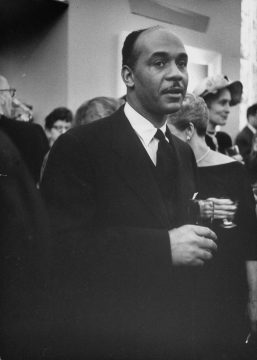 “Complexity” was the term that Ralph Ellison deployed most often to describe black life and culture. And it is the term best suited to convey the character of this brilliant, often disapproving and unsparing man. Decades before Toni Morrison’s “Beloved” and “Song of Solomon,” “Invisible Man” (1952) singularly defined the meaning of literary achievement. As a critic, Ellison was no less significant a thinker and stylist. Always, he was a philosopher of black expressive form and an astute cultural analyst.
 Dear imagined future self,
 False words, phony videos, doctored photos, and violent content are regular features on the online ecosystem worldwide. India is no exception, where such content, which often attracts millions of views, has led to
  Accusations of antisemitism
  I often think that my obsession with
  Unlike Armstrong or Cukor, who stay true to Alcott’s timeline, Gerwig begins in the middle of the narrative, depicting the second half of the book while weaving in scenes drawn from the first. We open on the March sisters in their late teens or early twenties. The women in question are no longer very little, and the Civil War that cast a shadow over their youth has ended. We find the eldest, Meg, searching for contentment in her new life as the wife of a poor tutor (James Norton). Played by Emma Watson, she is the picture of grace if not always the voice, her Yankee accent at times on the brink. Tomboyish Jo—Ronan, offering a perfect compromise between Ryder’s timidity and Hepburn’s ham—is in New York avoiding an unwanted marriage proposal from her best friend, Laurie (Timothée Chalamet), and chasing after her dream of becoming a writer. Amy (Florence Pugh), the bratty baby, is in Europe to hone her painting skills and find a society husband. Only sweet, sickly Beth (Eliza Scanlen) remains at home, though she will soon depart on an adventure of a more permanent kind, as she learns to accept her slowly impending death, the consequence of childhood scarlet fever. As she says of her fate in one of Alcott’s most poetic lines, delivered with solemn elegance by Scanlen, who makes the most of Beth’s limited part: “It’s like the tide . . . when it turns, it goes slowly, but it can’t be stopped.”
 Jugaad is a hack, a hustle, a fix. It’s a lot from a little, the best with what you’ve got—which is likely not much, if you need jugaad. A “very DU word,” a Delhi University grad once explained to me, and I thought about how college students as a rule and around the world turn nothing into something (e.g., instant noodles).
 A facility that saw 53,000 emergency room visits per year disappeared from Philadelphia this summer with the prolonged and still-unfinished closure of Hahnemann University Hospital. The 496-bed hospital employed 2,700 people and saw 17,000 admissions in 2017, its last year under the management of the Tenet Healthcare Corporation. Tenet, one of the nation’s largest for-profit hospital conglomerates, owned ninety-six hospitals and nearly 500 outpatient centers in the United States that year. Not all of them turned a profit. Hahnemann, for example, booked $790 million in revenue in 2017, $115 million short of breaking even. So Tenet embarked on an international restructuring program, liquidating seventeen low-margin hospitals in the United States and the United Kingdom. In Philadelphia, Tenet sold Hahnemann to Joel Freedman, a man from Los Angeles who sat on the advisory board of the University of Southern California’s Leonard D. Schaeffer Center for Health Policy and Economics (his name has since been removed from the center’s website) and managed an investment fund, Paladin Capital, with interests in “the world’s most innovative cyber companies,” according to its website. By spring 2019 Freedman was still losing $3 to $5 million a month on Hahnemann. He had burned through four CEOs in fifteen months. In June, hospital administrators announced that the facility was shutting down.
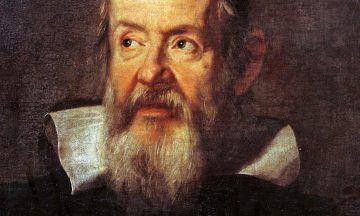 There is no escape from this dilemma – either all matter is conscious, or consciousness is something distinct from matter”: Alfred Russel Wallace put the point succinctly in 1870, and it is hard to see how his colleague