V S Naipaul in The New Yorker:
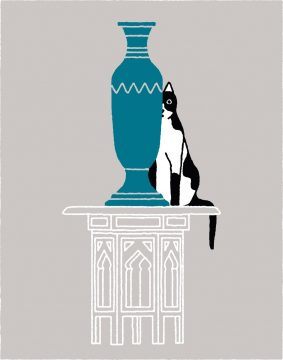 Nadira was living in Bahawalpur, in Pakistan. One day, she saw a cat on the window ledge of her room. It was looking into the room in a disquieting way, and she told the servant to get rid of the cat. He misunderstood and killed the poor creature. Not long after this, in a laundry basket near the window, Nadira found a tiny kitten who was so young that its eyes were still closed. She understood then that the poor creature that had been so casually killed was the mother of the little kitten, who was probably the last of the litter. She thought she should adopt him. The kitten slept in her bed, with Nadira and her two children. He received every attention that Nadira could think of. She knew very little about animals, and almost nothing about cats. She must have made mistakes, but the kitten, later the cat, repaid the devotion with extraordinary love. The cat appeared to know when Nadira was going to come back to the house. It just turned up, and it was an infallible sign that in a day or two Nadira herself would return. This happy relationship lasted for seven or eight years. Nadira decided then to leave the city and go and live in the desert. She took the cat with her, not knowing that a cat cannot easily change where it lives: all the extraordinary knowledge in its head, of friends and enemies and hiding places, built up over time, has to do with a particular place. A cat in a new setting is half helpless. So it turned out here.
She came back one day to her desert village and found the people agitated. They had a terrible story. A pack of wild desert dogs had dragged away the unfortunate cat into a cane field. Nadira looked, fruitlessly, and was almost glad that she couldn’t find her cat. It would have been an awful sight: the wild dogs of the desert would have torn the cat to pieces. The cat was big, but the desert dogs were bigger, and the cat would have had no chance against a ravening pack. If it had got to know the area better, the cat might have known how to hide and protect itself. The dogs were later shot dead, but that revenge couldn’t bring back the cat whom she had known as the tiniest kitten, motherless, in the laundry basket. Grief for that particular cat, whose ways she knew so well, almost like the ways of a person, never left her.
And it was only when she came to live with me in Wiltshire—a domesticated landscape, the downs seemingly swept every day: no desert here, no wild dogs—that she thought she could risk having another cat, to undo the sorrow connected with the last. She went to the Battersea rescue home. In one cage she saw a very small black-and-white kitten, of no great beauty. Its nose was bruised and it was crying. It was being bullied by the bigger cats in the cage. It was the runt of its litter and had been found in a rubbish bin, where it had been thrown away. Everything about this kitten appealed to Nadira. And this was the kitten that, after the Battersea formalities, two friends, Nancy Sladek and Farrukh Dhondy, brought to us.
More here. (Note: This is what good writing is all about. A sublime piece!)

 Early Friday morning, Qasem Soleimani, the head of the Iranian Revolutionary Guards Corps Quds Force, was killed on the drive back from the international airport in Baghdad, Iraq, in a US drone strike authorized by President Trump.
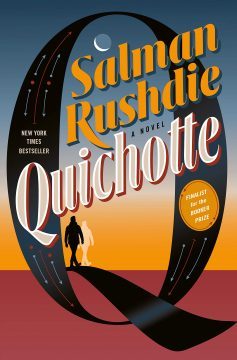 The story of Don Quixote never gets old. First published (Book One, that is) in 1605, Cervantes’s novel continually makes the list of the greatest books of all time, being the second most translated after the Bible. In 2002, the Norwegian Academy of Science and Letters asked a hundred authors across the world to name their choice for “best novel” of all time: Cervantes won in a landslide. Considered by many people to be “the first modern novel”, it is a story of a man’s search for truth. It is also hilariously funny. I was not surprised to learn that it is one of the most requested books by the inmates at Guantánamo.
 My mother had green eyes. Black hair. Her name was Marie Augustine Adeline Legrand. She was born a peasant, daughter of farmers, near Dunkirk. She had one sister and seven brothers. She went to teachers college, on a scholarship, and she taught in Dunkirk. The day after an inspection, the inspector who had visited her class asked for her hand in marriage. Love at first sight. They got married and left for Indochina. Between 1900 and 1903. A sort of commitment, adventure, a sort of desire, too, not for fortune but for success. They left like heroes, pioneers, they visited the schools in oxcarts, they brought everything, quills, paper, ink. They had succumbed to the posters of the era urging, as if they were soldiers: “Enlist.”
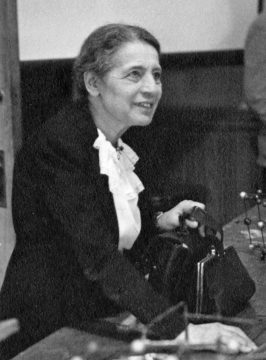 Jeremy Bernstein in Inference:
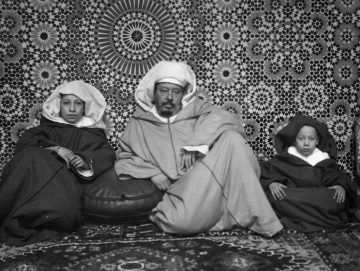 Adam Shatz over at the NYRB:
 C
C At a global financial services firm we worked with, a longtime customer accidentally submitted the same application file to two offices. Though the employees who reviewed the file were supposed to follow the same guidelines—and thus arrive at similar outcomes—the separate offices returned very different quotes. Taken aback, the customer gave the business to a competitor. From the point of view of the firm, employees in the same role should have been interchangeable, but in this case they were not. Unfortunately, this is a common problem.
 Antonia Malchik in Aeon:
 A “VISIONARY,” A “PROPHET,” A “MODERN-DAY LEONARDO”: Writers often resort to panegyrics when confronted with the eccentric, daunting intellect of Agnes Denes. Given the ambition of the octogenarian artist’s career, which spans fifty years and emerges from deep research into philosophy, mathematics, symbolic logic, and environmental science, it’s hard to fault them.
 I
I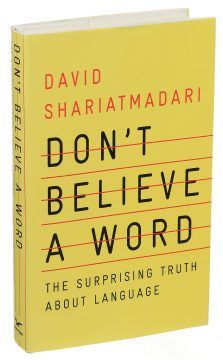 It’s astonishing that humans are expected to make our way in the world with language alone. “To speak is an incomparable act / of faith,” the poet Craig Morgan Teicher has written. “What proof do we have / that when I say mouse, you do not think / of a stop sign?”
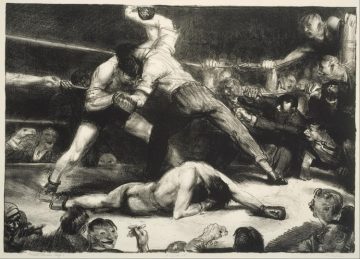 Gordon Marino teaches philosophy at St. Olaf College and curates the Hong Kierkegaard Library. He has spent decades writing about the existentialists. His passion for them did not begin in the classroom, though. After a failed relationship, with derailed careers in both boxing and academic philosophy, a young Marino strugged with suicidal thoughts. While waiting for a counseling session, he spotted a copy of Søren Kierkegaard’s Works of Love on a coffee-shop bookshelf. He opened it to a passage in which Kierkegaard criticizes a “conceited sagacity” that refuses to believe in love. Intrigued, Marino hid Works of Love under his coat on the way out the door. He credits the book with saving his life. “At the risk of seeming histrionic,” Marino writes, “there was a time when Kierkegaard grabbed me by the shoulder and pulled me back from the crossbeam and the rope.” In Kierkegaard and other existentialists, Marino found philosophers who wrote in the first person, took moods and emotions seriously, and kept up a staring contest with despair. While these eclectic thinkers often had qualms about the professoriate, they led Marino back to academic philosophy. He returned with an older conception of philosophy as a way of life and a pursuit of wisdom, a conception the existentialists helped renew and one that animates this compelling study of them.
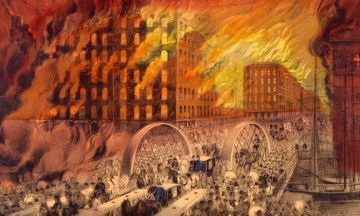 Called shikaakwa by the Miami-Illinois tribe for the skunky smell of the wild-onion that grew on the banks of Lake Michigan, “Chicago” is a French transcription of the earlier name for the area. Founded in 1833, with an initial population of 350, before the fire, it is said, Chicago’s streets curved around the Lake Michigan waterfront and followed the course of the Chicago River and a network of cattle paths lain over Native American migration routes. In contrast to the organic form of the city associated with the early settlers, modern Chicago would be organized as a grid, with address numbers (beginning in 1909) that could tell any pedestrian where they were in relationship to the central point (0,0) of State and Madison streets. According to plan, the modules of this new grid, great skyscrapers, grew up from the rubble like gigantic, up-stretched skeletons of cast iron and, later, steel. The grid, “a framework of spaced parallel bars” according to the Oxford American Dictionary, appears here as the image of an emerging modernity.
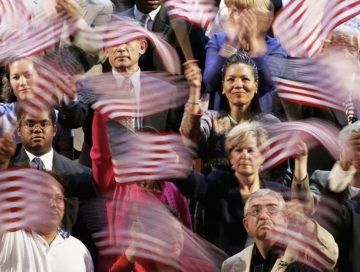 Democracy is hard work. If it is to function well, citizens must do a lot of thinking and talking about politics. But democracy is demanding in another way as well. It requires us to maintain a peculiar moral posture toward our fellow citizens. We must acknowledge that they’re our equals and thus entitled to an equal say, even when their views are severely misguided. It seems a lot to ask.