
Gentile et al in The Scientist:
 While some details of the mechanisms of splicing remain to be worked out, it’s known that mature, edited mRNAs result from an interplay between multiple factors within and outside the transcript itself. Among these is the spliceosome, the machinery that carries out the splicing. Each splicing event requires three components: the splice donor, a GU nucleotide sequence at one end of the intron; a splice acceptor, an AG nucleotide sequence at the opposite end; and a branch point, an A approximately 20–40 nucleotides away from the splice acceptor. These three “splice sites” are recognized by two core small nuclear RNAs (snRNAs) of the spliceosome, U1 and U2, followed by a protein, U2AF. The binding of these molecules to a transcript recruits a complex of three more snRNAs—U4, U5, and U6—which facilitates the splicing reaction. A variety of factors affect how transcripts from a particular gene are spliced. Exon recognition by the spliceosome can be influenced by RNA binding proteins (RBPs), which bind to enhancer and silencer motifs within the mRNA and help or hinder spliceosome recognition of the splice sites. And because pre-mRNAs are frequently spliced as they’re transcribed, the speed of transcription by RNA polymerase II further tunes the window of opportunity for splice site recognition by the spliceosome.
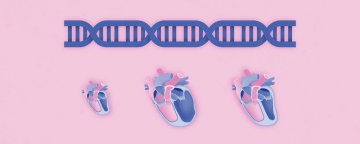
Titin, which codes for a protein in muscle, is one example of a gene whose pre-mRNA transcript can be spliced in multiple ways to yield different protein isoforms. During development of the fetal heart, more exons are left in during splicing, which produces a relatively long, springy protein. In adult hearts, an RNA-binding protein called RBM20 associates with long stretches of the mRNA transcript during splicing, forcing the spliceosome to cut out those bits of DNA. The result is a relatively short, stiff protein. If RBM20 is missing or defective in adult hearts, these hearts will produce more fetal, springy titin protein relative to the stiff adult version. This is thought to reduce the capacity of the heart to contract, contributing to a condition known as dilated cardiomyopathy.
More here.
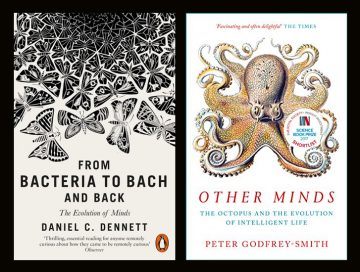 In this essay, I discuss Dennett’s From Bacteria to Bach and Back: The Evolution of Minds (hereafter From Bacteria) and Godfrey Smith’s Other Minds: The Octopus and The Evolution of Intelligent Life (hereafter Other Minds) from a methodological perspective. I show that these both instantiate what I call ‘synthetic philosophy.’ They are both Darwinian philosophers of science who draw on each other’s work (with considerable mutual admiration). In what follows I first elaborate on synthetic philosophy in light of From Bacteria and Other Minds; I also explain my reasons for introducing the term; I look at the function of Darwinism in contemporary synthetic philosophy; and I close by analyzing the sociological challenges to synthetic philosophy.
 I’m not just a remainer. I’m a European through and through, and the rats have taken over the ship, I want to tell him. It’s breaking my heart and I want it to break yours. We need your voice to wake us from our sleepwalk, and save us from this wanton act of political and economic self-harm. But you’re too late.
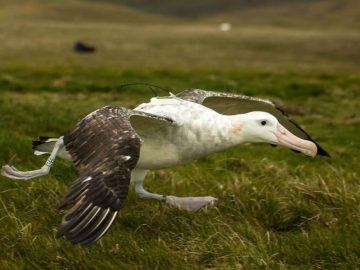 Boasting wingspans of up to 11 feet—the largest of any bird alive today—these feathered goliaths, native to the Southern Ocean and North Pacific, are built to soar. Gliding at speeds that often exceed 50 miles per hour, they can
  At one point in A Very Stable Genius, the conservative lawyer
 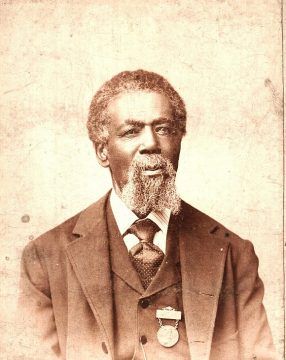 On Feb. 3, 1870, the Fifteenth Amendment was ratified prohibiting “the federal government and each state from denying a citizen the right to vote based on that citizen’s race, color, or previous condition of servitude” giving Black men the right to vote across the nation. Just under a month later the first African American vote was cast in Perth Amboy, N.J. on March 31, 1870 by Thomas Mundy Peterson. Born in 1824 in Metuchen, N.J., Peterson was the son of ex-slave Lucy Green. Peterson worked as a janitor and handyman in Perth Amboy. After the Fifteenth Amendment was enacted, Peterson participated in Perth Amboy’s local election held at city hall over the city’s charter. A member of the Republican and Prohibition Parties, he cast his ballot in favor of revising the existing charter, making him the first African American to vote in any election in the nation. Along with being the first Black person to vote in America, he was also the first Black person in Perth Amboy to serve on a jury. Peterson would go on to be one of seven people appointed to make amendments to the charter’s revisions he voted in favor of.
 Samuel Moyn in The LRB:
 As late as the 20th century, grafting a monkey’s testicle on to your scrotum was considered a plausible cure for impotence and general sluggishness. As early as 1139, it was signed into canonical law that impotence was grounds for the annulment of a marriage, so you can see why the try-anything approach persisted, when a person could be unmade by physical failure, publicly ejected from the organising bond of society. Dough has reminded humans of sex, one way or another, pretty much since the cultivation of wheat began; any loaf of bread worth its salt was originally designed to resemble either a penis or a vagina. But much of the significance of food, especially in the early modern period, was not its erotic redolence but its mediating role in the bewitchery of carnal urges. So a wife might increase her husband’s ardency by keeping a live fish in her vagina for two days, then roasting it and feeding it to him. Or she might, conversely, set out to kill him by covering herself in honey and rolling in wheat, before grinding the wheat and turning it into bread, which she then fed to him. But she’d have to remember to mill it in the opposite direction to the sun, whatever that means.
 For those who don’t know about America’s involvement in Laos, which at the time U.S. officials called the “
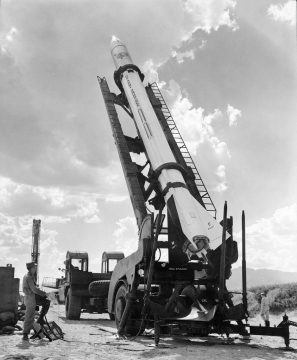 The early years of the American nuclear program were dominated by men in the mold of
  Getting rid of Trump means taking seriously “shit-life syndrome”—and its resulting misery, which includes suicide, drug overdose death, and trauma for surviving communities. My state of Ohio is home to many shit-life syndrome sufferers. In the
 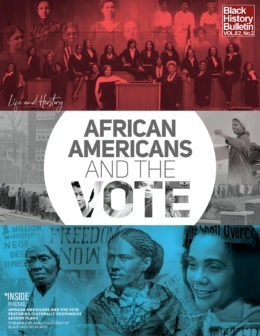 When Carter G. Woodson established Negro History week in 1926, he realized the importance of providing a theme to focus the attention of the public. The intention has never been to dictate or limit the exploration of the Black experience, but to bring to the public’sattention important developments that merit emphasis. For those interested in the study of identity and ideology, anexploration of ASALH’s Black History themes is itself instructive. Over the years, the themes reflect changes in how people of African descent in the United States have viewed themselves, the influence of social movements on racial ideologies, and the aspirations of the black community. The changes notwithstanding, the list reveals an overarching continuity in ASALH–our dedication to exploring historical issues of importance to people of African descent and race relations in America.