
Peter Schjeldahl at The New Yorker:
 I would tell you my emotional responses to the gorgeous works in the Donald Judd retrospective that has opened at the Museum of Modern Art if I had any. I was benumbed, as usual, by this last great revolutionary of modern art. The boxy objects (he refused to call them sculptures) that Judd constructed between the early nineteen-sixties and his death, from cancer, in 1994, irreversibly altered the character of Western aesthetic experience. They displaced traditional contemplation with newfangled confrontation. That’s the key trope of Minimalism, a term that Judd despised but one that will tag him until the end of time. In truth, allowing himself certain complexities of structure and color, he was never as radically minimalist as his younger peers Dan Flavin (fluorescent tubes) and Carl Andre (units of raw materials). But Judd, a tremendous art critic and theorist, had foreseen the change (imagine, in theatre, breaking the fourth wall permanently) well before his first show of mature work, in 1963, when he was thirty-five. Slowly, by erosive drip through the nineteen-sixties and seventies, the idea that an exhibition space is integral to the art works that it contains took hold. It is second nature for us now—so familiar that encountering Judd’s works at moma may induce déjà vu.
more here.
 Toniann Fernandez in The Paris Review: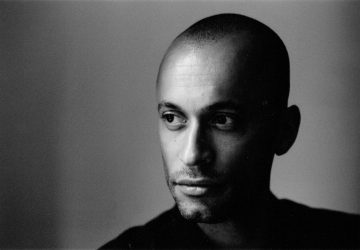
 Maria Farrell in The Conversationalist:
 Samanth Subramanian in the New Yorker:
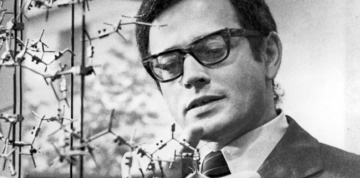 The brain is wider than the sky,
 In the 2017 film Star Wars: The Last Jedi, the character Finn plans to sacrifice himself for the rebel cause by flying into the glowing-hot core of a giant weapon trained on the rebel hideout. As his rickety vessel speeds toward the target, he is sideswiped off his path by another rebel, Rose. When Finn asks Rose why she prevented his self- sacrifice, she replies: “That’s not how we’re going to win. Not fighting what we hate, [but] saving what we love.” It is difficult to imagine such a scene appearing in earlier Star Wars episodes.
 The huge success of the Netflix teen drama series, Sex Education, is partly fuelled by the poor quality of sex ed lessons in schools. Young people are fed up with prudish, vague and incomplete information from their teachers – and parents. So they are turning to the often explicit TV series to get answers.
 Las Vegas is a place about which people have ideas. They have thoughts and generalizations, takes and counter-takes, most of them detached from any genuine experience and uninformed by any concrete reality. This is true of many cities—New York, Paris, Prague in the 1990s—owing to books and movies and tourism bureaus, but it is particularly true of Las Vegas. It is a place that looms large in popular culture as a setting for blowout parties and high-stakes gambling, a place where one might wed a stripper with a heart of gold, like Ed Helms does in The Hangover, or hole up in a hotel room and drink oneself to death, as Nicolas Cage does in Leaving Las Vegas. Even those who would never go to Las Vegas are in the grip of its mythology. Yet roughly half of all Americans, or around 165 million people, have visited and one slivery weekend glimpse bestows on them a sense of ownership and authority.
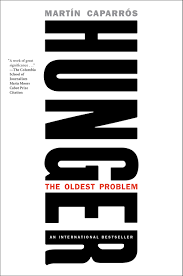 How do those of us who have enough to eat account for hunger? We often imagine it’s about drought, famine, lack of rain, corruption and incompetence. We need to be much more imaginative. Hunger is about land-grabbing, cartels, early marriage, immunisation, genetically modified crops, child development, slums, climate change, subsidies, chemical pollution, derivative markets, deforestation, child labour, food banks and much, much more. Systemic hunger is about the failure of our food systems and the fact that one half of the world is eating the food of the other half. This is not new. In the 19th century, Europe improved its food availability and quality by importing foodstuffs grown elsewhere.
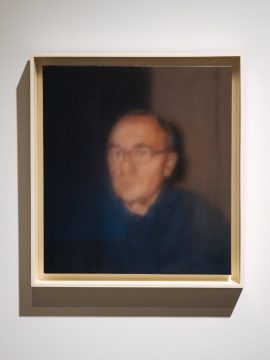 The blur is as close as Mr. Richter has ever come to a stylistic signature, and it recurs here in seascapes, landscapes, and street scenes; portraits of his daughter Betty, her head resting on a table like meat on the butcher block, or his ex-wife, the artist
  Suppose that you’re interested in how false beliefs – ‘fake news’ – spread across a population. The problem is extraordinarily complicated. What people come to believe depends on a myriad of factors: which news outlets they read; who their friends and colleagues are; their ability to distinguish between fact and fiction; their social media echo chamber; and so on. A very good way of investigating a complicated phenomenon is to model it. This involves the construction of a simplified version of it and the investigation of the behaviour of that simplified version in order to draw conclusions about the actual system of interest. Both of these steps require a curious and playful outlook.
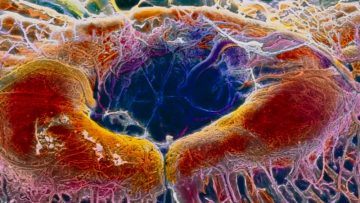 A person with a genetic condition that causes blindness has become the first to receive a CRISPR–Cas9 gene therapy administered directly into their body. The treatment is part of a landmark clinical trial to test the ability of CRISPR–Cas9 gene-editing techniques to remove mutations that cause a rare condition called Leber’s congenital amaurosis 10 (LCA10). No treatment is currently available for the disease, which is a leading cause of blindness in childhood. For the latest trial, the components of the gene-editing system – encoded in the genome of a virus — are injected directly into the eye, near photoreceptor cells. By contrast, previous CRISPR–Cas9 clinical trials have used the technique to edit the genomes of cells that have been removed from the body. The material is then infused back into the patient. “It’s an exciting time,” says Mark Pennesi, a specialist in inherited retinal diseases at Oregon Health & Science University in Portland. Pennesi is collaborating with the pharmaceutical companies Editas Medicine of Cambridge, Massachusetts, and Allergan of Dublin to conduct the trial, which has been named BRILLIANCE.
 When the Japanese attacked Pearl Harbor, the United States was surprised and unprepared, but it was quickly freed of its illusions. The same does not hold true for the COVID-19 epidemic. The attack is underway and our defenses are down – but so far our illusions remain intact.
 I think I’m finally ready to come out as a