
Elena Saavedra Buckley at the New Yorker:
One night this past spring, the audience members at a bagpipe concert in Red Hook, Brooklyn, could be organized into two neat categories: people who knew little to nothing about bagpipes—the majority—and people who knew so much that the backs of their jackets were festooned with regimental patches for the uniformed pipe bands of various Northeastern cities. The latter group had mostly come to the event together in a van from Connecticut, where they lived. One of the jacket-wearers, a man with a septum piercing named Benjamin, spends his free time 3-D-printing custom bagpipe drones—the cylindrical pipes that sound the instrument’s continuous, harmonically dense vibrations. When I asked him why he did this, he seemed stunned by the question. “Um, more drone?” he said.
Everyone had come to see the twenty-seven-year-old Brìghde (pronounced “Breech-huh”) Chaimbeul, considered one of the most skillful and interesting bagpipe players in the world, who was visiting from her native Scotland. Chaimbeul walked onstage in a witchy outfit, grounded by a navy tartan skirt, her raven hair up in a half bun and her dark-browed face set calmly. Shahzad Ismaily, a celebrated experimental-jazz musician, sat next to her with a chunky Moog synthesizer on his lap.
more here.
Enjoying the content on 3QD? Help keep us going by donating now.
 J
J This is a pivotal
 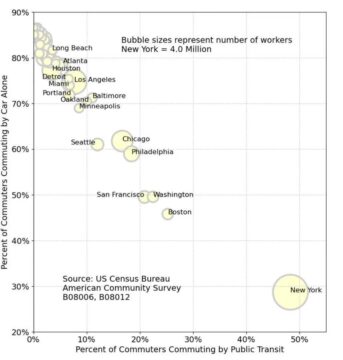 Americans who go to Tokyo or Paris or Seoul or London are often wowed by the efficient train systems, dense housing, and walkable city streets lined with shops and restaurants. And yet in these countries, many secondary cities also have these attractive features. Go to Nagoya or Fukuoka, and the trains will be almost as convenient, the houses almost as dense, and the streets almost as attractive as in Tokyo.
 You chaired the judging panel for the 2025 Royal Society Book Prize. What were you and your fellow judges looking for when you selected the best new popular science books?
 The hard statistics underlying poverty and social mobility opportunities for children and other marginalized individuals might seem like an unlikely entry point for a philosophy book. Yet they are the impetus for philosopher of science Philip Kitcher’s latest project: The Rich and the Poor (2025). The book’s cover sets the tone. Featuring side-by-side portraits of rich individuals enjoying cocktails by an infinity pool and a woman with children kicking home canisters filled with water collected at a nearby water aid station, it is meant to be—and is—uncanny.
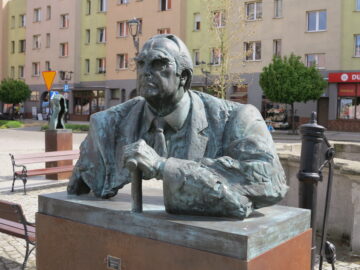 This poem reads like a precursor to the decision to act (like Einstein) in the second “fragment” of “To Albert Einstein.” The poet, as if in a New Year’s resolution, has now decided that it is better to speak out dangerously than to be silent. But he has not yet settled on what he will say (i.e., make a clean break with the post-war Polish state for which he was still working).
 Carlos Sánchez has dedicated a lot of thought and ink to two questions: (1) Is there such a thing as “Mexican philosophy”? and (2) If there is such a thing, does it matter? Throughout his career, Sánchez has consistently answered the first question affirmatively. In response to the second, Sánchez has shared that this tradition matters to him for personal reasons. Mexican philosophy has enriched his life, providing resources not only for deep philosophical speculation but also for coming to grips with his identity as a Mexican American. Yet, with respect to the question of why this tradition should matter to everyone regardless of their background, he at one point confessed, “There is, of course, a well-developed and highly nuanced answer to the question as to why one should study Mexican philosophy ‘at all’. But I haven’t found it yet” (2019).
 Made at the high point of Kline, de Kooning, and Pollock, Andy Warhol’s “Campbell’s Soup Cans” was a poke in the eye of abstract expressionism. Not only was it blatantly mimetic, but it was being blatantly mimetic with a mundane commercial product found in every supermarket and corner grocery store in America. When people think of repetition in painting, they probably think first of these iconic soup cans.
 T
T “Born with voices that could drive back the darkness,” the character Celine, a former K-pop idol, narrates at the start of Netflix’s new release “
 My husband and I married in September 2018. We planned our wedding a year in advance. We didn’t even think about the sea, its surges, its rhythms. It was a feat of stupidity, for two people who grew up on an island surrounded by the Indian Ocean.
 A typical scene goes