
Robert Pippin at The Point:
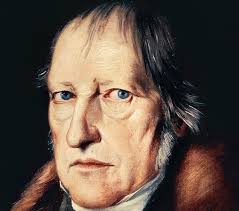 Although the nineteenth-century philosopher G.W.F. Hegel is known as a defender of bourgeois society and so of what came to be known after him as capitalism, I think the evidence suggests that his answer to these questions is far more negative than is widely recognized, and this in a distinctive sense that remains relevant today. I want to try to explain this counterintuitive claim. Hegel, of course, writing in Germany in the early nineteenth century, had no idea of the full scope of the industrial capitalism to come, but he certainly saw that a largely agricultural and artisanal/craft/predominantly homebound economy was changing into a wage-labor economy, and his worries about that alone are apposite. What makes him especially worth returning to in our present circumstances, however, is that while material inequalities and the resulting systematic unfairness were important to him, Hegel’s principal focus was on the experiences of ourselves and others inherent in the ordinary life required by such a productive system. These issues are often misleadingly marginalized as “psychological,” but as recent events have shown, they are crucial to the possibility of the social bonds without which no society can survive.
more here.
 The ongoing coronavirus disease 2019 (COVID-19) pandemic has renewed academic and clinical interest in an old vaccine,
 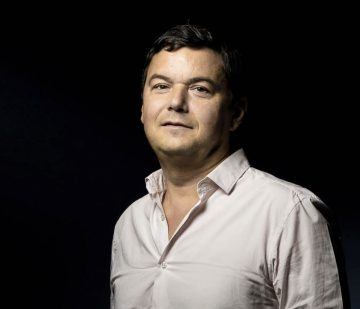 Piketty’s 753-page book Capital in the Twenty-First Century, published in 2013, sold 2.5 million copies worldwide and helped put inequality on the global agenda. But his latest, the even thicker Capital and Ideology, may prove still more influential. The book is nothing less than a global history of inequality and the stories that societies tell to justify it, from premodern India to Donald Trump’s US. It arrives just as anger about inequality (some of it generated by Piketty’s work) approaches a boiling point, and was channeled by a contender for the White House, Bernie Sanders.
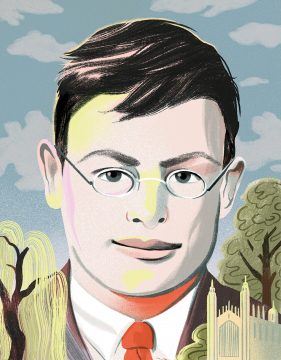 The world will never know what has happened—what a light has gone out,” the belletrist Lytton Strachey, a member of London’s Bloomsbury literary set, wrote to a friend on January 19, 1930. Frank Ramsey, a lecturer in mathematics at Cambridge University, had died that day at the age of twenty-six, probably from a liver infection that he may have picked up during a swim in the River Cam. “There was something of Newton about him,” Strachey continued. “The ease and majesty of the thought—the gentleness of the temperament.”
 Last week,
 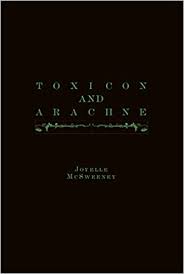 In 2011, McSweeney coined the term
 Toward the end of his life, the humanistic psychologist Abraham Maslow was developing
  Why do some people
  The virus has punctured the dream that any built item in our world just wondrously appears, in our stores or on our screens. Instead, like the casing coming off an enormous clock, we see how our way of life relies on millions of people, working together. Like cogs in that clock, tipping over the edge of a cliff.
 When major decisions must be made amid high scientific uncertainty, as is the case with
 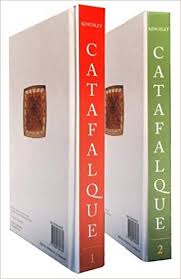 It reveals Jung’s certainty about the going down of the West: a culture and a civilization which even in 1961 had profoundly run out of any gyring or generative energy and was already quite still, poised at the point of stasis before the inevitable unwinding begins. From this, a vision unfolds of western culture as seen from the perspective of the dead: of the joining from past to future that an unbroken chain of linkages ensures, followed by the horrifying awareness of how we have lost our linkage to the primordial past—leaving us an age adrift, nowhere, bereft. The only possible response to such seeing is to lament; to turn to face our ancestors; to bury optimism as a kind of dereliction of our duty; and to learn to dance for the dead. I cannot stress starkly enough the sheer physicality of reading this book, the pain it draws forth, and not only from enduring for eight hundred pages what is unbearable to consider. There is a deeper mystery afoot and it would appear that, in the presence of words truly uttered and written, one virtually has to die to keep up one’s end of the arrangement.
 Most faculty, students, and administrators don’t actually think of colleges as hedge funds or hoteliers; they think, rather, that colleges charge students for teaching them. Before the coronavirus pandemic, professors would grouse that their students acted like customers who expected faculty to provide services. But it’s impossible to argue that online instruction, even when exceptionally well-executed, delivers the same quality of education as in-person teaching. I’ve been lucky: all of my students have high-speed Internet access, I have relatively small classes, and my students had a chance to get to know one another during the first six weeks of the semester. (Some of my friends who teach on different timetables met their students for the first time online.) I have done my best to compensate for what students have lost: learning by discussion, by engaging with one another and with me in ways that simply cannot be replicated online. Still, they are certainly not learning as much as they would be in person.