
Chase Kuesel at Music and Literature:
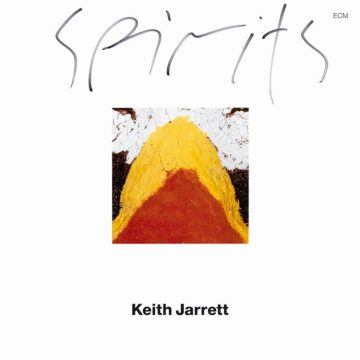 On July 7, 2013, Keith Jarrett bracingly took to the stage at the Umbria Jazz Festival in Perugia, Italy. The momentousness of the occasion was not lost on anyone: just six years earlier, Jarrett had become the first artist to ever be banned from the festival by director Carlo Pagnotta, for delivering a profanity-ridden condemnation of photographers in the audience. Seeking to avoid a similar incident this time around, Pagnotta issued a preemptive plea to the crowd to put their cameras away and to greet Jarrett with a standing ovation.
As the audience stood and complied, Jarrett finally appeared, flanked once again by his longtime trio-mates Gary Peacock on bass and Jack DeJohnette on drums. The atmosphere of camaraderie did not last long, as Jarrett examined the audience for just a few seconds before hastily declaring, “See you later” and walking offstage. There was momentary confusion: surely this could not be a repeat of the 2007 performance, where Jarrett issued his diatribe against the audience before even playing a note. But there was Stephen Cloud, Jarrett’s manager, walking on stage to beg for appropriate behavior once again: apparently Jarrett had seen some people in the audience flashing their cameras.
more here.
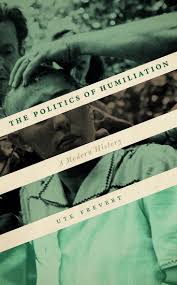 No emotion stands nearer to the foundational myths of the human social order than shame. In the beginning, Adam and Eve stood together ‘both naked, the man and his wife, and were not ashamed’. And then they ate of the tree of knowledge; their eyes opened; they knew they were naked; they covered themselves with fig leaves. Their shame was what told God they had fallen and become humans of our sort. Protagoras tells Socrates that after Prometheus had distinguished humans from other animals by giving them fire, Zeus gave them both shame and justice so that they could live together in harmony.
 IN A TELEGRAM SENT
 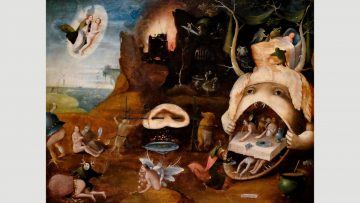 Dreams have fascinated philosophers and artists for centuries. They have been seen as divine messages, a way of unleashing creativity and, since the advent of psychoanalysis in the 19th Century, the key to understanding our unconscious. As so many of us have been experiencing unusually vivid dreams in recent weeks, it seems an opportune moment to explore the way in which they have been understood and depicted throughout the centuries. In doing so we may even find some intriguing parallels with our own experiences. But why are we dreaming so vividly now? “We’re in a new situation so there’s new emotions to process,” says psychotherapist Philippa Perry, who was inundated with replies when she recently asked her followers to send her their dreams on Twitter. We make up narratives to make sense of those feelings that in dream manifest themselves “not straightforwardly but in metaphors”, she explains.
 If we cannot resume economic activity without causing a resurgence of Covid-19 infections, we face a grim, unpredictable future of opening and closing schools and businesses.
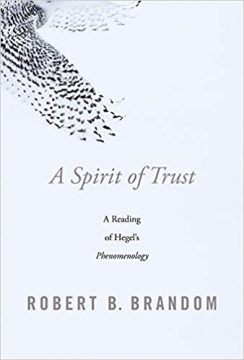 ROBERT BRANDOM IS one of the few living philosophers who can, without exaggeration, be compared to the philosophical giants who once bestrode the earth, or at least loomed large in the study, from the 17th through the 19th centuries: Spinoza, Leibniz, Hume, Kant, Hegel — system-builders who intended to explain all of reality, and ourselves, to ourselves, insofar as we and it were explicable (a matter about which they disagreed). Brandom’s long-awaited book A Spirit of Trust is an achievement in that classical vein, and quite a surprising one in this period of punctilious specialists.
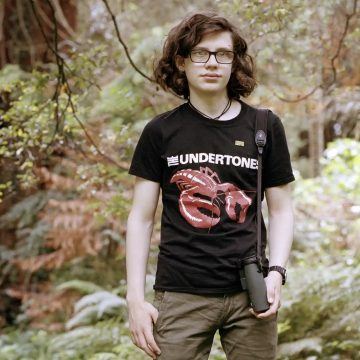 It is a challenging time to be 16 and, like his peers, Dara McAnulty must currently endure a form of house arrest that means no seeing friends, no GCSEs. Unlike other locked-down teens, McAnulty is also dealing with the harsh mischance of having his first book, Diary of a Young Naturalist, published during the coronavirus crisis. He was supposed to be touring festivals but every date is cancelled. “I feel like my being is suffering from a slow puncture,” McAnulty tweeted in March. “I honestly feel like my world is falling apart right now.”
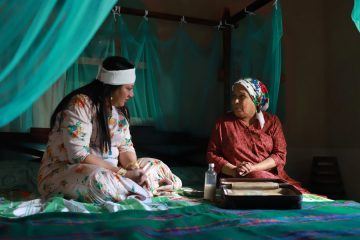 The people of the Middle East are quite used to the many attempts over decades to reconcile Jews and Arabs. Yet nothing has been tried on such a mass scale as a drama series being shown on one of the Arab world’s most popular TV channels during this year’s month of Ramadan. Since the series began to air in April over the Saudi-backed MBC station, it has dominated viewership ratings at a time when Arab families gather around a television in the evening. The drama “Um Haroun,” or “Mother of Aaron,” centers on a Jewish nurse living in an Arabian Gulf country in the 1940s. She and other Jews live peacefully in a village with Muslims and Christians as she lovingly brings health care to all. While the show has plenty of village intrigue, it depicts interreligious harmony before the 1948 creation of modern Israel and the later rise of intolerant Islamic groups such as Al Qaeda.
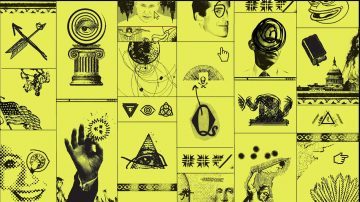 If you were an adherent, no one would be able to tell. You would look like any other American. You could be a mother, picking leftovers off your toddler’s plate. You could be the young man in headphones across the street. You could be a bookkeeper, a dentist, a grandmother icing cupcakes in her kitchen. You may well have an affiliation with an evangelical church. But you are hard to identify just from the way you look—which is good, because someday soon dark forces may try to track you down. You understand this sounds crazy, but you don’t care. You know that a small group of manipulators, operating in the shadows, pull the planet’s strings. You know that they are powerful enough to abuse children without fear of retribution. You know that the mainstream media are their handmaidens, in partnership with Hillary Clinton and the secretive denizens of the deep state. You know that only Donald Trump stands between you and a damned and ravaged world. You see plague and pestilence sweeping the planet, and understand that they are part of the plan. You know that a clash between good and evil cannot be avoided, and you yearn for the Great Awakening that is coming. And so you must be on guard at all times. You must shield your ears from the scorn of the ignorant. You must find those who are like you. And you must be prepared to fight.
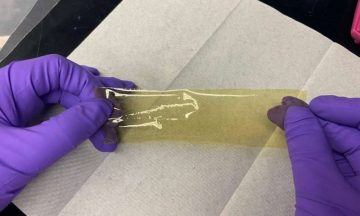 Scientists at the University of South Carolina and Columbia University have developed a faster way to design and make gas-filtering membranes that could cut greenhouse gas emissions and reduce pollution. Their new method, published today in Science Advances, mixes machine learning with
  According to the government, we are now supposed to be getting back to work. But what does “work” mean in the time of Covid-19? Amid the debates about how we might return to work, what is being forgotten is that work is a crucial part of what the 20th-century political philosopher Hannah Arendt called the human condition. The government’s Covid-19 recovery strategy, published on 11 May, states that people will be “eased back into work” as into a dentist chair: carefully, and with face masks.
 A revolutionary voice in her lifetime, Butler has only become more popular and influential since her death 14 years ago, at age 58. Her novels, including “Dawn,” “Kindred” and “Parable of the Sower,” sell more than 100,000 copies each year, according to her former literary and the manager of her estate, Merrillee Heifetz. Toshi Reagon has adapted “Parable of the Sower” into an opera, and Viola Davis and Ava DuVernay are among those working on streaming series based on her work. Grand Central Publishing is reissuing many of her novels this year and the Library of America welcomes her to the canon in 2021 with a volume of her fiction.