
Michael Brooks at Reader Supported News:
MB: What are your thoughts as you look at the movement that has erupted after the deaths of George Floyd and Breonna Taylor at the hands of police?
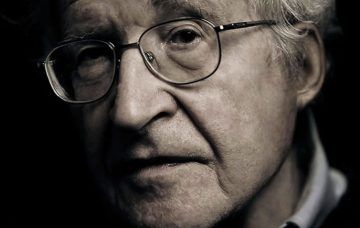 NC: The first thing that comes to mind is the absolutely unprecedented scope and scale of participation, engagement, and public support. If you look at polls, it’s astonishing. The public support both for Black Lives Matter and the protests is well beyond what it was, say, for Martin Luther King at the peak of his popularity, at the time of the “I Have a Dream” speech. It’s also far beyond the level of public reaction to earlier police killings.
It may be the most similar to the reaction to the beating of Rodney King in Los Angeles. They beat him almost to death. Most of the attackers were freed in the courts without charge. There was a week of protest; sixty people were killed, and they had to call in federal troops to quell the protests. But that was in Los Angeles. Now it’s everywhere.
And it’s not just the police killing — it’s background issues. It’s beginning to move into concern, inquiries, and protests about the facts that lead to events like this occurring. This rise in consciousness is aided by the rise in consciousness of four hundred years of vicious repression.
More here.
 The cost of
  I’m recovering from flu, so I’ve spent more time than usual by myself lately, with odd ideas swirling around in my feverish brain. Recently a bunch of different thoughts–about
 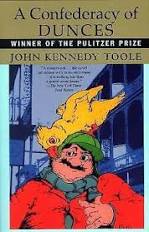 The New York publishers were wrong. A Confederacy of Dunces did, in fact, make a point, a fundamental one. Percy grasped it immediately: the book was a screed against American materialism and optimism, a defense of the oddball outcasts who live on the fringes and resist the push of progress, and a celebration of those who try to drop out with dignity.
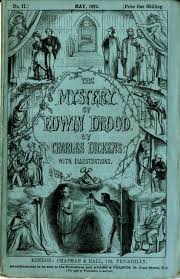 While he was writing Edwin Drood, Dickens was imbibing large quantities of opium, a drug that allows us, Thomas De Quincey explained in Confessions of an English Opium-Eater, access to a ‘second life’. Opium also allows the ‘guilty man’, De Quincey continued, to regain ‘for one night … the hopes of his youth, and hands washed pure of blood’. But at the same time as releasing the guilty man from his chains, taking opium causes further feelings of guilt. ‘In the one crime of OPIUM’, wailed Coleridge, whose life was destroyed by it, ‘what crime have I not made myself guilty of!’
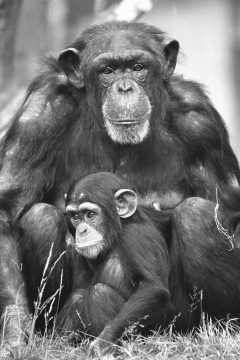 Leviton:
 The best chess and Go players in the world aren’t human beings any more; they’re artificially-intelligent computer programs. But the best poker players are still humans. Poker is a laboratory for understanding how rationality works in real-world situations: it features stochastic events, incomplete information, Bayesian updating, game theory, reading other people, a battle between emotions and reason, and real-world stakes. Maria Konnikova started in psychology, turned to writing, and then took up professional-level poker, and has learned a lot along the way about the challenges of being rational. We talk about what games like poker can teach us about thinking and human psychology.
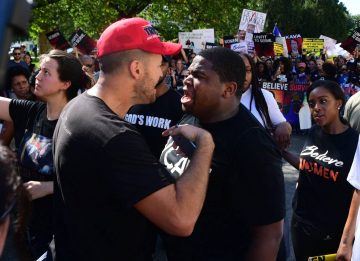 There are distinct and deep-rooted traditions of rational empiricism and religious sermonizing in American history. But these two modes seem to have become fused together in a new form of argumentation that is validated by elite institutions like the universities, The New York Times, Gracie Mansion, and especially on the new technology platforms where battles over the discourse are now waged. The new mode is argument by commandment: It borrows the form to game the discourse of rational argumentation in order to issue moral commandments. No official doctrine yet exists for this syncretic belief system but its features have been on display in all of the major debates over political morality of the past decade. Marrying the technical nomenclature of rational proof to the soaring eschatology of the sermon, it releases adherents from the normal bounds of reason. The arguer-commander is animated by a vision of secular hell—unremitting racial oppression that never improves despite myths about progress; society as a ceaseless subjection to rape and sexual assault; Trump himself, arriving to inaugurate a Luciferean reign of torture. Those in possession of this vision do not offer the possibility of redemption or transcendence, they come to deliver justice. In possession of justice, the arguer-commander is free at any moment to throw off the cloak of reason and proclaim you a bigot—racist, sexist, transphobe—who must be fired from your job and socially shunned.
 The pathologist makes do with red wine until an effective drug is available, the biochemist discards the bread from her sandwiches, and the mathematician indulges in designer chocolate with a clear conscience. The demographer sticks to vitamin supplements, and while the evolutionary biologist calculates the compensations of celibacy, the population biologist transplants gonads, but so far only those of his laboratory mice. Their common cause is to control and extend the healthy lifespan of humans. They want to cure ageing and the diseases that come with it.
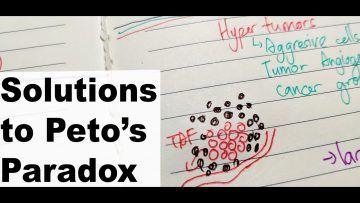 Larger organisms have more potentially carcinogenic cells, tend to live longer and require more ontogenic cell divisions. Therefore, intuitively one might expect cancer incidence to scale with body size. Evidence from mammals, however, suggests that the cancer risk does not correlate with body size. This observation defines “Peto’s paradox.”
 What brings me back to a painting is often a feeling, like a nagging muscle memory, of wanting not only to see, but to sense the painting’s facture. At the Met, I always return to Degas’s Portrait of a Woman in Gray (c. 1865), and the strange way in which the sitter’s black scarf seems to dominate the picture. Looking in closely, to the point where the weave of the canvas is visible and catching against the streaks of thinned oil, I find my wrist twitching with the desire to repeat the artist’s marks, anticipating the slight give of the fabric against the brushstroke, the soft friction of the bristles as they run out of pigment. It follows that my eyes’ movements are bound by this black shape that blends into the woman’s bonnet and resembles a figure holding an umbrella against the wind or wielding a scythe high in the air. Other portions of the painting seem secondary—the sketched-in right hand, the unfinished left eye—the whole composition just scaffolding for this burst of gesture. The tugging at my wrist lasts well after I leave the picture, each tightening of my fingers against the imaginary brush pulling the scarf back into focus.
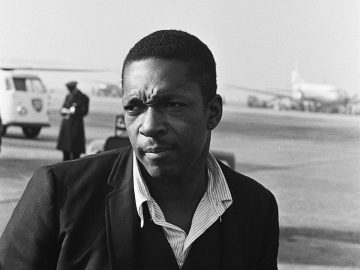 The John Coltrane Quartet’s “Alabama” is a strange song, incongruous with the rest of the album on which it appears. Inserted into Coltrane’s 1964 album Live at Birdland, it’s a studio track that confounds the virtuosic post-bop bliss of the album’s first three tracks, live recordings that include a jittery rendition of Mongo Santamaria’s “Afro Blue.” All of that collapses when we reach the sunken melancholy of “Alabama.” We are far, now, from the cascades of sound that Coltrane introduced us to in “Giant Steps,” far from the sonic innovations and precise phrasing he refined in this album’s live recordings. Here, Coltrane’s saxophone sounds hoarse and enfeebled, until it collapses on the threshold of a hole in the ground.
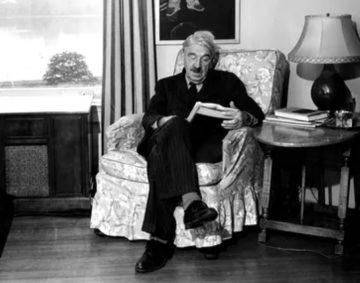 Though many in the U.S. are disoriented and disheartened by the lack of an effective federal response to the coronavirus pandemic, John Dewey, an American philosopher, psychologist and educator, would not have been surprised.
 This is not the right time for a bigger particle accelerator. But