
Matt Hanson in The Baffler:
 THE LATE, GREAT COMEDIAN Bill Hicks liked to tell a story about how audiences responded to his brand of scathing, gleefully subversive comedy, which he once referred to as “Chomsky with dick jokes.” Hicks’s relentless skewering of American materialism, jingoism, and religious hypocrisy didn’t exactly endear him to the mainstream. An appearance on the Letterman show was infamously cut—it was taped, but not aired—for containing jokes about pro-lifers, who were among the show’s sponsors. After a set in Tennessee, the story goes, a couple of locals confronted the Texas-born comic and declared that they were Christians and they didn’t like his act. Without missing a beat, Hicks responded with “well then, forgive me.” Instead, they broke his arm.
You might think reacting in such a spirit of vengeance is pretty much the exact opposite of how any self-professed Christian is supposed to behave. Yet there were deeper and more distinctly American pathologies at work: the guys who supposedly beat up Hicks were responding politically, not theologically. It wasn’t an attempt to defend Jesus’ honor or the tenets of whatever church they might have belonged to—it was to show that little punk who was really boss. They probably didn’t even notice the irony; and why would they? They may have grown up in an evangelical culture, but that culture glorifies what we now refer to as toxic masculinity. This “muscular Christianity” encourages both aggression and victimhood, emboldening believers, especially men, to impose their collective will on the rest of the public whenever they suddenly feel empowered or aggrieved.
In Jesus & John Wayne: How White Evangelicals Corrupted A Faith and Fractured a Nation the historian Kristin Kobes Du Mez explores this moral schizophrenia. We know there are legions of people on the religious right who talk a good game about following Christ but end up voting overwhelmingly for venal, crass, blustering wannabe tough guys like the current president and his enablers in Congress. But much of the evangelical leadership is this way, too. It often consists of self-appointed alpha male types who write bestselling books with imposing titles like Dare to Discipline, and Never Surrender, and You: The Warrior Leader, and Why We [meaning Muslims, of course] Want to Kill You. A writer for the Christian Broadcasting Network even teamed up with a Baptist minister a couple of years ago to produce The Faith of Donald J. Trump: A Spiritual Biography. While trying to mimic the terse, stoic cowboy ideal of manhood nicked from old Western movies, these opportunistic showboats often end up sounding and acting a lot more like Tom Cruise’s Frank T.J. Mackie in Magnolia, the brash misogynist who gives conferences about how to seduce and destroy women and who turns out to be a basket case of Oedipal rage and self-loathing.
The use of John Wayne as an evangelical role model implicitly suggests how some people’s religious beliefs are akin to identifying with their favorite movie stars.
More here.
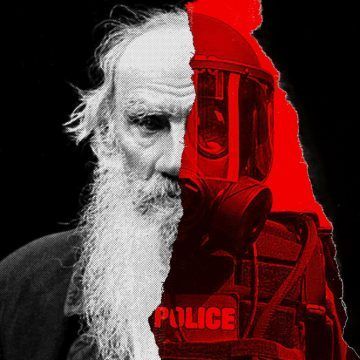 Tolstoy was drawn to seekers, to characters perpetually in the throes of spiritual crisis; George Orwell described them as figures “struggling to make their souls.” Indeed, Tolstoy saw emergencies, personal and social, as necessary ruptures that could spark a deeper questioning of society and the beliefs that supported it. Of his own spiritual reawakening, captured in his memoir “A Confession” (1882), he described feeling as though the ground beneath him had collapsed. It is no wonder, then, that readers are finding new urgency in his work at a time when the racial and economic inequities revealed by Covid-19 and police killings have inspired unprecedented numbers of people to begin questioning some of this country’s foundational myths. With calls to defund the police, many are asking, for the first time in their lives, not just how our institutions function but whether they should exist at all.
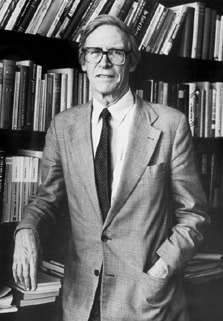 Lorna Finlayson in the New Left Review:
 In her introduction, Mary-Kay Wilmers, editor of the LRB, writes: “One of the pleasures of reading
  Madison Condon in Boston Review:
 Christy Hoffman and Sharan Burrow in Social Europe:
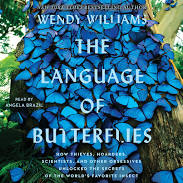 For many, insects are an annoyance and at best an inconvenience. They deserve and even demand to be dispatched to an abrupt and untimely demise. In Victorian England, on the other hand, insects were so revered that documenting and cataloguing them became a popular and passionate pastime. The eccentric banker Charles Rothschild is said to have stopped a train to allow his servants to capture a rare species of butterfly that he had spotted from a window. His daughter Miriam Rothschild, in between determining the mechanism by which fleas jump and establishing a dragonfly reserve on her estate, became a leading authority on the monarch butterfly, which she described as “the most interesting insect in the world.”
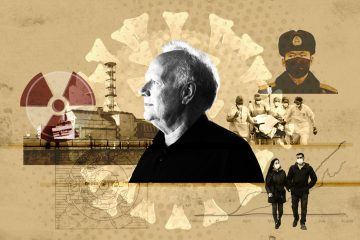 Adam Tooze in Foreign Policy:
 Sonam Kachru in Aeon:
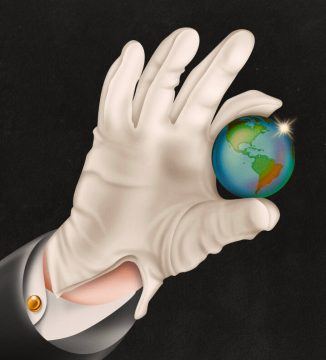 One of the mysteries in politics for decades now has been why white working-class Americans began to vote Republican in large numbers in the 1960s and 1970s. After all, it was Democrats who supported labor unions, higher minimum wages, expanded unemployment insurance, Medicare and generous Social Security, helping to lift workers into the middle class. Of course, an alternative economic view, led by
  On Thursday, when

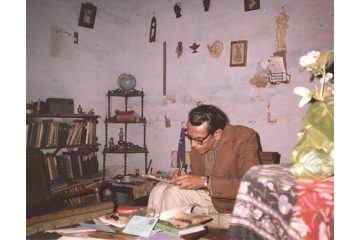 “Destitutes Compound,” a story by Naiyer Masud, is about a young man who leaves his home after an argument with his father. After his only friend dies, the man concludes that it is time for him to return to his family. As he makes preparations for his homecoming, he realises that the children he met when he first arrived at the compound now have greying hair. When he returns, he learns that both his parents have passed away, but an old, blind grandmother still sits in the house’s entrance cracking betel nuts, just as she had when he left. The image of the grandmother rhythmically cracking betel nuts has stayed with me for years. To me, she symbolises time itself, resting still, awaiting our return.
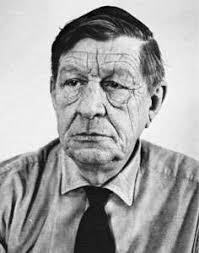 A second spur for Auden was his experience during the Spanish Civil War, where he witnessed the destruction of churches and the persecution and murder of the clergy. As Carpenter writes, “In all, several thousand clergy members of religious orders fell victim to Republican persecutors, and this was only a fraction of the total number of people murdered on the Republican side.” Auden was deeply disillusioned by what he found in Spain. He later said that he “could not escape acknowledging that, however I had consciously ignored and rejected the Church for sixteen years, the existence of churches and what went on in them had all the time been very important to me.”
 DEVARI, India — Somebody took a photograph on the side of a highway in India. On a clearing of baked earth, a lithe, athletic man holds his friend in his lap. A red bag and a half empty bottle of water are at his side. The first man is leaning over his friend like a canopy, his face is anxious and his eyes searching his friend’s face for signs of life. The man is small and wiry, in a light green T-shirt and a faded pair of jeans. He is sick, and seems barely conscious. His hair is soaked and sticking to his scalp, a sparse stubble lines the deathlike pallor of his face, his eyes are closed, and his darkened lips are half parted. The lid of the water bottle is open. His friend’s cupped hand is about to pour some water on his feverish, dehydrated lips.