Lauren Michele Jackson in The New Yorker:
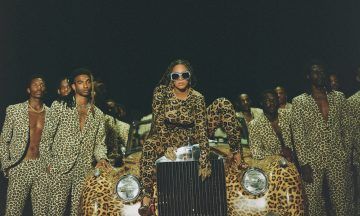 The story of Disney’s “The Lion King,” about a cub who avenges his uncle’s regicide, is said to have borrowed its bones from “Hamlet” (though Marlon James would say otherwise). “Black Is King,” the new “visual album” from Beyoncé Giselle Knowles-Carter, borrows its bones from “The Lion King,” and is comparably interested in rehearsing the drama of its source material—which is to say, not very interested at all. The project is a cinematic adaptation of “The Lion King: The Gift,” the Beyoncé-produced companion album to Disney’s 2019 remake of the film, in which she voiced the part of Nala and for which she created an original song. “Black Is King” follows a young child (Folajomi Akinmurele) whose wayward adventures and visions provoke the question of what kind of man he will become. Royal titles are treated, with urgency, as a means of affirming the innate worth of the human spirit, a message that the film aims especially at the many Black peoples who were long denied the status of human (and, depending on who is asked, still are). Anchored by the lyrical grandeur of its soundtrack, which includes the fourteen songs co-written and co-produced by Beyoncé for “The Gift” (“black parade,” a bonus single on the deluxe edition of the soundtrack, plays during the credits),“Black Is King” expertly slides between talk of bloodlines and molded thrones and more modest—but far from modest—footage of impeccably styled, beautiful Black people in motion.
…The album’s knowingly ethnic splendor is mesmerizing in its scope; it does not attempt to provide cultural lessons but, rather, invitations to awesome delights. Above all, “Black Is King” is a tribute to the manifold ways that a body can be displayed, from root to toe, dressed up and painted in white, gold, seafoam, lilac, electric green, and pink; in cowhide, denim and tulle, ink, acrylic, lace, leopard, and satin, and fringe; cowry shells and goddess braids; bejewelled everything; good shirts tucked into good chinos; pearl-drenched headdresses, harnesses, thick gold rings; gowns and bleached tips, evening gloves, track jackets, catsuits, tunics, chunky sneakers, mammoth gele; cornrows, ribbon-wrapped feet, cargo pants, and trapezoidal shades. Also, the manifold ways in which a body can move: legwork, footwork, shaku shaku, zanku, twerk, wine, gbese, thrust, grind, shake—the grounded, weight-changing style of choreography that Beyoncé has been fond of since working with the Mozambican trio Tofo Tofo on “Run the World (Girls),” which is prominently shown here in her duet with the Afrobeats artist and divine dancer Stephen Ojo, in “already,” performed with Shatta Wale and Major Lazer. Though Beyoncé, when she appears onscreen, is usually at its center, “Black Is King” also cedes the floor to such charismatic movers as the Afropop artist Yemi Alade, who is featured on “don’t jealous me” and “my power,” alongside the South African artists Moonchild Sanelly and Busiswa and also a supreme slate of professional dancers. There is, in our present moment, a palpable, and reasonable, fatigue when it comes to the superlative showiness of a certain class of celebrity. Some of this sticks to Beyoncé, in particular, given the outsized scale at which she has been working for a while now. But this production—or, rather, the dozens of credited designers, stylists, artists, tailors, architects, weavers, seamstresses, builders, braiders, jewellers, and dancers whose crafts are on display in it—marvels in a way that is difficult to scoff at, especially given that we aren’t likely to see such feats again soon.
More here.

 In Khalidi’s latest book, The Hundred Years’ War on Palestine, history proves once again to be the key to understanding the present. He builds on his previous work, interspersing personal and family stories with political ones and tracing the lineage of violence that has engulfed a land that has been known by many different names. In doing so, Khalidi identifies many of the actors who have been instrumental to the Palestinian cause, the revolutionaries, women, and young people who helped build the fabric of Palestinian life within the shadow of endless war, displacement, and occupation.
 My favorite versions of Dylan are the two I like to think of as Romantic Bob and Contemptuous Dylan. The former is the most lovable of love-song writers, the latter the cool guy who scorns his fans. They came together best in the classics of the 1970s that are now rather unfashionable among Dylan obsessives, especially Blood on the Tracks (1975) and its outtakes recently released as More Blood, More Tracks: Bootleg Series Vol. 14 (2018). “Any fool could find whatever he wanted inside the vast Dylan songbook: drugs, Jesus, Joan Baez,” David Kinney wrote in The Dylanologists. It’s impossible to disagree, but I’ve always foolishly enjoyed the search for the traces of “real” women in Dylan’s life. There are the wistful, bittersweet Suze Rotolo songs of the 1960s; the stories of his first marriage and divorce to Sara Dylan (who is the presumed inspiration of one of his greatest love songs, “Abandoned Love,” an outtake off Desire (1976)); the tortured ballads of the 1990s (which of them are odes to Mavis Staples?); and the special sentimentality seemingly reserved for Baez: “We could sing together in our sleep,” Dylan says of her in Scorsese’s Rolling Thunder Revue (2019). She seemed to remember things a little differently in “Diamonds and Rust” (1975): “My poetry was lousy, you said.“ A man I once loved used to tease me for my clichéd preoccupations with Dylan’s most mawkish of songs about bad love, “Idiot Wind,” but its portrayal of cruelty and masochism is also Dylan at his most usable for feminists.
 K
K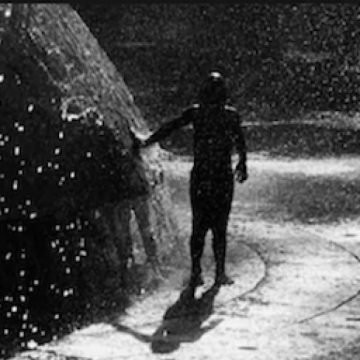 The memoirs of Black revolutionaries have been, almost by definition, exceptional in their narratives, exemplary in their aspirations, and dispirited in their conclusions. Traditionally, the disappointment of unfinished and unrealized ambitions is mitigated by a rhetorical appeal to continued struggle and hope for a future Black liberation that the memoirists themselves will not live to see. They look to the future to say: One day. In time we will find our way to freedom, equality, self-loving, and self-respecting — to fully enjoying whatever the best of the human condition ought to entail. But what if the condition of being human is so thoroughly racialized that even appealing to it only further distances them from the possibility of its realization? What if, moreover, the destruction of Black people is not a contingent difficulty that can be corrected, but a necessary fate because the very category of “the human” is premised on their negation? As Frank Wilderson puts it, what if “Human life is dependent on Black death for its existence and for its conceptual coherence”?
 We are living, in case you haven’t noticed, in a world full of bullshit. It’s hard to say whether the amount is truly increasing, but it seems that everywhere you look someone is trying to convince you of something, regardless of whether that something is actually true. Where is this bullshit coming from, how is it disseminated, and what can we do about it? Carl Bergstrom studies information in the context of biology, which has led him to investigate the flow of information and disinformation in social networks, especially the use of data in misleading ways. In the time of Covid-19 he has become on of the best Twitter feeds for reliable information, and we discuss how the pandemic has been a bounteous new source of bullshit.
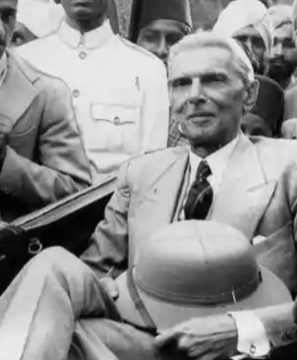 The peculiarity of hindsight is that it depends on the point from which you look back at Pakistan’s and India’s trajectories. In the early 1970s and till the late 1990s, as Pakistan itself broke up into two and generals and mullahs controlled its politics, India could afford to be smug. In 1992, the destruction of the Babri Masjid changed that, and the consequences of India’s 2014 election are there for us to see. Some Pakistanis may feel triumphant, but the virtue of Pakistani lawyer Yasser Latif Hamdani’s new biography, Jinnah: A Life, is that it takes a sober tone.
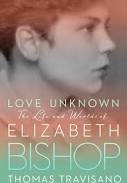 Bishop published only about a hundred poems during her lifetime, but won the most prestigious prizes for American literature: the Pulitzer in 1956 and the National Book Award in 1970. Brilliant, quirky critic Randall Jarrell described her poems as “honest, modest, minutely observant, masterly. . . . The poems are like Vuillard or even, sometimes, Vermeer.” Bishop was overwhelmed: “It has always been one of my dreams that someday someone would think of Vermeer, without my saying it first”—adding cheerfully, “So now I think I can die in a fairly peaceful frame of mind any old time.” Her life was tumultuous and tragic, but also filled with love and lust. Bishop’s father died when she was only a few months old, a loss her mother, mentally unstable Gertrude Bulmer, never overcame. Her loving, but simple, maternal grandparents raised Bishop in Great Village, a hamlet in Nova Scotia, Canada, during her infancy, while Bulmer was locked up in an insane asylum for long periods. When Bishop was five years old, Bulmer was put away forever, mostly in solitary confinement. She would never see her mother again. Soon after, suddenly, her father’s parents took her to Worcester, Massachusetts, and Bishop ended up in a world that was less austere, but much colder and more distant. Lonely and alone, she was plagued by terrible asthma and eczema; Travisano convincingly argues that these had psychosomatic origins.
 In making these claims about academic writing, I am thinking in the first instance of my own corner of academia—philosophy—though I suspect that my points generalize, at least over the academic humanities. To offer up one anecdote: in spring 2019 I was teaching Joyce’s Portrait of the Artist as a Young Man; since I don’t usually teach literature, I thought I should check out recent secondary literature on Joyce. What I found was abstruse and hypercomplex, laden with terminology and indirect. I didn’t feel I was learning anything I could use to make the meaning of the novel more accessible to myself or to my students. I am willing to take some of the blame here: I am sure I could have gotten something out of those pieces if I had been willing to put more effort into reading them. Still, I do not lack the intellectual competence required to understand analyses of Joyce; I feel all of those writers could have done more to write for me.
 Back in the ’30s — the 1130s — the Welsh cleric Geoffrey of Monmouth created the impression that Stonehenge was built as a memorial to a bunch of British nobles slain by the Saxons. In his “
 Over the past two years a striking change has taken place in the boardrooms of greenhouse-gas producers: a growing number of large companies have announced commitments to achieve “net zero” emissions by 2050. These include the oil majors BP, Shell, and Total, the mining giant Rio Tinto, and the electricity supplier Southern Company. While such commitments are often described as “voluntary”—not mandated by government regulation—they were often adopted begrudgingly by executives and boards acquiescing to demands made by a coordinated group of their largest shareholders.
 At the heart of every white dwarf star—the dense stellar object that remains after a star has burned away its fuel reserve of gases as it nears the end of its life cycle—lies a quantum conundrum: as white dwarfs add mass, they shrink in size, until they become so small and tightly compacted that they cannot sustain themselves, collapsing into a neutron star.
 Am I being reductive? All of narrative fiction, I’ve suggested, can be sorted into four grand categories. Each presents a rich world of feeling in which any number of stories can be told and positions established, but always in relation to, or rather, driven by, a distinct cluster of values and consequent emotions. My claim is that it really is worth being aware which of these worlds we are being drawn into. We read better. We know where we are. And what the dangers are.
 As we head into a tumultuous US election season, it is worth remembering that political parties can get trapped in partisan frameworks that cater to the loudest sections of their base, but which prevent them from appealing to a wider range of voters. Ideological litmus tests not only narrow appeal, but they cause politicians to pander, to disregard evidence, and to reject compromise in favor of rhetorical stridency. Social conservatives’ endlessly sputtering crusade over pornography is unusual in that it brings them into alliance with many radical feminists on the Left. Nevertheless, of the two main parties, it is the moral majoritarians in the Republican Party who have most frequently attempted to generate political capital by inveighing against pornography. This movement’s foundational moment was President Reagan’s Meese commission established to investigate the potential harms caused by pornography. The Meese Report, however, badly over-reached—even those who worry about the effects of pornography acknowledge it made