
Enjoying the content on 3QD? Help keep us going by donating now.
Category: Recommended Reading
Thursday Poem
The Nights You Fight Best
are
when all the weapons are pointed
at you,
when all the voices
hurl their insults
while the dream is being
strangled.
The nights you fight best
are
when reason gets
kicked in the
gut,
when the chariots of
gloom
encircle
you.
The nights you fight best
are
when the laughter of fools
fills the
air,
when the kiss of death is
mistaken for
love.
The nights you fight best
are
when the game is
fixed,
when the crowd screams
for your
blood.
The nights you fight best
are
on a night like
this
as you chase a thousand
dark rats from
your brain,
as you rise up against the
impossible,
as you become a brother
to the tender sister
of joy and
move on
regardless.
by Charles Bukowski
from Poetic Outlaws
Enjoying the content on 3QD? Help keep us going by donating now.
How Quantum Computing Works
Enjoying the content on 3QD? Help keep us going by donating now.
Wednesday, October 15, 2025
Seamus Heaney’s collected works reveal his colossal achievement
Philip Terry in The Guardian:
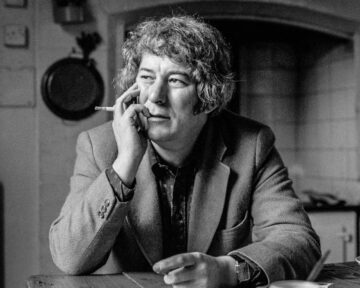 Bringing all Heaney’s poems together in one volume, this collection lets us see for the first time all the archaeological layers that make up his oeuvre, from the talismanic Death of a Naturalist (1966) to the visionary long poem Station Island (1984), on to the parables of The Haw Lantern (1987) and the intimacies of The Human Chain (2010), the last volume published during the poet’s lifetime. A key poem in that collection, Chanson d’Aventure, describes his journey to hospital in an ambulance following a stroke: “Strapped on, wheeled out, forklifted, locked / In position for the drive”. The book also makes available at last Heaney’s prose poems, Stations (1975), released in a small press edition by Ulsterman Publications, which Heaney effectively kept under wraps as he felt the publication of Geoffrey Hill’s Mercian Hymns – “a work of complete authority” – had stolen his thunder in this form.
The editors have taken the admirable decision to leave the published volumes intact, so that their careful ordering, something Heaney learned from Yeats, remains in place. Between each volume they insert all the contemporaneous poems that Heaney published in magazines and in pamphlets, as well as a selection of previously unpublished manuscript poems.
More here.
Enjoying the content on 3QD? Help keep us going by donating now.
“Technological Optimism and Appropriate Fear”, a talk by Anthropic cofounder Jack Clark
Jack Clark at Import AI:
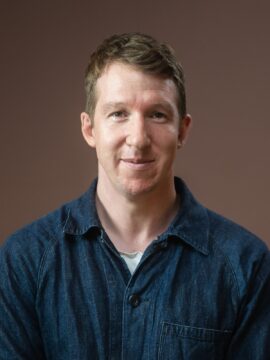 I remember being a child and after the lights turned out I would look around my bedroom and I would see shapes in the darkness and I would become afraid – afraid these shapes were creatures I did not understand that wanted to do me harm. And so I’d turn my light on. And when I turned the light on I would be relieved because the creatures turned out to be a pile of clothes on a chair, or a bookshelf, or a lampshade.
Now, in the year of 2025, we are the child from that story and the room is our planet. But when we turn the light on we find ourselves gazing upon true creatures, in the form of the powerful and somewhat unpredictable AI systems of today and those that are to come. And there are many people who desperately want to believe that these creatures are nothing but a pile of clothes on a chair, or a bookshelf, or a lampshade. And they want to get us to turn the light off and go back to sleep.
In fact, some people are even spending tremendous amounts of money to convince you of this – that’s not an artificial intelligence about to go into a hard takeoff, it’s just a tool that will be put to work in our economy. It’s just a machine, and machines are things we master.
But make no mistake: what we are dealing with is a real and mysterious creature, not a simple and predictable machine.
More here.
Enjoying the content on 3QD? Help keep us going by donating now.
A Once-in-a-Century Proof: The Kakeya Conjecture
Enjoying the content on 3QD? Help keep us going by donating now.
Pranab Bardhan talks to Katharina Pistor about her new book, “The Law of Capitalism and How to Transform It”
They discuss her book at Pranab Bardhan’s Substack:
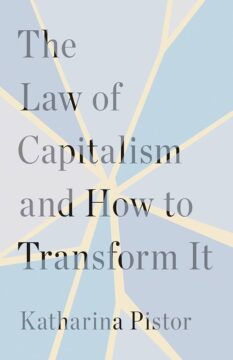 Book Abstract: Capitalism seems unstoppable. Laws and regulations that are meant to contain its excesses can slow its expansion but are unable to contain it. How is it that a system that relies extensively on the law to code assets as capital is so resistant to legal constraints is the big question this book addresses. The answer lies in the fact that capitalist law is Janus-faced: Its private law side empowers non-state actors to use law as a tool to build private wealth and power over others; the public law side seeks to rein in some actions, but it also protects private actors against state interference through constitutional constraints on state power. This is how private actors rule over others with impunity, shift the risk of their actions on society at large and the environment. I conclude that private law needs a reset to ground it in principles of mutual respect and support among private actors rather than exploitation and power.
More here.
Enjoying the content on 3QD? Help keep us going by donating now.
The puzzle of the ‘idiot savant’
Violeta Ruiz in aeon:
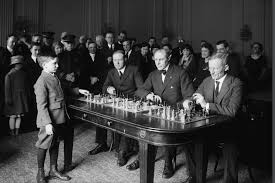 On 25 November 1915, the American newspaper The Review published the extraordinary case of an 11-year-old boy with prodigious mathematical abilities. Perched on a hill close to a set of railroad tracks, he could memorise all the numbers of the train carriages that sped by at 30 mph, add them up, and provide the correct total sum. What was remarkable about the case was not just his ability to calculate large numbers (and read them on a moving vehicle), but the fact that he could barely eat unassisted or recognise the faces of people he met. The juxtaposition between his supposed arrested development and his numerical facility made his mathematical feats even more impressive. ‘How can you account for it?’ asked the article’s author. The answer took the form of a medical label: the boy was what 19th-century medicine termed an ‘idiot savant’. He possessed an exceptional talent, despite a profound impairment of the mental faculties that affected both his motor and social skills.
More here.
Enjoying the content on 3QD? Help keep us going by donating now.
The quest to make babies with lab-grown eggs and sperm
Heidi Ledford in Nature:
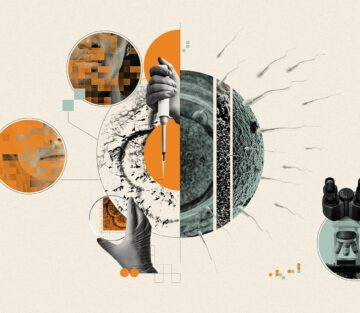 Off a quiet hallway on the top floor of a building at the University of Osaka in Japan, Katsuhiko Hayashi is hatching a revolution. He is on a decades-long quest to grow eggs and sperm in the laboratory. Hayashi wants to understand the fundamental biology of these reproductive cells. But, if he succeeds, it could forever alter how humans reproduce. Even for a scientist known for extreme doggedness, it has been a tortuous road. It has taken Hayashi to some strange places: his lab grows fragments of faux ovaries and testes in dishes and has produced mice with two fathers and no mother1. Every paper he publishes brings e-mails from people clamouring for help with their fertility. “I tell them, ‘This is still experimental’,” Hayashi says. “But sometimes, I can’t respond. There are too many.”
The work that Hayashi and others in the field are doing could offer fresh hope to people struggling with infertility, and to same-sex couples who want children who are genetically related to both partners. But despite the dazzling results researchers have achieved in rodents, that future remains distant. “The technology is super cool,” says Christian Kramme, chief scientific officer at Gameto, a fertility-focused biotechnology company in Austin, Texas. “But fundamentally, I don’t believe there is a single person in the world that should attempt to enact this clinically in the next decade.”
More here.
Enjoying the content on 3QD? Help keep us going by donating now.
Wednesday Poem
The Daily Fire
As the air
…………….. constructs and destroys
invisible buildings
on the pages of geology,
on the planetary mesas:
………………………………… man.
His language is barely a seed,
yet it burns
………………. in the palm of space.
Syllables are incandescent,
and they are plants:
……………………………. their roots
fracture silence,
……………………… their branches
build houses of sound.
……………………,…………. Syllables:
they twine and untwine,
………………………………….. play
at likeness and unlikeness.
Syllables:
……………. they ripen in the mind,
flower in the mouth.
…………………………… Their roots
drink night, eat light.
……………………………. Languages:
trees incandescent
with leaves of rain.
Lightning vegetation,
geometries of echoes:
on a sheet of paper
the poem builds itself
…………………………….. as the day
on the palm of space.
by Octavio Paz
from The Collected Poems 1957-1987
Carcanet, 1987
Enjoying the content on 3QD? Help keep us going by donating now.
Tuesday, October 14, 2025
11,000 Strings: 50 Pianos Tuned to Slightly Different Frequencies Play Together
Ella Feldman in Smithsonian Magazine:
 On a visit to the Hailun piano factory in China, Peter Paul Kainrath observed a room full of 100 pianos being played simultaneously by machines for quality control before being shipped off.
“Of course, there’s no music behind it,” Kainrath, who leads the contemporary orchestra Klangforum Wien, tells the New York Times’ Joshua Barone. “It was this pure, massive sound.”
The cacophonic scene left Kainrath so inspired that he called Austrian composer Georg Friedrich Haas to discuss its potential, per the New York Times. The next morning, Haas told Kainrath that if he brought him 50 pianos, he would compose a piece.
The resulting composition is Haas’ 11,000 Strings, which runs at New York’s Park Avenue Armory through Oct. 7. The piece features 50 pianists playing 50 Hailun pianos, which are all tuned to strike a slightly different frequency. In conjunction with a 25-person chamber ensemble, the musicians envelop their audience in a “sonic forest,” as New York Magazine’s Justin Davidson writes.
That enveloping effect is by design.
More here. [A friend wrote this on Facebook about the experience of hearing this piece: “Last night, at the Park Avenue Armory I experienced the most exhilarating, awe-inspiring, piece of music I have ever heard in my life.” This friend is not given to exaggeration.]
Enjoying the content on 3QD? Help keep us going by donating now.
Coral die-off marks Earth’s first climate ‘tipping point’, scientists say
Jeff Tollefson in Nature:
 Surging temperatures worldwide have pushed coral reef ecosystems into a state of widespread decline, marking the first time the planet has reached a climate ‘tipping point’, researchers announced today.
They also say that without rapid action to curb greenhouse-gas emissions, other systems on Earth will also soon reach planetary tipping points, thresholds for profound changes that cannot be rolled back.
“We can no longer talk about tipping points as a future risk,” says Steve Smith, a social scientist at the University of Exeter, UK, and a lead author on a report released today about how close Earth is to reaching roughly 20 planetary tipping points. “This is our new reality.”
More here.
Enjoying the content on 3QD? Help keep us going by donating now.
Judy Wu: How benzene changed chemistry forever
Enjoying the content on 3QD? Help keep us going by donating now.
A Nobel for thinking about long-term growth
Noah Smith at Noahpinion:
 Well, it’s time for my annual Economics Nobel post! If you like, you can also check out my posts for 2024, 2023, 2022, and 2021.
Other than the tired old question of whether the Econ Nobel is a “real” Nobel prize,1 there are basically three things to talk about in these posts:
- The research that got the prize
- What the prize says about the economics profession
- What the prize says about politics and policy in the wider world
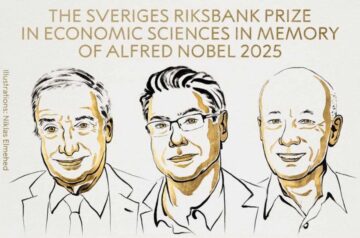
So first let’s briefly talk about the research. This year’s prize went to Joel Mokyr, for writing about culture and growth, and Philippe Aghion and Peter Howitt, for making models of technological innovation.
More here.
Enjoying the content on 3QD? Help keep us going by donating now.
Tuesday Poem
Seeking Sleep
Hey — they turned the moon off!
……. gone by my window
………… once too often
I stick my arm out
and get a glassful of dark air.
O to pour
……. the night over my head!
O for a taste
……. of nothing!
……. Everything I’ve lost —
years gone into the past’s
shoes.
Now for the other life!
…………………….. the one
without mistakes.
I finally dream of you.
I’m like a mountain goat
searching for your window
as my crazy hooves
clack along the deserted
streets of town.
by Lou Lipsitz
from Seeking the Hook
Signal Books, 1997
Enjoying the content on 3QD? Help keep us going by donating now.
Water and Carbon Capture for Climate Resilience
Omar Yaghi, a Jordanian-American chemist at the University of California, Berkeley, was awarded the 2025 Nobel Prize in Chemistry today, sharing it with Richard Robson of the University of Melbourne, Australia, and Susumu Kitagawa of Kyoto University, Japan. The scientists were cited for creating “molecular constructions with large spaces through which gases and other chemicals can flow. These constructions, metal-organic frameworks, can be used to harvest water from desert air, capture carbon dioxide, store toxic gases or catalyze chemical reactions.”
More here.
The World’s First Climate Tipping Point Has Been Crossed, Scientists Say
Simmone Shah in Time Magazine:
 The exact moment when Earth will reach its tipping points—moments at which human-induced climate change will trigger irreversible planetary changes—has long been a source of debate for scientists. But they might be closer than we think. A report published today says that the Earth has passed its first climate tipping point. The second “Global Tipping Points” report published by the University of Exeter found that warm-water coral reefs are passing their tipping point. Rising ocean temperatures, acidification, overfishing, and pollution are combining to cause coral bleaching and mortality, meaning that a large number of coral reefs will be lost unless the global temperature returns towards 1°C warming or below.
“We’re in a new climate reality,” said Tim Lenton, founding director at the Global Systems Institute at the University of Exeter, who led the report. “We’ve crossed a tipping point in the climate system, and we’re now sure we’re going to carry on through 1.5°C of global warming above the prior industrial level, and that’s going to put us in the danger zone for crossing more climate tipping points.” The planet is predicted to cross the 1.5°C threshold within the next 5 years, according to a report from the World Meteorological Organization. Once that threshold is reached, the planet will see more frequent and intense extreme weather and strains on food production and water access—impacts many nations vulnerable to climate change are already seeing.
More here.
Enjoying the content on 3QD? Help keep us going by donating now.
Monday, October 13, 2025
The NY Times: We Asked 50 Legal Experts About the Trump Presidency
Emily Bazelon in the New York Times:
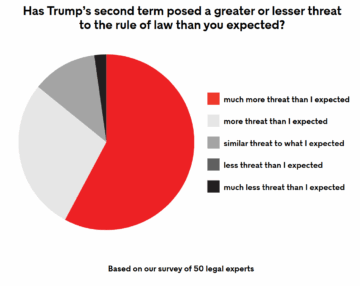 Last year, in the months before the 2024 presidential election, the magazine surveyed 50 members of what might be called the Washington legal establishment about their expectations for the Justice Department and the rule of law if Donald Trump were re-elected. The group was evenly split between Democrats and Republicans. They had worked as high-level officials for every president since Ronald Reagan.
A majority of our respondents told us they were alarmed about a potential second Trump term given the strain he put on the legal system the first time around. But several dissenters countered that those fears were overblown. One former Trump official predicted that the Justice Department would be led by lawyers like those in the first term — elite, conservative and independent. “It’s hard to be a bad-faith actor at the Justice Department,” he said at the time. “And the president likes the Ivy League and Supreme Court clerkships on résumés.”
Eight months into his second term, Trump has taken a wrecking ball to those beliefs. “What’s happening is anathema to everything we’ve ever stood for in the Department of Justice,” said another former official who served in both Democratic and Republican administrations, including Trump’s first term.
We recently returned to our group with a new survey and follow-up interviews about Trump’s impact on the rule of law since retaking office. The responses captured almost universal fear and anguish over the transformation of the Justice Department into a tool of the White House.
More here.
Enjoying the content on 3QD? Help keep us going by donating now.
A Look into the Iberian Blackout
Deric Tilson at The Ecomodernist:
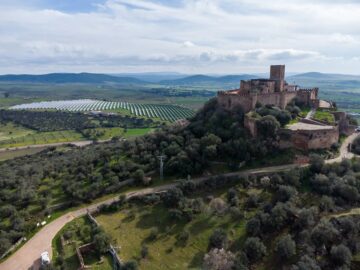 On April 28, 2025, at 12:33:24 CET, a blackout encompassed Spain, Portugal, and parts of southwest France, leaving over 50 million people without power. The loss of electricity cost Spain an estimated $1.82 billion in economic output and damages. When the Iberian grid collapsed, people who were going about their day moments before were now stuck in elevators, food in freezers and refrigerators began to thaw or spoil, and non-urgent medical needs were delayed as hospitals dealt with scarce backup power supplies.
Quickly, pundits, experts, and posters on social media descended on the details of the blackout, grabbing what information they could, and spewing hot takes: “Solar is to blame.” “Why did the nuclear power plants go offline?” “Green energies and renewables did this.” “Aha, nuclear plants were in planned outage.” Schadenfreude abounds when systems begin to break, especially when aspects of those systems are politically charged.
Fifteen hours later, the transmission grids of Spain and Portugal were restored to full operation. Electrons once again flowed to people’s homes, charging their phones, illuminating their rooms, cooling their food, and providing them with modern comforts. The question of how the blackout happened remained.
More here.
Enjoying the content on 3QD? Help keep us going by donating now.
Social engineering, malware, and the future of cybersecurity in AI
Enjoying the content on 3QD? Help keep us going by donating now.