
Linda Feldmann in The Christian Science Monitor:
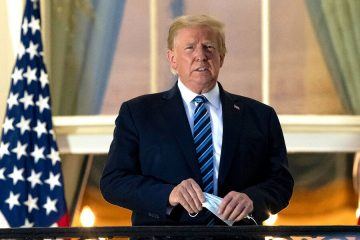 The election is 25 days away, and President Donald Trump’s political prognosis is not good. He’s losing altitude in major national polls – and more crucially, is sinking in key battleground states that will decide the winner in the Electoral College. It would be a tough time for any incumbent running for reelection. But for President Trump, whose brand is all about winning, the pressure seems especially intense. Mr. Trump says he’s eager to return to the campaign trail, following his COVID-19 diagnosis Oct. 1. On Friday, he called in to the Rush Limbaugh radio show for a two-hour “virtual MAGA rally,” and was scheduled to do an on-camera interview with a physician on Fox News’ “Tucker Carlson Tonight.” On Saturday, he plans to host hundreds of people on the White House lawn, addressing a group of “peaceful protesters for law and order” from the balcony, according to multiple media outlets. Monday, he is scheduled to travel to Florida for a campaign rally.
White House physician Sean Conley announced Thursday that Mr. Trump had completed his therapy and should be able to safely “return to public engagements” on Saturday. Medical experts who have not been treating the president question whether clearing him for public events this soon is wise. The president’s spokespeople still won’t say when he last tested negative for the virus. The political universe is not taking the news frenzy quietly.
“The past week was bizarre, berserk, almost biblical,” writes former Reagan speechwriter Peggy Noonan in a Wall Street Journal column. The most delicate question is whether Mr. Trump’s medical treatment – some of it experimental – has affected him in ways beyond his physical condition. His abrupt announcement Monday that he was calling off talks with congressional Democrats over a new stimulus package until after Election Day raised eyebrows among members of his own party, even as Republicans blamed Democrats for holding up a deal. The president soon reversed himself, tweeting on Friday: “Covid Relief Negotiations are moving along. Go Big!” But the damage caused by Mr. Trump’s statement Monday seems to be lingering. Republican Sen. Ted Cruz of Texas warned on CNBC that the election “could be a bloodbath of Watergate proportions” for the GOP if things don’t turn around. Even Senate Majority Leader Mitch McConnell, a most loyal soldier for Mr. Trump on Capitol Hill, said pointedly that he has not been to the White House since Aug. 6, citing its lax approach to virus safety measures.
More here.
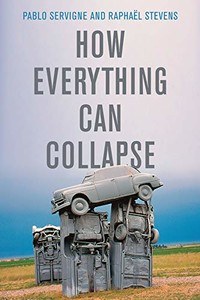 “UTOPIA HAS SUDDENLY changed camp,” write Pablo Servigne and Raphaël Stevens in How Everything Can Collapse: A Manual for Our Times, just out in an English translation by Andrew Brown. “Today, the utopian is whoever believes that everything can just keep going as before.” In 2015, when the book was first published in France, such a statement might have sounded alarmist. In 2020, Collapse feels positively prophetic. Things have not kept going as before, and it seems increasingly doubtful that they ever will again.
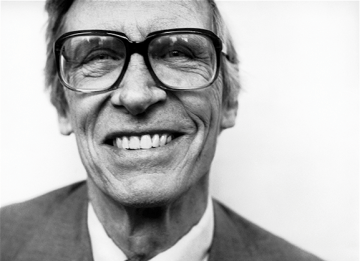 Imagine a human society not so very different from our own, on which a cataclysm is about to fall. Thousands, perhaps millions, of people will die. Many others will lead shorter and less happy lives; the financial and human costs will be felt for decades, if not forever. Looking in from the outside, and thinking in terms of big ideas such as equality, justice, fairness, human rights and the rule of law, what kind of society would you want to emerge from this catastrophe? What core principles should lie at its heart?
 In 1976, twenty-five-year-old Wendy Ewald rented a small house on Ingram Creek in a remote landscape in eastern Kentucky, hoping to make a photographic document of “the soul and rhythm of the place.” As she writes in an essay included in the expanded new edition of Portraits and Dreams: Photographs and Stories By Children of The Appalachians, originally published in 1985, her camera landed on the “commonplaces” of Letcher County. Set in the Cumberland Mountains at the edge of Kentucky and Virginia, Lechter Country is in the rural, rolling, rugged, coal-mining heart of the still sprawling and still vastly misunderstood and frequently mispronounced region known as Appalachia (the correct pronunciation is Appa-LATCH-uh). More than a decade before Ewald’s arrival, the publication of Night Comes to the Cumberlands: A Biography of a Depressed Area, by local lawyer and environmental crusader Harry Caudill, had helped spur John F. Kennedy and later Lyndon B. Johnson to declare war on poverty in Letcher County and regions like it. But Ewald did not intend to photograph “poverty,” or to photograph the place in the reductive way it had come to be depicted. She was interested in the way the people pictured themselves.
 Declan Walsh begins his captivating new book on Pakistan with an account of how he came to leave the country for the first time, abruptly and involuntarily in May 2013. “The angels came to spirit me away,” is the way he puts it, using the Urdu slang for the all-powerful men of the
 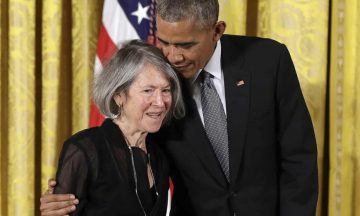 In Stanford in 2008, the Irish poet Eavan Boland told me how much she admired the work of
  Since Nature’s earliest issues, we have been publishing news, commentary and primary research on science and politics. But why does a journal of science need to cover politics? It’s an important question that readers often ask.
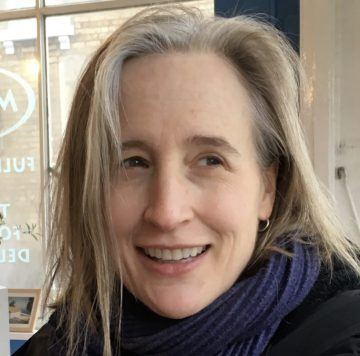 AC: I need to rephrase this question slightly in order to answer it. “Moral realism” is a label that I deliberately don’t use in describing my image of ethics. Not that, abstractly considered, the term is obviously ill-suited to capture things I believe. It is, for instance, a conviction of mine that that there are morally salient aspects of the world that as such lend themselves to empirical discovery. A case could easily be made for speaking of moral realism in this connection. But that would likely generate confusion. When I claim that, say, humans and animals have moral qualities that are as such observable, I work with an understanding of what the world is like, and of what is involved in knowing it, that is foreign to familiar discussions of moral realism. These discussions are often structured by the assumption that objectivity excludes anything that is only adequately conceivable in terms of reference to human subjectivity. Moral realism is frequently envisioned as an improbable position on which moral values are objective in this subjectivity-extruding sense while still somehow having a direct bearing on action and choice. Thus does the specter of Mackie’s “argument from queerness” still haunt the halls of moral philosophy.
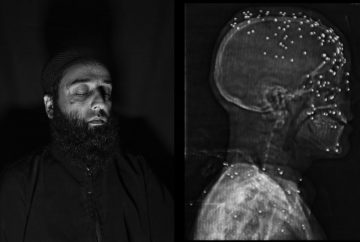 India first started using pellet-firing shotguns against Kashmiris in 2010 but the matter only hit international prominence in 2016 when protests following the death of Burhan Wani resulted in thousands of injuries, the blinding of hundreds and the deaths of over 70 people.
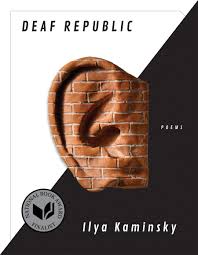 Twenty-five years after he and his parents fled Ukraine, Ilya Kaminsky went back to Odessa, the city of his childhood. As he explored the city, he did not feel that he had truly returned until he removed his hearing aids. He has written that, for him, Odessa is ‘a silent city, where the language is invisibly linked to my father’s lips moving as I watch his mouth repeat stories again and again. He turns away. The story stops.’
 There is a much darker side to his life, too. The relentless womanising, including with vulnerable people far, far younger than him; the children so numerous they were hard to keep track of; the brutal break-ups, vicious feuds and spasms of verbal cruelty that made Freud, for many people, an impossibly sulphurous figure, a coldly brilliant predator smoking with menace. Observing him at the Jewish wedding in London of the painter RB Kitaj, the poet Stephen Spender whispered to Feaver: “I can’t stand being in the same place with Lucian. He is an evil man.”
 Covid-19 has created a crisis throughout the world. This crisis has produced a test of leadership. With no good options to combat a novel pathogen, countries were forced to make hard choices about how to respond. Here in the United States, our leaders have failed that test. They have taken a crisis and turned it into a tragedy. The magnitude of this failure is astonishing.