
Michael Taussig at Cabinet Magazine:
 Drugs were doubtless important to Benjamin, who had first smoked hashish in Berlin in 1927. They confirmed his approach to reality and revolution, to art and politics—an approach shaped and sharpened by his experience of Ibiza. He stayed on the island two months, returning for another six in the summer of 1933. Wretchedly sad, he buried himself in his remote past, writing of his Berlin childhood. Yet he also wrote in lascivious detail of his surroundings, that other “remote past,” or so it seemed to him, this “outpost of Europe” apparently untouched by modernity. Here, he could face head-on his central idea that modernity atrophied the capacity to experience the world and tell stories. This is why the Ibizan poet Vicente Valero has titled his as-yet-untranslated book on Benjamin in Ibiza Experiencia y probreza (Experience and Poverty), after the title of a little-known essay Benjamin wrote under the spell of the island. In the hallucinatory splendor of Ibiza, with his future cast to the winds, Benjamin formulated what I would count as his major texts—on the storyteller and on the mimetic faculty—as well as inventing new forms for the essay as a crossover genre that linked dreams, ethnography, thought-figures, and storytelling.
more here.
 Though most people associate Nina Simone with the jazz clubs of New York and Paris, she grew up here, in rural Appalachia. Her home is only a few miles from my mother’s house, in an area that is more genteel and diverse than the rest of the region. In western North Carolina, where Nina Simone was raised, and where I still live, we don’t mine coal. We grow apples. While Appalachia technically stretches across
  SOMETIME AFTER MIDNIGHT ON JUNE 25, 1975,
  Cosmologists say that they have uncovered hints of an intriguing twisting in the way that ancient light moves across the Universe, which could offer clues about the nature of dark energy — the mysterious force that seems to be pushing the cosmos to expand ever-faster.
 Hungary and Poland have vetoed the European Union’s proposed €1.15 trillion ($1.4 trillion) seven-year budget and the €750 billion European recovery fund. Although the two countries are the budget’s biggest beneficiaries, their governments are adamantly opposed to the rule-of-law conditionality that the EU has adopted at the behest of the European Parliament. They know that they are violating the rule of law in egregious ways, and do not want to pay the consequences.
 There’s a passage in Roland Barthes by Roland Barthes in which the French theorist, eyeing his own author photo (turned head, silvered temples, faintly illuminated desk) exclaims: “But I never looked like that!” And yet, how can one know? You are, indeed, “the only one who can never see yourself except as an image” whether that be in the form of a reflection or a photograph. Moreover, one can argue that the author photo is a particularly deceptive sort of image, one that is meant to elicit disparate or even contradictory feelings in the viewer.
 If the Australian writer and critic Thelma Forshaw is remembered for anything today, it’s most likely the hatchet job that she gave Germaine Greer’s The Female Eunuch in 1972. Of the many reviews the book received, Forshaw’s—published in the Age, a newspaper based in Greer’s own hometown of Melbourne—was by far the most disdainful: “King Kong is back. The exploits of the outsized gorilla may have been banned as too scary for kids, but who’s to shield us cowering adults? To increase the terror, the creature now rampaging is a kind of female—a female eunuch. It’s Germ Greer, with a tiny male in her hairy paw (no depilatories) who has been storming round the world knocking over the Empire State Building, scrunching up Big Ben and is now bent on ripping the Sydney Harbour Bridge from its pylons and drinking up the Yarra.” Understandably, Forshaw’s slam piece caused quite a stir, and it was reprinted in a number of papers across the country, often alongside carefully chosen photographs of Greer looking suitably unkempt.
 Once upon a time, Albert Einstein described scientific theories as “free inventions of the human mind.” But in 1980, Stephen Hawking, the renowned Cambridge University cosmologist, had another thought. In a lecture that year, he argued that the so-called Theory of Everything might be achievable, but that the final touches on it were likely to be done by computers. “The end might not be in sight for theoretical physics,” he said. “But it might be in sight for theoretical physicists.” The Theory of Everything is still not in sight, but with computers taking over many of the chores in life — translating languages, recognizing faces, driving cars, recommending whom to date — it is not so crazy to imagine them taking over from the Hawkings and the Einsteins of the world.
 Conspiracy theories come in all shapes and sizes, but perhaps the most common form is the Global Cabal theory. A
 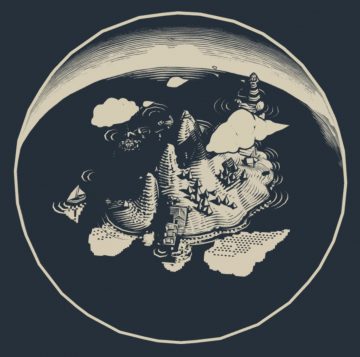 On a mild autumn day in 2016, the Hungarian mathematician
  Concern about American democracy is often expressed as a parable of the Thirties: We must prevent another Hitler. The word “fascism” has appeared frequently in denunciations of Donald Trump; many have accused him of a führer-like contempt for the American system. But it is time to ask whether the system itself is not thereby too conveniently excused. Mass political participation has come only recently and reluctantly to America; voter suppression is the more traditional American way. And for reasons that have nothing to do with fascism, even that partial efflorescence may be coming to an end. Trump’s baleful theatrics have distracted us, in fact, from the broader disintegration of the twentieth-century interregnum, of which he is only a symptom. That process has much further to go, and will produce dangers greater than he.
 Individual poems by Vilariño have occasionally appeared in anthologies of Latin American poetry in the United States, but not until now, more than a decade after her death and in the centennial year of her birth, has one of her books appeared in English translation. Unsurprisingly, it is her best-known work, Poemas de amor / Love Poems (University of Pittsburgh Press, 2020), in a translation by the poet Jesse Lee Kercheval. The literary scholar Emir Rodríguez Monegal, a Yale professor who wrote influential treatises on