
Category: Recommended Reading
Othella Dallas (1925 – 2020)
Camilla Wicks (1928 – 2020)
Saturday, December 12, 2020
The European Coup
 Perry Anderson in the LRB:
By repute, literature on the European Union and its prehistory is notoriously intractable: dull, technical, infested with jargon – matter for specialists, not general readers. From the beginning, however, beneath an unattractive surface it developed considerable intellectual energy, even ingenuity, as contrasting interpretations and standpoints confronted one another. But for some sixty years after the Schuman Plan was unveiled in 1950, there was a striking displacement in this body of writing. Virtually without exception, the most original and influential work was produced not by Europeans, but Americans. Whether the angle of attack was political science, economics, law, sociology, philosophy or history, the major contributions – Haas, Moravcsik, Schmitter, Eichengreen, Weiler, Fligstein, Siedentop, Gillingham – came from the United States, with a singleton from England before its accession to the Common Market, in the pioneering reconstruction of Alan Milward.
This has finally changed. In the last decade Europe has generated a set of thinkers about its integration who command the field, while the US, increasingly absorbed in itself, has largely vacated it. Among these, one stands out. By reason of both the reception and the quality of his work, the Dutch philosopher-historian Luuk van Middelaar can be termed, in Gramsci’s vocabulary, the first organic intellectual of the EU. Though related, applause and achievement are not the same. The Passage to Europe: How a Continent Became a Union, which catapulted van Middelaar to fame and the precincts of power, is a remarkable work. The tones in which it was received are of another order. ‘There are books,’ a Belgian reviewer declared, ‘before which a chronicler is reduced to a single form of commentary: an advertisement.’ The author himself has posted forty encomia on his website, in seven or eight languages, tributes ransacking the lexicon of admiration: ‘supremely erudite’, ‘brilliant’, ‘beautifully written’, ‘a gripping narrative of personalities and events that reads like a Bildungsroman’, ‘all the fields of human knowledge and culture are convoked in abounding richness’, ‘near Voltairean’, ‘a Treitschke with the tongue of Foucault’. Even the austere European Journal of International Law thought it ‘read like a thriller’.
More here.
Educated Fools
 Thomas Geoghegan in The New Republic:
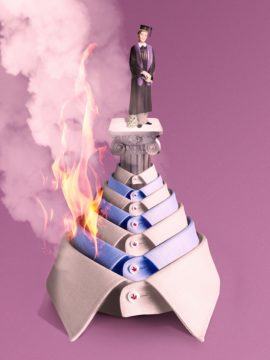
Here’s a little thought experiment: What would happen if, by a snap of the fingers, white racism in America were to disappear? It might be that the black and Latino working class would be voting for Trump, too. Then we Democrats would have no chance in 2020. We often tell ourselves: “Oh, we lost just the white working class because of race.” But the truth might be something closer to this: “It’s only because of race that we have any part of the working class turning out for us at all.”
How many of us in the party’s new postgraduate leadership caste have even a single friendship, a real one, of two equals, with any man or woman who is just a high school graduate? It’s hard to imagine any Democrat in either House or Senate who did not go beyond a high school diploma. (And no, I am not talking about Harvard dropouts Bill Gates and Mark Zuckerberg.)
Still, it’s unthinkable that the college-educated base of the party would trust a high school graduate without a four-year degree to run for or hold a serious office. We don’t trust them, and would never vote for one of them. Why should they trust or vote for one of us?
More here.
In Nyāya philosophy only some debates are worth having
 Malcolm Keating in Psyche:
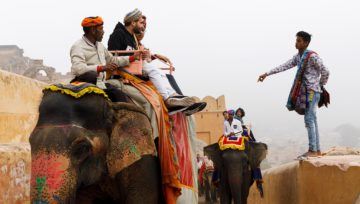
In premodern India, debates were entertainment in courtly settings, a sport for profiteers and clever men who enjoyed a quick turn of phrase or put-down. Successful debaters gained followers, fame, even wealth. Those pragmatic aims intertwined with nobler ones: religious believers and nonbelievers debated over deep religious truths. Both inside and outside religious traditions, participants sparred over controversies with significant social implications. Even the efficacy of medical cures was hard-fought in the debate arena.
During the 9th to 10th century CE, Vācaspati Miśra, an Indian philosopher who was part of a Hindu tradition called ‘Nyāya’ (or ‘reason’) argued that debate benefits society when it aims for truth. He thought, too, that debate helps us humans achieve ultimate happiness in our short, fragile and often painful human lives. But if debate has such noble aims, should we care about winning or losing? And if debate leads us to the truth, should we always debate everyone, everywhere? To understand Vācaspati’s answer, we must first understand the Nyāya philosophy of debate.
For Nyāya philosophers, we acquire ultimate happiness by ending the self’s painful cycle of rebirth, its journey from life to life, always bound to our past actions. Before we can end this cycle, we must rid ourselves of ethical vices. And this requires knowing the truth.
More here.
The Future of New York
A conversation between Molly Crabapple, Deborah Eisenberg, Michael Greenberg, Hari Kunzru, and Jana Prikryl:
Divided Over the Extraction Economy: An Conversation with Thea Riofrancos
Jess Bergman, David Rieff, & Ethan Taubes discuss “Divorcing,” by Susan Taubes
Gerhard Richter’s Birkenau Paintings
Robert Rubsam at Commonweal:
 In the summer of 1944, a camera was smuggled out of Auschwitz. Inside it was a roll of film with four images from the gas chambers at Birkenau, taken by members of the Jewish Sonderkommando. These photos were distributed worldwide by the Polish resistance. Two of them appear to have been taken in quick succession, discreetly, from within a shadowed doorframe. The other pair, one of which is blurred, appear to have been shot at the hip from a distance. The photos show Jewish women stripping before the gas chamber, and dead bodies waiting to be incinerated. White smoke billows as other bodies burn.
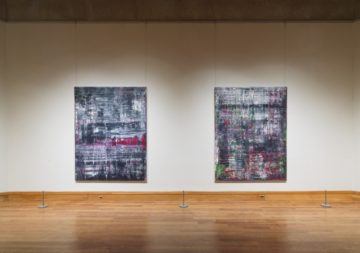
In 2014, the German painter Gerhard Richter sought to make a statement on the Holocaust. He copied these stark black-and-white images onto four monumental canvases, first in pencil, then in oil. And then he began to cover them.
more here.
A Skeptical Heroine
John Williams at the New York Times:
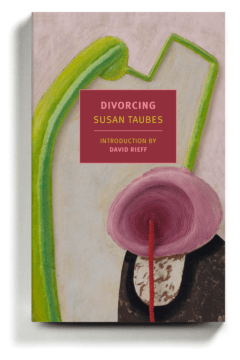 Because there are many things to say about Susan Taubes’s remarkable 1969 novel “Divorcing,” and many of those things concern the grim side of both real life and life in the book, I’d like to start by saying that it’s funny. It’s not a comic novel, by any stretch, but neglecting to mention its humor would shortchange it and deform one’s initial idea of it.
Much of this humor comes at the expense of psychoanalysis. It’s possible there is more talk of analysis in “Divorcing” than in the entire filmography of Woody Allen. “Before you do anything,” one doctor in it says, “you need at least seven years of analysis. Minimum five; absolute minimum.”
more here.
The primal thrill of striking a match: Kindling hope in the gloom of winter
Ann Wroe in MIL:
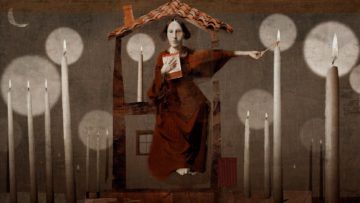 The day has been grey, dreary and drizzly, and evening is settling in – a typical covid evening, alone in my flat, with another radio concert playing from an empty hall. It seems a good moment for candles. Which means, even better, it’s time for matches. There’s no shortage of choice in the top kitchen drawer. Cook’s Matches, a hefty box with an efficient look. An equally big box of extra-long matches, to reach the oven pilot light if it blows out or to kindle anything successfully in the draughts that come through my windows. A little two-inch yellow box of Ship matches with a healthy rattle to it. Elegant, slim numbers from fancy restaurants and a few of the flimsy packs you can pick up in cafés like business cards.
From this hoard anyone would think I was a smoker or at least had a fireplace to attend to. Not so. A button sparks the ignition for the gas. The restaurant matches are never used, nor are the flimsy ones, but – like the wire ties and short lengths of string with which they keep company – they have a useful air about them. The little Ship box is there for purely sentimental reasons, because as a child I found no better container for tiny treasures such as shells and beads. The very slide of the tray into the cover is satisfaction in itself. Those matches are now old and probably have no virtue left – not that it matters. They represent childhood in suspension. Potential delight.
Matches themselves, too, are all about potential. Even when dormant, they sizzle with the thought of fire. It is all there, safe and portable, a dream that the Chinese inevitably engineered first when they soaked pine splinters in sulphur a whole millennium ago.
More here.
Saturday Poem
The Car That Brought You Here Still Runs
—for Dick
It takes more than gasoline and gumption
to get you to Zortman—more
than whimsy or a wild inkling
to rekindle history. It takes a primal prairie
need, a kinship with Old Man Winter, with Napi
hunkering in sunless gulches, a longing
for short Fourth of July parades, the bestkept-
secret-café with a waitress
who commutes 50 miles from Malta—
big city with its 5 p.m. rush
minute, she quips. Pavement—purt-near
all the way to the corrugated last
half mile into work—
through herd after mule deer herd,
excites her. What can anyone say in words
that Charles M. Russell has not
narrated in paint. Little Rockies, Larb Hills,
predator versus prey versus wind
still give this Indian-cowboy
landscape its animation.
Your eggs
jiggling over-easy, hashbrowns crisp,
roughcut slabs of real ham,
one pancake seat-cushioned over its own plate
(whole wheat toast sold out last month
to hot-shot fire crews), are all grilled
just right. The coffee, vintage-grind,
is brewed with water so mineralthick,
it’s panned first,
then filtered. Same goes for the décor—
local art collaged with faded Russell prints
above faux-brick wainscoting.
Read more »
Friday, December 11, 2020
By Their Epithets Shall Ye Know Them
Michael Maar in the New Left Review:

There is an ancient piece of classroom wisdom that is not entirely misguided when it states: steer clear of adjectives! Editors are unlikely to grumble about a missing adjective, but they will use up their pencils crossing out superfluous ones. When in doubt, leave it out. The critic Wolf Schneider provides an excellent illustration: ‘If the author of The Linden Tree had written’—instead of ‘By the well, before the gate, stands a linden tree’—‘“By the tumbled-down well, in front of the dilapidated, vine-clad gate, stands a gnarled old linden tree”, his poem would not have been set to music by Schubert.’ Quite so. Once the right verb and the right noun have been found, the writer has a full load and can set out for home (or embark on a Winterreise). That is the approach of the adjective sceptic. In the words of the poet-diplomat Paul Claudel, la crainte de l’adjectif est le commencement du style—fear of the adjective is the beginning of style.
Hemingway was the most effective propagator of this stylistic purism. As a journalist, he knew the value of concise speech. Every word counted, as each one had to be paid for when telegraphed to the news desk. Every decorative, non-informative adjective should be axed. The revolution detonated by the application of this approach to the novel can scarcely be exaggerated. All authors, especially the Anglo-Americans—Fitzgerald, Cheever, Carver, Ford—are indebted to this legacy, whether they like it or not. The only writers who have sought to distance themselves from it are the conscious champions of the adjective—Nabokov, Updike and their disciple, Nicholson Baker.
More here.
Science is an institutionalized set of knowledge practices, not a philosophical system
Andrew Jewett in the Chronicle of Higher Education:
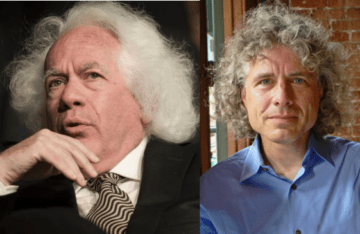 Back in 2013, another in a long line of tussles over scientism broke out. Leon Wieseltier, literary editor of The New Republic, told humanities majors at a Brandeis University graduation ceremony that they represented “the resistance” in a society dominated by “the twin imperialisms of science and technology.” Wieseltier sounded all the familiar themes — the enslavement of human beings to machines, the tyranny of numbers, the depredations of “technologism,” the unchallenged dominance of “utility, speed, efficiency, and convenience” in modern culture. The antidote, he claimed, was the humanities.
The evolutionary psychologist Steven Pinker fired back. Petulant humanists, he charged, welcomed science when it cured disease but not when it impinged on their professional fiefdom. The march of science and the Enlightenment had vastly improved the human condition. Only science, Pinker insisted, could address “the deepest questions about who we are, where we came from, and how we define the meaning and purpose of our lives.” Humanities scholars would remain irrelevant until they embraced the scientifically informed humanitarianism that constituted the “de facto morality” of the modern world. The ensuing controversy stretched through that summer and fall.
More here.
Sean Carroll’s “Biggest Ideas in the Universe”: 4. Space
America’s place in the world: Are we dispensable?
Nadav Samin in The Hedgehog Review:
 When I was a graduate student in international relations in the early 2000s, my teachers would frequently invoke the famous, though possibly apocryphal, response of the late Chinese foreign minister Zhou Enlai to the question of whether the French Revolution had been a success: “It’s too soon to tell.” Contemplating the same arc of history that forms the subtext of Zhou’s reply, we might see the United States today bending gingerly away from populist indignation and toward a potentially gentler interval of governance. Though the nation’s attention is rightly focused on domestic matters, above all on contending with a devasting pandemic, changes at the helm mean that it is open season for grand visioning from the heights, particularly as concerns America’s place in the world. Are we dispensable? Indispensable? Exceptional? Banal? Imperialist? Heroic? Or simply unsound?
My grandfather, a citrus farmer in Israel, was skilled at hybridizing citrus trees, splicing branches from one orange tree onto a larger trunk and grafting them to grow as one. That process might also describe the shaping of an emergent American foreign policy, one that joins conservative nationalist principles with liberal internationalist ones. If this smells of nostalgia for a bygone foreign policy consensus, then that fruit is past ripe, because the state of America’s politics today permits no retreads. Rather, I hope that by fusing together some of the sentiments that seem to animate liberal and conservative opinion, including the former’s optimism about human nature and the latter’s emphasis on American sovereignty, we may be able to move toward a new consensus, one that better reflects the nation’s imperfect yet admirable character.
More here.
Tarsila do Amaral: Inventing Modern Art in Brazil
“Family and History” in The Plantation Americas
Montana Ray at The Point:
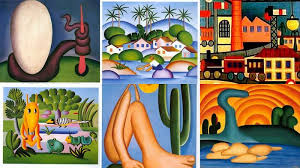 The Confederate immigrants didn’t impose their way of life in São Paulo’s rural interior. On neighboring plantations, enslaved women were raising the white artists who would become the country’s major modernists. Brazil’s most famous modernist painter, Tarsila do Amaral, muse of Antropofagia, grew up on her family’s coffee plantation, a half hour’s drive from the American colony. Antropofagia was a movement of “cultural cannibalism” based on a caricature of the Tupi indigenous people as cannibals; elite white Brazilians would “cannibalize” French styles in the production of Brazilian subject matter: Black people. A year before her death, do Amaral explained that the subject for her first anthropophagic painting, A Negra (1923), was a “female slave” she remembered from her youth, and described in vivid detail I won’t repeat how the woman had stretched her breasts so that she might breastfeed while working. Chattel slavery legally ended in Brazil on May 13, 1888, when do Amaral was one year old, so her explanation was technically anachronistic. Either emancipation passed without notice, or her family’s plantation hummed along under a new economic arrangement so closely resembling slavery that she still referred to wage workers as “slaves.”
more here.
About The Weather
Joanna Kavenna at Literary Review:
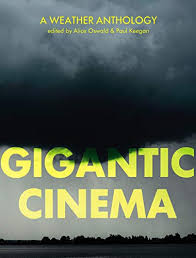 Samuel Johnson famously remarked, ‘It is commonly observed, that when two Englishmen meet, their first talk is of the weather; they are in haste to tell each other, what each must already know.’ Virginia Woolf politely added that Englishwomen also talk about the weather but thought there should be strict rules attached to all such discussions. A hostess or a novelist might talk about the weather to settle a guest or a reader, but they should move swiftly on to more interesting themes. A novel that considers nothing but the weather was most probably written by Arnold Bennett (I paraphrase). Mark Twain took this further, promising in the opening of The American Claimant that ‘no weather will be found in this book’ as ‘it is plain that persistent intrusions of weather are bad for both reader and author’.
more here.