
Dexter Filkins at The New Yorker:
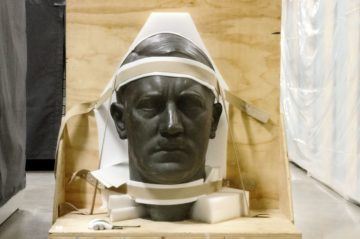 In the final days of the Second World War, a train loaded with relics of the collapsing Third Reich was speeding toward the Czech border when American pilots, flying P-47 fighters, spotted it and opened fire. The train ground to a halt in a forest, where German soldiers spirited the cargo away. They were pursued, not long afterward, by Gordon Gilkey, a young captain from Linn County, Oregon, who had been ordered to gather up all the Nazi propaganda and military art he could find. Gilkey tracked the smugglers to an abandoned woodcutter’s hut, where he pried up the floorboards and found what he was looking for: a collection of drawings and watercolors belonging to the German military’s high command. The cache had survived the strafing, only to be afflicted by mildew and a family of hungry mice. “They had eaten the ends off many pictures, large holes in a few, and gave all the cabin pictures an uneven deckle edge,” Gilkey wrote.
more here.
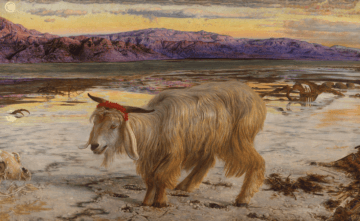 Although the literary theorist and anthropologist René Girard has many Silicon Valley disciples, surely the most notable of them is the German-born venture capitalist and founder of PayPal, Peter Thiel. A student of Girard’s while at Stanford in the late 1980s, Thiel would go on to report, in several interviews, and somewhat more sub-rosa in his 2014 book,
 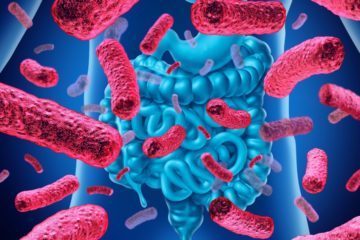 We are never alone. And by this statement, I do not intend to argue for existence of some supernatural entities, aliens or God. We are never alone because we all share our bodies with trillions of symbiotic microorganisms that perform various physiological functions crucial for our health. In fact, they may be responsible for even more than that. Here, I present a view that the symbiotic microbiota is an important part of the complex system constituting our consciousness. By consciousness, I mean the type called phenomenal consciousness (Block 2002) which stands for the subjective experience of what is it like to be someone (see Nagel 1974).
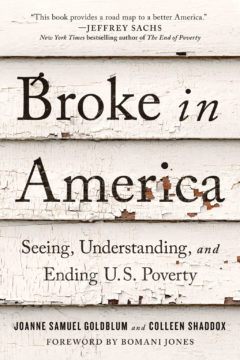 When we speak to our sisters and brothers living in poverty in the United States, the confessional trope that describes so many dysfunctional relationships should be our opening line. “Poverty is a choice that the fortunate collectively make,” social worker Joanne Goldblum and journalist Colleen Shaddox write in
  The investigative journalist Gary Taubes is known for his painstakingly researched and withering demolitions of the “eat less, move more” diet orthodoxy, but his latest book is personal. The Case for Keto is aimed at “those of us who fatten easily”. Taubes locates himself in this beleaguered group, “despite an addiction to exercise for the better part of a decade” and a diet of “low-fat, mostly plant ‘healthy’ eating”. “I avoided avocados and peanut butter because they were high in fat and I thought of red meat, particularly steak and bacon, as an agent of premature death. I ate only the whites of egg.” Yet still he remained overweight.
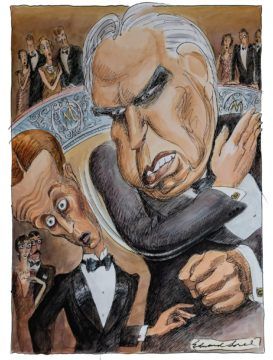 Both grew up in the Midwest, both wrote novels that skewered the patriarchal, conformist towns where they were raised, and both shared the distinction of having churchmen condemn their books as “immoral.” They should have been friends, but by 1925, when Theodore Dreiser’s “An American Tragedy” was published, he and Sinclair Lewis were hoping to become the first American to win the Nobel Prize in Literature. Lewis had already produced “Main Street” in 1920, then followed it with “Babbitt,” “Arrowsmith,” “Elmer Gantry” and “Dodsworth” before the decade was even over. In 1930 the prize was his.
 Priya Satia in Aeon:
 Peter Gordon in The New Statesman: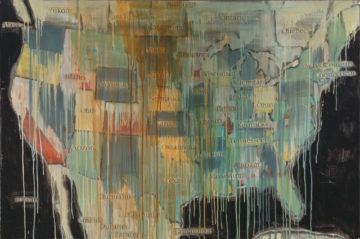
 Christopher Mackin and Richard May in The New Republic:
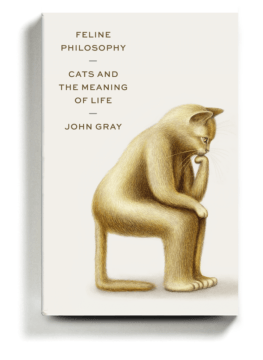 On the face of it, “Feline Philosophy” would seem like a departure for Gray — a playful exploration of what cats might have to teach humans in our never-ending quest to understand ourselves. But the book, in true Gray fashion, suggests that this very quest may itself be doomed. “Consciousness,” he writes, “has been overrated.” We get worried, anxious and miserable. Our vaunted capacity for abstract thought often gets us (or others) into trouble. We may be the only species to pursue scientific inquiry, but we’re also the only species that has consciously perpetrated genocides. Cats, unlike humans, don’t trick themselves into believing they are saviors, wreaking havoc in the process. “When cats are not hunting or mating, eating or playing, they sleep,” Gray writes. “There is no inner anguish that forces them into constant activity.”
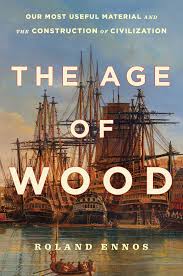 Though wood still plays an important role in the construction of our homes — think two-by-four stud supports and plywood in walls, flooring and roofing — our eye most often falls on exteriors covered in synthetic materials like vinyl siding. Some playgrounds that once featured lots of wood now have our kids screaming atop molded plastic play sets. And thousands of readers will take in this review on a digital device, not on a sheet of paper made from dried wood pulp. In a world where wood is, if not absent, increasingly out of sight, British biologist Roland Ennos suggests we may not be paying enough attention to its importance. He contends that wood is not merely useful but central to human history. “It is the one material,” Ennos writes in “