
Kamala Thiagarajan in NPR:
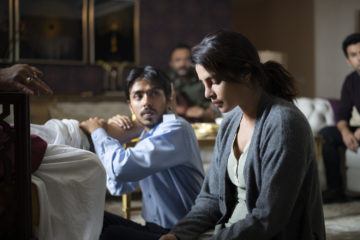
“Do we loathe our masters behind a façade of love, or do we love them behind a façade of loathing?”
This is just one of the questions that Balram Halwai, a poor, village-bred Indian boy and the central character of the movie The White Tiger, asks himself as he works as a chauffeur to a rich businessman in Delhi. The movie, newly released on Netflix, is an adaptation of the Booker Prize- winning debut novel of the same name by Indian author Aravind Adiga. Produced by Priyanka Chopra Jonas and directed by Ramin Bahrani, the film offers a grim tale of corruption and betrayal, examining the complex dynamics of the employer-servant relationships in India while delving into the country’s stark rich-poor divide and its class and caste issues. A predominant image in the movie is the rooster coop — a metaphor for the oppression of India’s poor: “The greatest thing to come out of this country … is the Rooster Coop. The roosters in the coop smell the blood from above. They see the organs of their brothers … They know they’re next. Yet they do not rebel. They do not try to get out of the coop. The very same thing is done with human beings in this country.”
…Not everyone feels the rooster coop image was an apt representation. Vaishali Shadangule, 42, founder of the fashion house Vaishali.S, left her hometown of Vidisha, about 500 miles from Mumbai, as a 17-year-old, with only the clothes on her back and the burning need to escape the limitations of a small town. Traveling ticketless on the train out of her hometown and headed for the northern Indian city of Bhopal, she had no money and no plan either. “I disliked the way the movie portrays poor people,” she says. “I thought it catered to the white Western gaze, reinforcing stereotypes that the poor are helpless.”
The overriding theme of the rooster coop in the movie is offensive and insulting, she says, because it dehumanizes poor people and implies that anyone born poor is subservient and servile.
More here.
 Adam Przeworski in Boston Review:
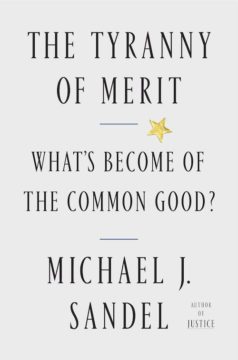 Christopher Kutz in the LA Review of Books:
 Andrew Elrod in Phenomenal World:
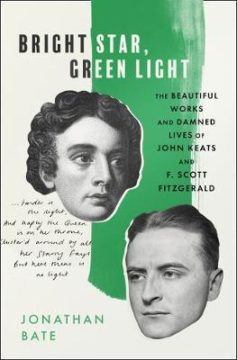 This may be why I find the ambition of Jonathan Bate’s new book a little on the mad side. Crikey, but this is daring. Attempting to squeeze the short, dazzling lives of Fitzgerald and Keats, already so much written about, into one short volume, he asks a huge amount of himself, and of his reader. Flipping between 19th-century Hampstead and 20th-century Los Angeles, between Keats’s mooning after the barely outlined figure of Fanny Brawne and Fitzgerald’s tortured relationship with the altogether more vivid creation that was his wife, Zelda, has the potential to cause a certain amount of dizziness. I felt at moments as though I was caught between two lovers. When I was with Keats, I longed to get back to Fitzgerald; when I was with Fitzgerald, I would experience a sudden, fierce pang for Keats.
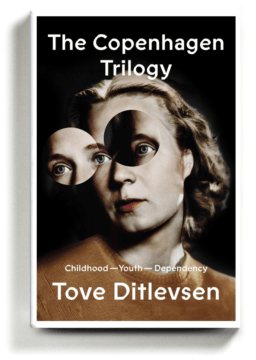 How does great literature — the Grade A, top-shelf stuff — announce itself to the reader?
 As Twitter and Facebook become more acrimonious and less trusted, an older means to get information has made a comeback: the email newsletter. Chances are that newsletters make up a larger part of your media diet than they did a couple of years ago. You may even be paying for some of them. In recent months several journalists have left jobs at established publications to earn a living by asking their most loyal readers to subscribe to a personal email newsletter instead. Entrepreneurs, cookery writers and academics have also embraced this model. Who needs a publisher if you can sell your writing straight to your readers? Most of these people are established experts in a particular field. They have chosen to bypass the involvement of advertisers and algorithms in favour of the pleasingly straightforward approach of delivering their thoughts directly to the inboxes of paying subscribers. Writers with large online followings can earn a respectable income even if only a small fraction of their fans sign up (typically for $5 a month, or $50 a year).
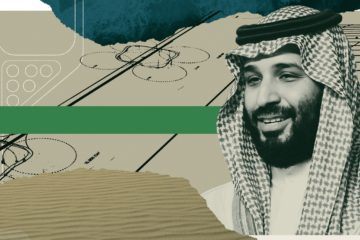 To the rest of the world, Saudi Arabia may look like a quasi-medieval kingdom where women still struggle for basic rights, where bearded clerics run the courts and where convicts are routinely beheaded by sword in public. But the Saudi monarchy — like its neighbors in Dubai and Abu Dhabi — has long cherished dreams of leapfrogging into a high-tech future. The last Saudi king created plans for six new cities in the desert, all billed as transformative steps toward a world beyond oil.
 We are writing this letter after a year unlike any other in our lifetimes.
 Can the world meet the challenge of climate change?
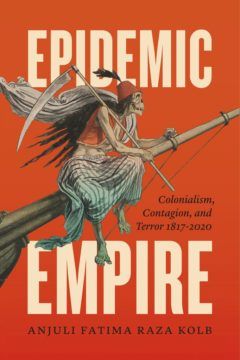 Terrorism has often been described as a cancer, an infection, an epidemic, a plague. In her new book,
 One of the more difficult parts of raising a Black child in the United States of America—and it bears mentioning from the beginning that the joys are innumerable—is the question of where they will go to school. Most of us know, through both memory and a wealth of empirical data testifying to this difficult truth, that the classroom is a battleground. It is a site of suffering. It is, in the first instance, a space wherein our hair, our diction, our social practices and modes of cognition are denigrated as a matter of institutional mission and everyday protocol. The Black aesthetic tradition, in one sense, is a single front in an ongoing war against this and other forms of asymmetrical violence against our children. In the poems and plays, stories and essays, we are mapping out a set of alternatives. Another world, another way that things might eventually be if we are brave.