
Katherine Wu in The New York Times:
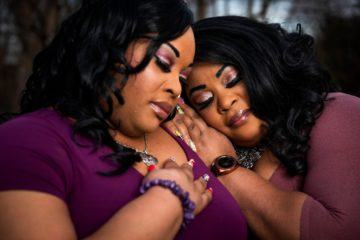 After 35 years of sharing everything from a love for jazz music to tubes of lip gloss, twins Kimberly and Kelly Standard assumed that when they became sick with Covid-19 their experiences would be as identical as their DNA. The virus had different plans. Early last spring, the sisters from Rochester, Michigan, checked themselves into the hospital with fevers and shortness of breath. While Kelly was discharged after less than a week, her sister ended up in intensive care. Kimberly spent almost a month in critical condition, breathing through tubes and dipping in and out of shock. Weeks after Kelly had returned to their shared home, Kimberly was still relearning how to speak, walk and chew and swallow solid food she could barely taste. Nearly a year later, the sisters are bedeviled by the bizarrely divergent paths their illnesses took.
“I want to know,” Kelly said, “why did she have Covid worse than me?”
Since the new coronavirus first shuddered into view, questions like the one posed by Ms. Standard have spurred scientific projects around the globe. Among the 94 million infections documented since the start of the outbreak, no two have truly been alike, even for people who share a genetic code. Identical twins offer researchers a ready-made experiment to untangle the contributions of nature and nurture in driving disease. With the help of twin registries in the United States, Australia, Europe and elsewhere, researchers are confirming that genetics can affect which symptoms Covid-19 patients experience. These studies have also underscored the importance of the environment and pure chance: Even between identical twins, immune systems can look vastly different — and continue to grow apart over the course of a lifetime.
More here.
 Over the past 10 years, numerous studies have shown that our obsession with happiness and high personal confidence may be making us less content with our lives, and less effective at reaching our actual goals. Indeed, we may often be happier when we stop focusing on happiness altogether.
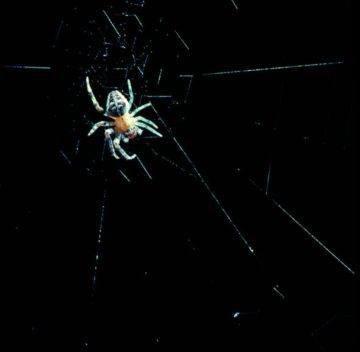 Spider legs seem to have minds of their own. According to findings published
  Critics of Silicon Valley censorship for years heard the same refrain: tech platforms like Facebook, Google and Twitter are private corporations and can host or ban whoever they want. If you don’t like what they are doing, the solution is not to complain or to regulate them. Instead, go create your own social media platform that operates the way you think it should.
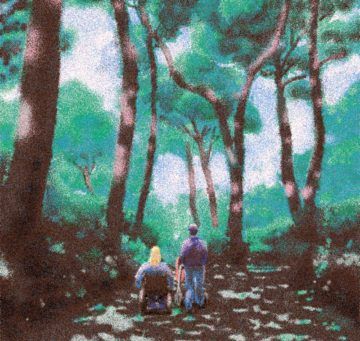 It was a night in mid-April that I fell asleep to the phrase this is too hard pinging through my brain, and they were the first words to cross my mind when I opened my eyes the next morning. I texted my sisters: “Remember the easy days when it was JUST a baby and cancer???” I pulled myself out of bed, plopped heavily into my wheelchair and stared in the mirror with my fingers splayed across my growing belly. That day we had to decide if my partner Micah would start a second round of chemotherapy treatments that would weaken his ability to fight against this new virus if he caught it, or forgo the treatment and change his odds against cancer. Our baby would arrive in a few weeks.
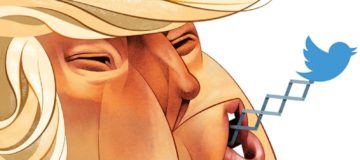 After Donald Trump lost the US presidency last year, he retained the consolation prize of his Twitter account. Commentators debated how Mr Trump would seek to profit from the 88 million followers he had accumulated: a new TV career or another presidential bid? Yet on 8 January, he lost his cherished platform after he was permanently suspended by Twitter because of “the risk of further incitement of violence”. Two days earlier a rabble of Trump fanatics, conspiracy theorists and white supremacists had stormed the US Capitol, resulting in five deaths. In a video posted on Twitter, Mr Trump told the mob, “We love you” and later tweeted: “These are the things and events that happen when a sacred landslide victory is so viciously & unceremoniously stripped away from great patriots who have been badly & unfairly treated for so long.”
 So much has been written on the Heide group of artists, Nolan, Tucker, Hester, and their patrons John and Sunday Reed that it is hard to imagine anything more could be added. π.ο.’s Heide however, though holding this group of communalism, camaraderie, and free love as its centre, radiates backwards to the history that precedes the Reeds’ utopian endeavour, and continues into its aftermath. One epigraph from Oscar Wilde signals Heide’s intent: ‘The only duty we have to history is to rewrite it.’ Artists tumble out in artistic lineage from Buvelot to the Heidelberg School to Heide, along with numerous glancing biographies of influential patrons and politicians, William Barak, Ned Kelly, Albert Namatjira, Patrick White, Billy Hyde, Eliza Fraser, and many others. Through these intersecting histories, Heide also depicts the struggle between the conservation of the past and revolt against it, as epitomised in the Ern Malley hoax, with Angry Penguins magazine briefly funded by the Reeds, and the recurring compromises that swing between capital and art; ‘Only an Artist, can break out of / a straight-jacket.’. But it is his poetic technique that most energetically enacts these struggles, forging a dense amalgam in which past and present continually invade each other. Where π.ο.’s earlier Fitzroy: The Biography catalogued portraits of famous, notorious, and lesser known characters, Heide commences with ‘Terra Australis’ that cryptically lampoons its title, then to Cook’s voyage, and gradually progresses to the establishment of the State Library and the National Gallery of Victoria in 1850s colonial Melbourne, and eventually to the artists hammering to enter or exit those institutions. Escapee William Buckley and explorers Leichhardt and Burke and Wills are also among these seekers of the new: ‘On the horizon: / 23 horses, 19 men, and 26 camels on / a slow walk across / a blank slate.’ This imaginary ‘blank slate’ is equivalent to the unpolished metropolis without its establishments of arts and learning, and these doomed or heralded figures parallel the relentless pursuit of art.
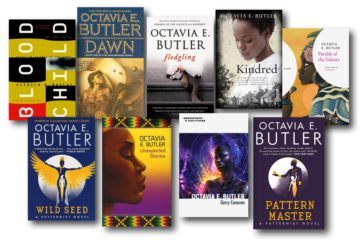 The plaques and firsts are the least interesting part of her story, though. Above all, Butler was an observer and ponderer. The probing mind that animates her novels, short stories and essays is obsessed with the viability of the human enterprise. Will we survive our worst habits? Will we change? Do we want to?
 Yakov Feygin in Phenomenal World:
 Florence Sutcliffe-Braithwaite interviews Katrina Forrester over at Renewal:
 Houman Barekat in LA Review of Books:
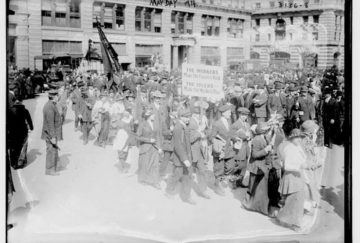 Mike Konczal in Boston Review:
 Like school, work conferences and visiting your grandparents, this year’s