
Steffie Nelson at the LA Times:
 In the essay, Didion describes a particular “shimmer” that would form around images in her mind, creating a frame of sorts that pulled her in, impelled her to set down words as a means of telling the scene into being. She compares this shimmer to the way a schizophrenic or someone under the influence of psychedelic drugs is purported to perceive his surroundings — ”molecular structure breaking down,” foreground and background “interacting, exchanging ions.”
“I’m not a schizophrenic, nor do I take hallucinogens,” she continues, “but certain images do shimmer for me. Look hard enough, and you can’t miss [it].” Didion goes on to illustrate several tableaux that emitted the shimmer: the minor actress with long hair and a short halter dress, walking alone through a Las Vegas casino at 1 a.m., who inspired the dissolute ennui of her 1970 Hollywood novel, “Play It As It Lays”; and an early morning at the Panama airport, heat rising off the tarmac, into which the author inserted Charlotte Douglas, one of the main characters in “A Book of Common Prayer,” with her square-cut emerald ring and a demand for tea made from water boiled for 20 minutes (no doubt drawing on Didion’s own bout with dysentery after visiting said airport).
more here.
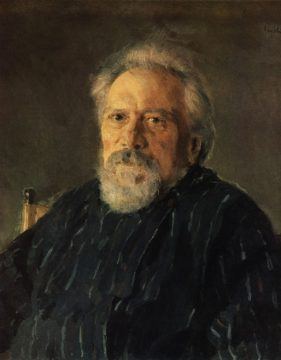 AS A PROFESSOR OF MINE
 It’s tempting to presume a clear line between intention and accomplishment, but Janice P. Nimura, in her enthralling new book, “The Doctors Blackwell,” tells the story of two sisters who became feminist figures almost in spite of themselves. Elizabeth Blackwell was the first woman to receive a medical degree in the United States, in 1849, and she later enlisted her younger sister Emily to join her. Together they ran the New York Infirmary for Indigent Women and Children and founded a women’s medical college — even though, as Nimura puts it, opening a separate school for women was just about the last thing they had planned to do.
 I want to write about a certain kind of prose. It is the kind of prose that gets lost in itself. The kind of writing that tumbles head over heels and threatens to drown in its own wake. But not quite. The kind of prose that drowns completely is not so interesting. And the prose that never gets lost is not so interesting either. In my opinion. You’ve got to teeter around and stumble just at the edge there. In my opinion.
 Imagine spilling a plate of food into your lap in front of a crowd. Afterwards, you might fix your gaze on your cell phone to avoid acknowledging the bumble to onlookers. Similarly, after disappointing your family or colleagues, it can be hard to look them in the eye. Why do people avoid acknowledging faux pas or transgressions that they know an audience already knows about?
 It was February 20, 1939, two days before George Washington’s birthday. Fritz Kuhn, leader of the prominent pro-Nazi German American Bund, took the stage at Madison Square Garden. Behind him stood a towering 30-foot portrait of the first US president between giant swastikas, and around him twenty thousand rally-goers. Posters at this infamous Pro-America Rally promised a “mass-demonstration for true Americanism,” bringing National Socialist ideals to the American people. Participants waved American flags, marched to loud drum rolls, and heard pro-fascist speeches. Speakers urged the audience to embrace National Socialism, not merely to show support for Germany, but above all because it was fundamentally American.
 The United States of America was founded on a conspiracy theory. In the lead-up to the War of Independence, revolutionaries argued that a tax on tea or stamps is not just a tax, but the opening gambit in a sinister plot of oppression. The signers of the Declaration of Independence were convinced — based on “a long train of abuses and usurpations” — that the king of Great Britain was conspiring to establish “an absolute Tyranny” over the colonies.
 My daughter, a Pakistani American mother of two young children, married to an African American man of Jamaican parentage, is understandably excited about our new Veep-to-be, Kamala Harris. She keeps sending me articles by “desi” women like herself in relationships with Black men, who are excited about this new chapter dawning in American history.
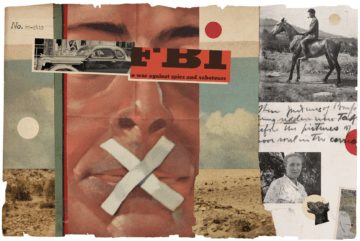 During the mad rush of leaving, they had to find homes for 60 animals, a menagerie of horses, snakes, turtles, and various other creatures. Only two made the cut to tag along with them: their blue budgie parakeet, Bird, who went eerily still as they crossed the Sonoran Desert, and their Doberman, Kinch, who panted in the scorching heat.
 No matter how much we might try and hide it, there’s an enormous problem staring us all in the face when it comes to the Universe. If we understood just three things:
 A record-breaking 4,000 Americans are now dying each day from Covid-19, while the federal government fumbles vaccine production and distribution, testing and tracing. In the midst of the worst pandemic in 100 years, more than 90 million Americans are uninsured or underinsured and can’t afford to go to a doctor when they get sick. The isolation and anxiety caused by the pandemic has resulted in a huge increase in mental illness.
 “K
“K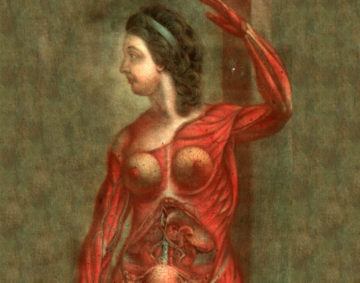 In all its varied symptomology, menopause put me on intimate terms with what Virginia Woolf, writing about the perspective-shifting properties of illness, called “the daily drama of the body.” Its histrionics demanded notice.
 Build a working coalition