
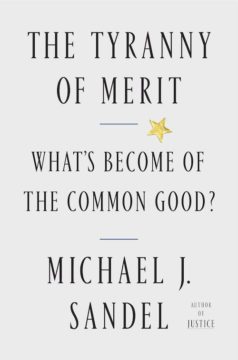
 Christopher Kutz in the LA Review of Books:
A FIERCE AND EMOTIONAL debate recently broke out among the first-year law students at UC Berkeley, where I teach. Because of the strain of remote learning during the pandemic, roughly half the class asked that the law school suspend ordinary grading (as we did last spring) and replace our letter grades with pass/fail grades. The other half of the class opposed this proposal in equally heartfelt terms.
It turned out that many advocates for keeping the letter grades were first-generation students and students of color, whom Berkeley enrolls in significant numbers. These students argued that grades give them a chance at competing for jobs. Without grades, they worried, potential employers would rely on stereotypes and hire those students who most resemble themselves.
Meritocracy looks different from different angles, and is easier to dismiss when you’re already sitting pretty.
This matter of angles and perspectives was apparent to me as I read the Harvard political theorist Michael Sandel’s The Tyranny of Merit: What’s Become of the Common Good? The book is a jeremiad against meritocracy, taking Harvard as its model. It is a view of Harvard as seen from Harvard. For someone looking at Harvard from 3,000 miles away in California — or more often, looking at meritocracy in the public university system and therefore not looking at Harvard at all — things appear very different.
To Sandel, Harvard represents meritocracy run amok, epitomized by its less than five percent admissions rate. This meritocratic extremism imperils the common good by leaving the other 99.5 percent out in the cold, allocating wealth, power, and cultural prestige to a small elite of “winners,” and creating extreme political, economic, and cultural stratification and polarization in its wake.
To me, in contrast, not only is Harvard not much of a model of meritocracy but there are different and far more important sources for the polarization we are facing. The best hope of a solution to this polarization bypasses Harvard altogether.
More here.
 Andrew Elrod in Phenomenal World:
 This may be why I find the ambition of Jonathan Bate’s new book a little on the mad side. Crikey, but this is daring. Attempting to squeeze the short, dazzling lives of Fitzgerald and Keats, already so much written about, into one short volume, he asks a huge amount of himself, and of his reader. Flipping between 19th-century Hampstead and 20th-century Los Angeles, between Keats’s mooning after the barely outlined figure of Fanny Brawne and Fitzgerald’s tortured relationship with the altogether more vivid creation that was his wife, Zelda, has the potential to cause a certain amount of dizziness. I felt at moments as though I was caught between two lovers. When I was with Keats, I longed to get back to Fitzgerald; when I was with Fitzgerald, I would experience a sudden, fierce pang for Keats.
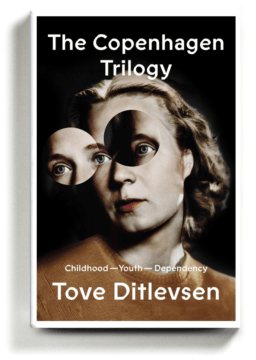 How does great literature — the Grade A, top-shelf stuff — announce itself to the reader?
 As Twitter and Facebook become more acrimonious and less trusted, an older means to get information has made a comeback: the email newsletter. Chances are that newsletters make up a larger part of your media diet than they did a couple of years ago. You may even be paying for some of them. In recent months several journalists have left jobs at established publications to earn a living by asking their most loyal readers to subscribe to a personal email newsletter instead. Entrepreneurs, cookery writers and academics have also embraced this model. Who needs a publisher if you can sell your writing straight to your readers? Most of these people are established experts in a particular field. They have chosen to bypass the involvement of advertisers and algorithms in favour of the pleasingly straightforward approach of delivering their thoughts directly to the inboxes of paying subscribers. Writers with large online followings can earn a respectable income even if only a small fraction of their fans sign up (typically for $5 a month, or $50 a year).
 To the rest of the world, Saudi Arabia may look like a quasi-medieval kingdom where women still struggle for basic rights, where bearded clerics run the courts and where convicts are routinely beheaded by sword in public. But the Saudi monarchy — like its neighbors in Dubai and Abu Dhabi — has long cherished dreams of leapfrogging into a high-tech future. The last Saudi king created plans for six new cities in the desert, all billed as transformative steps toward a world beyond oil.
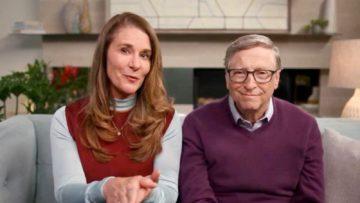 We are writing this letter after a year unlike any other in our lifetimes.
 Can the world meet the challenge of climate change?
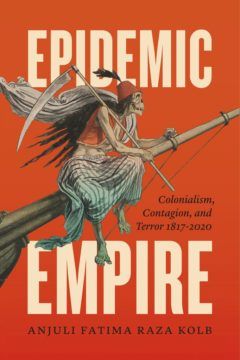 Terrorism has often been described as a cancer, an infection, an epidemic, a plague. In her new book,
 One of the more difficult parts of raising a Black child in the United States of America—and it bears mentioning from the beginning that the joys are innumerable—is the question of where they will go to school. Most of us know, through both memory and a wealth of empirical data testifying to this difficult truth, that the classroom is a battleground. It is a site of suffering. It is, in the first instance, a space wherein our hair, our diction, our social practices and modes of cognition are denigrated as a matter of institutional mission and everyday protocol. The Black aesthetic tradition, in one sense, is a single front in an ongoing war against this and other forms of asymmetrical violence against our children. In the poems and plays, stories and essays, we are mapping out a set of alternatives. Another world, another way that things might eventually be if we are brave.
 If anyone is tried for sedition after this whole wretched ordeal, it should be Donald Trump and the repellent congressional creatures who cravenly believed they could direct the QAnon crowd and keep them in their control. The fact of their failure, their monumental miscalculation, does not absolve them of their culpability. We’re already seeing figures like the pusillanimous Missouri Senator Josh Hawley
  The naked mole-rat may not be the most attractive rodent on the block, but it’s still a social butterfly. These hairless, mostly blind and deaf animals live in colonies of up to 300 individuals, which communicate with high-pitched squeaks. Now, researchers have discovered that, like humans and many birds, mole-rat communities have their own dialect, which is kept alive by their queen. “The study is exciting because it provides the first evidence for vocal learning in a rodent,” says evolutionary biologist Tecumseh Fitch at the University of Vienna, who was not part of the work. More research, he says, may help scientists better understand how complex vocalizations evolved in social animals, including humans.
 We all yearn for happiness, and yet so many Americans are unhappy. Polls document a rising tide of unhappiness — especially now, as the pandemic has upended life, with 23% of Americans claiming to be unhappy. This represents the highest figure on record since 1972. Yet even in 2019, with the economy humming, levels of unhappiness had been rising for some time.
 In 1987, A