
Joan Didion in Literary Hub:
 Of course I stole the title for this talk from George Orwell. One reason I stole it was that I like the sound of the words: Why I Write. There you have three short unambiguous words that share a sound, and the sound they share is this:
I
I
I
In many ways, writing is the act of saying I, of imposing oneself upon other people, of saying listen to me, see it my way, change your mind. It’s an aggressive, even a hostile act. You can disguise its aggressiveness all you want with veils of subordinate clauses and qualifiers and tentative subjunctives, with ellipses and evasions—with the whole manner of intimating rather than claiming, of alluding rather than stating—but there’s no getting around the fact that setting words on paper is the tactic of a secret bully, an invasion, an imposition of the writer’s sensibility on the reader’s most private space.
I stole the title not only because the words sounded right but because they seemed to sum up, in a no-nonsense way, all I have to tell you.
More here.
 In January 2017, a lengthy proposal showed up at the offices of the
  Have you ever felt uncomfortable sharing your opinion on politics — whether online or with friends? If so, you’re not alone. Americans are becoming increasingly cautious about sharing their political opinions. In a recent
 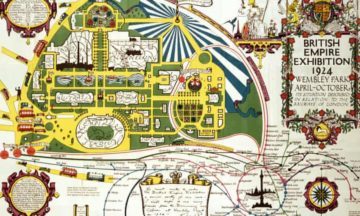 In the endless catalogue of British imperial atrocities, the unprovoked invasion of Tibet in 1903 was a minor but fairly typical episode. Tibetans, explained the expedition’s cultural expert, were savages, “more like hideous gnomes than human beings”. Thousands of them were massacred defending their homeland, “knocked over like skittles” by the invaders’ state-of-the-art machine guns. “I got so sick of the slaughter that I ceased fire,” wrote a British lieutenant, “though the General’s order was to make as big a bag as possible.” As big a bag as possible – killing inferior people was a kind of blood sport.
 By his own lights, Daniel Patrick Moynihan, ambassador, senator, sociologist, and itinerant American intellectual, was
  T
T Back outside in the summer air, the summer frost heaves passed beneath my feet. I thought of Robert Walser, his little essay on walking, seeing everything afresh, the teeming world, the sap running, the beautiful phenomena, or his essay about Kleist walking around Thun, the mountainous Swiss village—“Bells are ringing. The people are leaving the hilltop church.” In those days, Walser wrote most of his stories in a micro-script so tiny it was assumed illegible for years, until two scholars with a magnifying lens revealed that the script, which looked like termite tracks, was actually Kurrent, a form of handwriting, medieval in origin, used by German speakers until the mid-twentieth century. Why am I describing Walser? Because I thought of him as I was walking on the sidewalk. Because Sontag describes Walser’s writing as a free fall of innocuous observations not governed by plot, in which “the important is redeemed as a species of the unimportant.” For instance, he ends the story “Autumn (II)” with the sentence, “In the city where I reside, a van Gogh exhibition is currently on view,” apropos of nothing. We don’t know what the broken white line means until much later. That’s why dream journalists write. That’s why journalists dream.
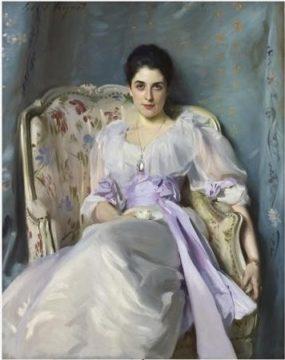 It was often the case in the late 19th century that if you wanted to add a little prestige to your life you had your portrait painted by a notable portrait painter. Or you had your family painted, or just your wife. This latter idea was the thought that occurred to Sir Andrew Agnew, the 9th Baronet of Lochnaw Castle in Wigtownshire, Scotland. He was proud of his wife, perhaps in the way one is proud of a horse, or an elegant piece of furniture. He wanted others to be proud too. There was a lot of pride going around.
 AI is a broad church, and like many churches, it has schisms.
 Fears about
 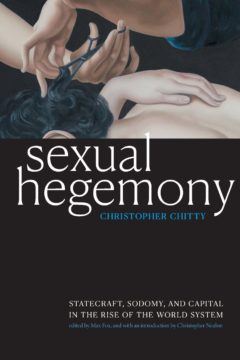 While some academics (like John Boswell and Terry Castle) spent years arguing, with ever-decreasing success, that something like the contemporary “gay” or “lesbian” had always existed in relatively similar ways, “constructionist” models like those offered by Foucault and D’Emilio have become dominant in today’s academic histories about gay, lesbian, and trans lives. In the mainstream, however, it’s almost the reverse. If in the 1970s and 1980s there was a vibrant public activist culture in which both Queer History One and Two were debated, today most gay and lesbian people firmly rely on the former. The wages of nationalism are generous, and Queer History One’s story—you have always existed, you have dignity because you are like Great Men/Women—has proven to be an easier position from which to argue for the dispensation of civil rights and protections from the state. It’s unsurprising that this has become the mass-market narrative about homosexuality in the contemporary West: we’re born this way, and we always have been. Recognize us, and we’ll marry, pay taxes, and serve in the military.
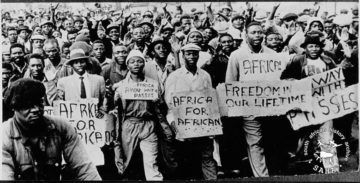 Like all children in our exile community whose parents were members of the African National Congress, I attended Young Pioneers meetings every weekend. The meetings were like Sunday school sessions. Politics was our religion, and we worshipped at the altar of
 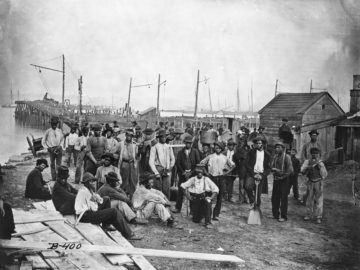 In August of 1619, the English warship White Lion sailed into Hampton Roads, Virginia, where the conjunction of the James, Elizabeth and York rivers meet the Atlantic Ocean. The White Lion’s captain and crew were privateers, and they had taken captives from a Dutch slave ship. They exchanged, for supplies, more than 20 African people with the leadership and settlers at the Jamestown colony. In 2019 this event, while not the first arrival of Africans or
  As an organizational psychologist, I’ve spent the past few years studying how to motivate people to think again. I’ve run experiments that led proponents of gun rights and gun safety to abandon some of their mutual animosity, and I even got Yankees fans to let go of their grudges against Red Sox supporters. But I don’t always practice what I teach.