Colin Grant in The Guardian:
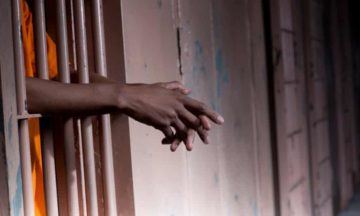 In 2008, months before his election as president, Barack Obama assailed feckless black fathers who had reneged on responsibilities that ought not “to end at conception”. Where had all the black fathers gone, Obama wondered. In The New Jim Crow, Michelle Alexander has a simple answer to their whereabouts: they’ve gone to jail. Her clear-eyed assessment, published in the UK almost a decade after it first stunned America, is an indictment of a society that, since the 1980s, has been complicit in the explosion of its prison population from around 300,000 to more than 2 million. Drug convictions have largely fuelled the increase, and an extraordinary number of those new felons have been black. This is not coincidental. The Reagan administration’s “war on drugs” shifted the legal goalposts, Alexander asserts, so that mass incarceration “emerged as a stunningly comprehensive and well-designed system of racialised social control that functions in a manner strikingly similar to Jim Crow”.
In the years following the civil war southern legislators designed “Jim Crow” laws to thwart the newly emancipated black population, notably curbing voting rights. Under the laws, black people also, increasingly, found themselves “relegated to convict leasing camps that were, in many ways, worse than slavery”. If Jim Crow was an effective means of controlling the black population, then modern mass incarceration, Alexander argues, is its successor. The figures are extraordinary. A decade ago in Chicago, for instance, 55% of the adult black male population had a felony record. In quiet yet forceful writing Alexander, a legal scholar, outlines how the Reagan government exploited 1980s hysteria over crack cocaine to demonise the black population so that “black” and “crime” became interchangeable. It was a war – not on drugs – but on black people. While churchgoing mothers in the ghetto might want politicians to be tough on crime, they don’t want to see their sons routinely arrested (suspected of being drug dealers for wearing baggy trousers).
More here. (Throughout February, at least one post will be dedicated to honoring Black History Month. The theme this year is: The Family)

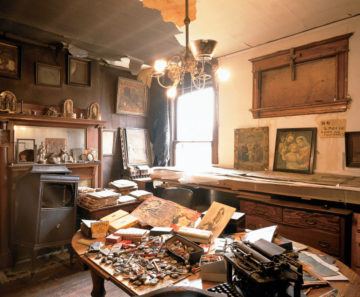 From December 31, 1957 until December 31, 1967, the artist and writer Henry Darger (1892–1973) kept a series of six ring-binder notebooks with almost daily entries on the weather in his native Chicago. On the outside cover of the first book, Darger describes the project, with encyclopedic enthusiasm, as a “book of weather reports on temperatures, fair cloudy to clear skies, snow, rain, or summer storms, and winter snows and big blizzards—also the low temperatures of severe cold waves and hot spells of summer.”
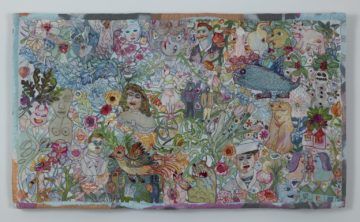 Angels, devils, dragons, and monsters are just a few of the unruly creatures that maraud across
 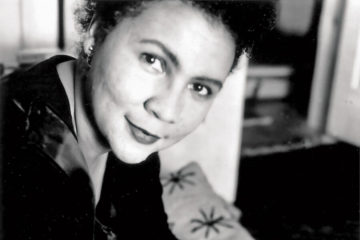 Black feminist thought has become crucial to how we navigate the social, economic, and political currents in America. To understand the consequences of pervasive racist narratives that seep into mainstream media – as well as into public policy and legislation – we must first examine how these narratives affect one of this country’s most vulnerable populations: Black women.
 As the pandemic raged in 2020, my boyfriend and I were confined within the closed quarters of my two-bedroom flat in Delhi. When the claustrophobia got too heavy, I would step out to rediscover the pleasure of walking with a sense of calm. I would try — and regularly fail — to meet my pre-pandemic mark of eight kilometers every day. It was not a means to an end. I did not have a grand plan. It was just a way to be a part of the city.
 A novel computer algorithm, or set of rules, that accurately predicts the orbits of planets in the solar system could be adapted to better predict and control the behavior of the
 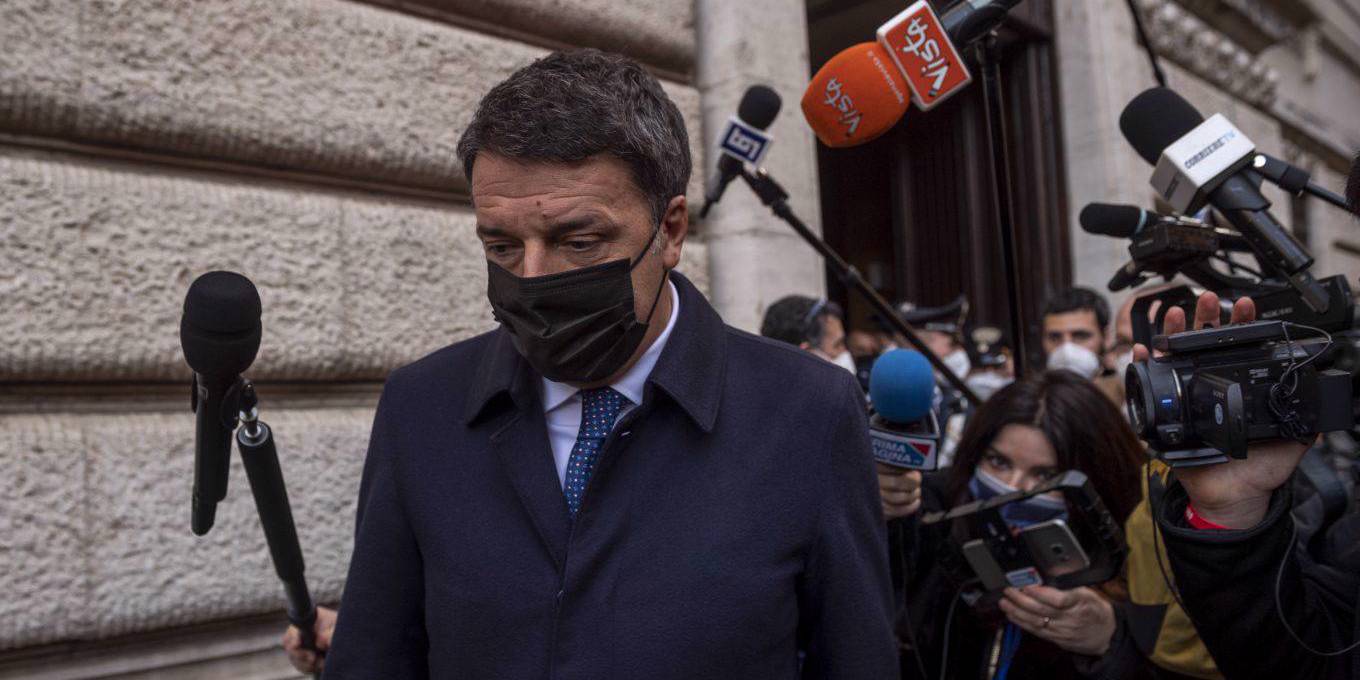 With deft and bold action, Mario Draghi’s unity government in Italy can go some way toward addressing the COVID-19 emergency, laying the groundwork for long-term economic recovery, and restoring Italians’ confidence in their political leaders. But he cannot do it alone.
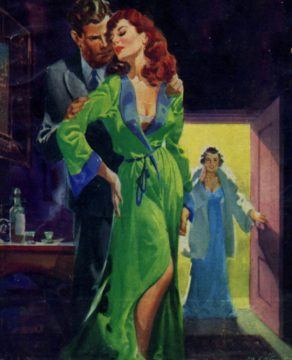 Tolstoy was a moralist. He wrote one novel—Anna Karenina—in which infidelity ends in death, and another—War and Peace—in which his characters endure a thousand pages of political, military and romantic turmoil so as to eventually earn the reward of domestic marital bliss. In the epilogue to War and Peace we encounter his protagonist Natasha, unrecognizably transformed. Throughout the main novel, we had known her as temperamental, beautiful and reflective; as independent, occasionally to the point of selfishness; as readily overwhelmed by ill-fated romantic passions.
 On a trip to Warsaw, Poland, in 2019, Richard Freund confronted the history of resistance against the Nazis at a Holiday Inn. Freund, an archaeologist, and professor of Jewish Studies at Christopher Newport University in Virginia, was led by the hotel manager into the basement. “Lo and behold,” Freund says, a section of the Warsaw Ghetto wall was visible. Freund was in Warsaw accompanied by scientists from
  Ross Andersen in The Atlantic:
 Judith Levine in Boston Review:
 Adam Shatz in the LRB:
 O
O