Channels to fall asleep to
While shoe box to shoe box travels my childhood
Professionals roll garbage cans around a conference room
Half the size of a holding tank
Half the hope of a holding tank
Full of third world retail flattery
“nothing wrong with the blind leading the blind,”
………………………………………………….…….. we think they just said
…………………………… the entire train station crouches behind a piano player
……………………………… ……and why should Harlem not kill for its musicians
……………………………… ……………………………….………………..“He is in a dream”
……………………………… ……………………………………………………..“A spirit world”
……………………………… ………………………………….…“I should introduce myself”
……………………………… ……………………………………“And convince him to sleep”
porcelain epoch
succeeding for the most part
dying for the most part
married for the most part to its death
when a hostage has a hostage
that is u.s. education
stores detach their heads
and expect you to do the same when you enter
God says, “do not trust me in this room”
Two fascists walk into a bar
One says, “let’s make a baby.”
The other says, “let’s make three… and let the first one eat the other two.”
……………………………… ……………………..……………….…….your sky or mine
……………………………… …………………..………………………………….read from
……………………………… ……………..…………the book of pool room enemies
“I’m the best kind of square. Poor and in love with the 1960s. The first picture I ever
saw in my life faded from my storytelling a long time ago.”
Not even ten years old
And most of you are on my shoulders
……………………………… ………………….The store’s detached head smiled
casually be poor
… teach yourself
… how to get out of this room
… and we’ll leave you enough blood
… to turn off the lights
… on your way out
casually be poor
.. they are all cops when you are poor
by Tony Eisen-Martin
from Brooklyn Quarterly
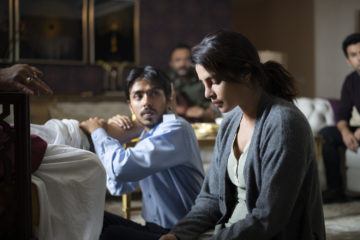
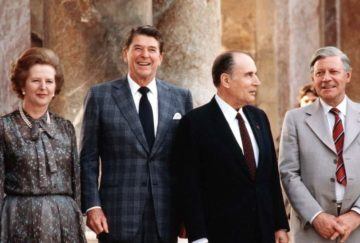 Adam Przeworski in Boston Review:
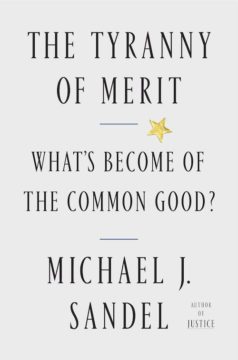 Christopher Kutz in the LA Review of Books:
 Andrew Elrod in Phenomenal World:
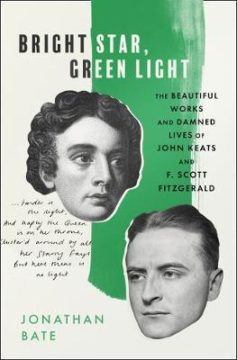 This may be why I find the ambition of Jonathan Bate’s new book a little on the mad side. Crikey, but this is daring. Attempting to squeeze the short, dazzling lives of Fitzgerald and Keats, already so much written about, into one short volume, he asks a huge amount of himself, and of his reader. Flipping between 19th-century Hampstead and 20th-century Los Angeles, between Keats’s mooning after the barely outlined figure of Fanny Brawne and Fitzgerald’s tortured relationship with the altogether more vivid creation that was his wife, Zelda, has the potential to cause a certain amount of dizziness. I felt at moments as though I was caught between two lovers. When I was with Keats, I longed to get back to Fitzgerald; when I was with Fitzgerald, I would experience a sudden, fierce pang for Keats.
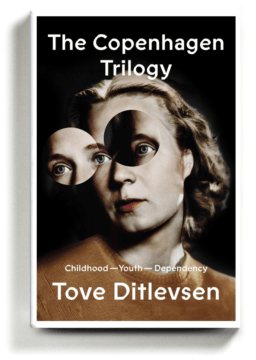 How does great literature — the Grade A, top-shelf stuff — announce itself to the reader?
 As Twitter and Facebook become more acrimonious and less trusted, an older means to get information has made a comeback: the email newsletter. Chances are that newsletters make up a larger part of your media diet than they did a couple of years ago. You may even be paying for some of them. In recent months several journalists have left jobs at established publications to earn a living by asking their most loyal readers to subscribe to a personal email newsletter instead. Entrepreneurs, cookery writers and academics have also embraced this model. Who needs a publisher if you can sell your writing straight to your readers? Most of these people are established experts in a particular field. They have chosen to bypass the involvement of advertisers and algorithms in favour of the pleasingly straightforward approach of delivering their thoughts directly to the inboxes of paying subscribers. Writers with large online followings can earn a respectable income even if only a small fraction of their fans sign up (typically for $5 a month, or $50 a year).
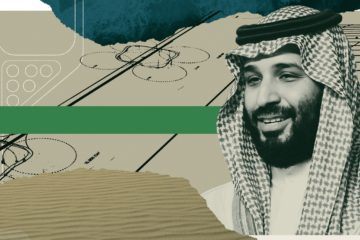 To the rest of the world, Saudi Arabia may look like a quasi-medieval kingdom where women still struggle for basic rights, where bearded clerics run the courts and where convicts are routinely beheaded by sword in public. But the Saudi monarchy — like its neighbors in Dubai and Abu Dhabi — has long cherished dreams of leapfrogging into a high-tech future. The last Saudi king created plans for six new cities in the desert, all billed as transformative steps toward a world beyond oil.
 We are writing this letter after a year unlike any other in our lifetimes.
 Can the world meet the challenge of climate change?
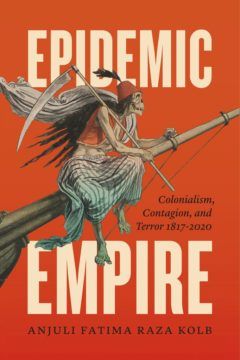 Terrorism has often been described as a cancer, an infection, an epidemic, a plague. In her new book,