
Smriti Mallapaty in Nature:
 The pandemic is sweeping through India at a pace that has staggered scientists. Daily case numbers have exploded since early March: the government reported 273,810 new infections nationally on 18 April. High numbers in India have also helped drive global cases to a daily high of 854,855 in the past week, almost breaking a record set in January. Just months earlier, antibody data had suggested that many people in cities such as Delhi and Chennai had already been infected, leading some researchers to conclude that the worst of the pandemic was over in the country.
Researchers in India are now trying to pinpoint what is behind the unprecedented surge, which could be due to an unfortunate confluence of factors, including the emergence of particularly infectious variants, a rise in unrestricted social interactions, and low vaccine coverage. Untangling the causes could be helpful to governments trying to suppress or prevent similar surges around the world. European countries such as France and Germany are also currently experiencing large outbreaks relative to their size, and nations including Brazil and the United States are reporting high infection rates at around 70,000 a day. But India’s daily totals are now some of the highest ever recorded for any country, and are not far off a peak of 300,000 cases seen in the United States on 2 January.
More here.

 Adam S. Green in the Journal of Archaeological Research (h/t
  Steve Hahn in Boston Review:
 Dilip Hiro in The Nation:
 Philip Roth
 Seth Rogen’s home sits on several wooded acres in the hills above Los Angeles, under a canopy of live oak and eucalyptus trees strung with outdoor pendants that light up around dusk, when the frogs on the grounds start croaking. I pulled up at the front gate on a recent afternoon, and Rogen’s voice rumbled through the intercom. “Hellooo!” He met me at the bottom of his driveway, which is long and steep enough that he keeps a golf cart up top “for schlepping big things up the driveway that are too heavy to walk,” he said, adding, as if bashful about coming off like the kind of guy who owns a dedicated driveway golf cart, “It doesn’t get a ton of use.” Rogen wore a beard, chinos, a cardigan from the Japanese brand Needles and Birkenstocks with marled socks — laid-back Canyon chic. He led me to a switchback trail cut into a hillside, which we climbed to a vista point. Below us was Rogen’s office; the house he shares with his wife, Lauren, and their 11-year-old Cavalier King Charles Spaniel, Zelda; and the converted garage where they make pottery. I was one of the first people, it turns out, to see the place. “I haven’t had many people over,” Rogen said, “because we moved in during the pandemic.”
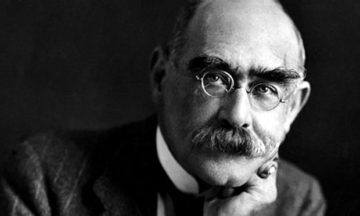 It is always tricky writing about Kipling. By the time of his death in 1936 his jingoism, with its babble about the “white man’s burden” in Africa, made many moderate souls feel queasy. Batchelor is too scrupulous a scholar to ignore what came after the Just So Stories – indeed he points out that within two years of the book’s publication the satirist Max Beerbohm was drawing Kipling as an imperial stooge, the diminutive bugle-blowing cockney lover of a blousy-looking Britannia.
 The evenhanded approach of
  I thought I was so clever. For a few days, anyway.
 The first numbers that come to mind when thinking about Tim Burton’s Alice in Wonderland might be how much money the movie is raking in at the box office.
 I would like to stage a fight between two different accounts of the current political landscape—what’s been called the “post-truth” era, the infodemic, the end of democracy, or perhaps most accurately, the total shitshow of the now.
 “W
“W “It feels like a grew a new heart.” That’s what my best friend told me the day her daughter was born. Back then, I rolled my eyes at her new-mom corniness. But ten years and three kids of my own later, Emily’s words drift back to me as I ride a crammed elevator up to a laboratory in New York City’s
  A
A