
Jon Grinspan in Smithsonian:
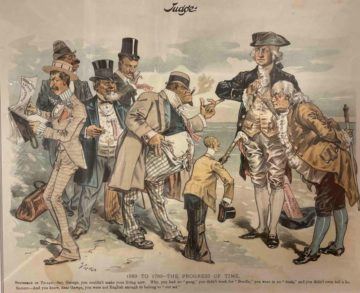 Nearly every day while writing my new book, The Age of Acrimony: How American’s Fought to Fix Their Democracy, I would walk across the National Mall in Washington, D.C., to my office at the Smithsonian’s National Museum of American History. I’d pass tourists wearing MAGA hats and protestors waving angry signs. In the museum’s secure collections, I’d settle into the cool, quiet aisles that preserve the deep history of our democracy. There, century-old objects—torches from midnight rallies, uniforms from partisan street gangs, ballots from stolen elections—told a forgotten drama of fractious and furious partisanship. Most people don’t often think about the politics of the late 1800s. Call it “historical flyover country,” an era stranded between more momentous times, when U.S. presidents had funny names and silly facial hair. But for our current political crisis, this period is the most relevant, vital and useful. The nation’s wild elections saw the highest turnouts and the closest margins, as well as a peak in political violence. Men and women campaigned, speechified and fought over politics, in a system struggling with problems all too familiar today.
In 1910, the influential Kansas journalist and eventual leader of the progressive movement William Allen White wrote: “The real danger from democracy is that we will get drunk on it.” White’s warning about the intoxicating potential of politics came at a turning point, just as the raucous politics of the 1800s were sobering up into the more temperate style of 20th-century America.
More here.
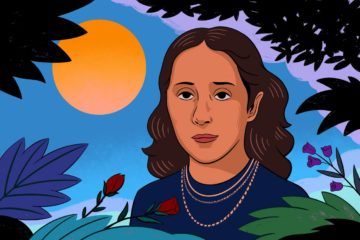 There are many reasons Mala’ika’s work has largely evaded the West. It’s hard to pigeonhole her, for one thing, which is by her own design. Mala’ika was always a neither-here-nor-there kind of poet. She was an Easterner with a calculated reverence for the West, a bard of Occidental impulses in a time and place more accustomed to Orientalist ones. She went from being a student of English poetry to being a scholar of it while simultaneously establishing herself as a thoroughly Arab poet. She was also an innovator whose free verse remains accessible while still keeping within her larger cultural tradition. And her feminism specifically concerned the roles of Arab women without evincing a need to compare, or center, the lives of her Western counterparts, as many women poets in her generation and beyond were tempted to do. (Mala’ika, with little fanfare, studied at Princeton in the 1950s, when it was still an all-male university.) She was also, finally, of the modernist and postmodernist eras but is perhaps best classified as a Romantic poet, despite publishing nearly a century after that movement’s heyday. As Drumsta notes in her substantial introduction, all these facts have perplexed Mala’ika’s biographers and translators.
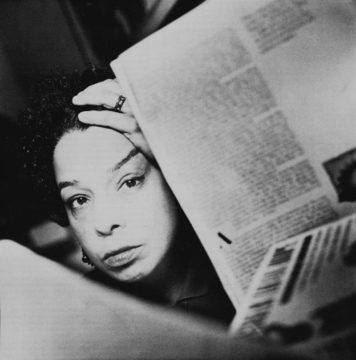 Nothing but the Music, which collects verse written between 1974 and 1992, reasserts Davis’s centrality to the Black Arts and Black Feminist movements. Though the book covers a wide range of topics, all the poems engage with music: listening to it, composing it, being transformed by it. There are accounts of driving through a rainstorm to see the Commodores, descriptions of Senegalese seamstresses listening to jazz as they work, and visions of enslaved people singing during the Middle Passage. Davis employs a variety of stanza forms, though most of the poems are on the shorter side. “Many of these poems here were performed with a number of musicians in different improvising configurations,” she writes in the acknowledgments. Her collaborators include her late husband and composer Joseph Jarman, free jazz pioneer Cecil Taylor, and saxophonist Arthur Blythe.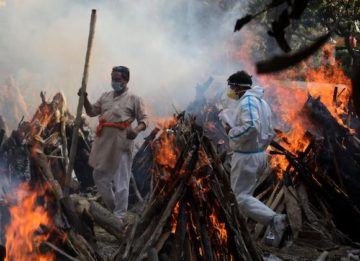
 Coming on the heels of
  James Carville: You ever get the sense that people in faculty lounges in fancy colleges use a different language than ordinary people? They come up with a word like
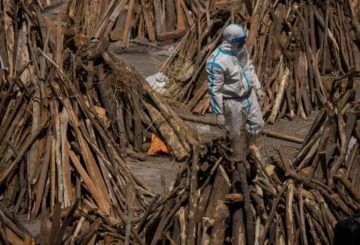 During a particularly polarising election campaign in the state of Uttar Pradesh in 2017, India’s prime minister, Narendra Modi, waded into the fray to stir things up even further. From a public podium, he accused the state government – which was led by an opposition party – of pandering to the Muslim community by spending more on Muslim graveyards (kabristans) than on Hindu cremation grounds (shamshans). With his customary braying sneer, in which every taunt and barb rises to a high note mid-sentence before it falls away in a menacing echo, he stirred up the crowd. “If a kabristan is built in a village, a shamshan should also be constructed there,” he
 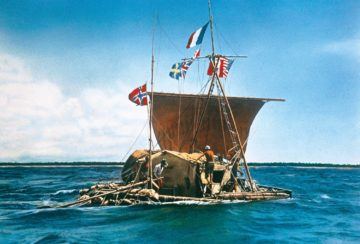 As he later told the story in Kon-Tiki: Across the Pacific by Raft, he was brushed off by many in the scientific establishment — and so went to extraordinary lengths to prove the theory’s plausibility, reconstructing the ancient journey by sailing across the sea on a wooden raft in 1947. This spectacular feat captured the imagination of the world, and researchers, skeptical as they might have been, have ever since debated what really had happened in prehistoric times between South America and Polynesia (the group of Pacific islands stretching from New Zealand to Hawaii). Most scientists never accepted the amateur anthropology in which Heyerdahl couched his theory, but the mystery of an ancient trans-Pacific journey was a live one. All sorts of evidence would be marshalled, sometimes seeming to affirm Heyerdahl in part, sometimes seeming to show him entirely wrong.
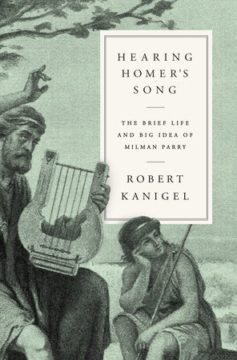 Milman Parry was arguably the most important American classical scholar of the 20th century, by one reckoning “the Darwin of Homeric Studies.” At age 26, this young man from California stepped into the world of Continental philologists and overturned some of their most deeply cherished notions of ancient literature. Homer, Parry showed, was no “writer” at all. The
 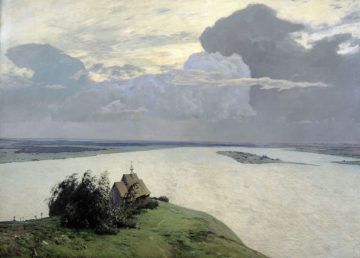 At the core of Anton Chekov’s short story, ‘
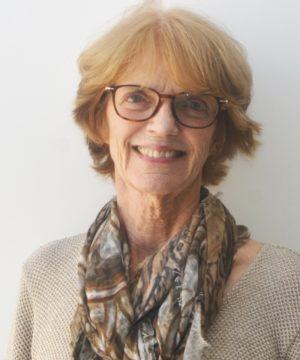 Released from the silo of conventional philosophy, I found the neuroscientists at the medical school to be uniformly hospitable and curious about what I was up to. A human brain was indeed delivered to me in the anatomy lab, and holding it my hands, I felt an almost reverential humility toward this tissue that had embodied someone’s love and knowledge and skills. It looked so small, relative to what a human brain can do.
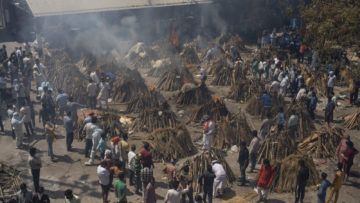 In cities big and small, hospitals are too full to accept new patients and diagnostic centers take up to three days or more to do chest scans of those who might have Covid-19. Doctors and hospital staff are completely exhausted.