
Adam Gopnik in The New Yorker:
 When the first volume of “In Search of Lost Time” appeared, a year before the Great War, the shock of its excellence was captured in a delicious exchange with André Gide, the magus of the Parisian literary scene. Apologizing for having passed on “Swann’s Way” for his Nouvelle Revue Française, Gide offered an explanation almost more insulting than the original rejection: “For me you were still the man who frequented the houses of Mmes X. and Z., the man who wrote for the Figaro. I thought of you, shall I confess it, as ‘du côté de chez Verdurin’; a snob, a man of the world, and a dilettante—the worst possible thing for our review.” Proust, who had money, had offered to help subsidize the publication, which, Gide fumbles to explain, only made it seem a dubious effort at buying a reputation. (That year, Gide confided in his journal his doubts that any Jewish writer could truly master the “virtues” of the French tradition.)
Proust responded with the most beautiful fuck-you letter in literary history, suavely pretending that Gide’s belatedly flattering letter made up for all the previous insults: “Had there been no rejection, no repeated rejections by the N.R.F., I should never have had your letter. . . . The joy of receiving your letter infinitely surpasses any I should have had at being published by the N.R.F. . . . How I should like to be able to give someone I loved as much pleasure as you have given me.” Gide, no fool, made a firm offer to publish the rest of the novel, which the Nouvelle Revue did, right through to its completion.
The exchange underlines several aspects of Proust as a phenomenon. First, Proust landed on his contemporaries with something of the same revelatory shock that he delivers to us. Perhaps only the abrupt celebrity of Karl Ove Knausgaard has had the same effect in our time. What made the metamorphosis? The unimaginably large space between the Proust of “The Mysterious Correspondent” and the Proust of “Swann’s Way” lies in his learning to trust the meandering nature of his own intelligence. He found a voice by hearing his own. The one thing that Proust’s mature literary manner is not is mannered. It was as natural and unimpeded as Mark Twain’s. His mind moved exactly as his sentences do, and his gift was to be able to trace its movements without being halted by other people’s literary rules.
More here.
 Usain Bolt won the men’s 100 metre final in the 2016 Olympic Games in 9.81 seconds and 42 strides. A few days later, Eliud Kipchoge ran 42 kilometres in 2 hours and 8 minutes to win the marathon. These extraordinary feats pose very different challenges for the human body, but the races began in much the same way. As the starting pistol fired, Bolt and Kipchoge began to use creatine phosphate, an energy-rich molecule stored in muscle tissue, to generate the energy-carrying molecule ATP. In a few seconds, however, both athletes’ stores of creatine phosphate were depleted, forcing their bodies to break down glucose to provide ATP to contracting muscle cells for a few more minutes. For Bolt and his fellow sprinters, a few minutes seems like an age. But for marathon runners, there is much farther to go. To reach the finish line, these endurance athletes rely on a slower, but more efficient way to generate ATP that uses oxygen to burn fats and carbohydrates, in structures inside the cell called mitochondria.
 Early in 2016, not long after the inauguration of Donald Trump as President of the United States, an artist named Arthur Jafa screened a work of video art at Gavin Brown’s Enterprise in New York City. The video was titled Love is the message, the message is death. It is about seven minutes long. It is constructed of found footage ranging in time from the immediate present to shaky clips from the early days of film. Most of the clips are just a couple of seconds long. Generally, they feature Black people, African Americans in specific. Much of the footage is upsetting. That’s to say, there are clips of police brutality against Black people. These clips are interspersed with other images not obviously related to the specific issue of police mistreatment of African Americans. The entire video is set to the music of Kanye West’s gospel-ish song Ultralight Beam.
 When you hit “send” on a text message, it is easy to imagine that the note will travel directly from your phone to your friend’s. In fact, it typically goes on a long journey through a cellular network or the Internet, both of which rely on centralized infrastructure that can be damaged by natural disasters or shut down by repressive governments. For fear of state surveillance or interference, tech-savvy protesters in Hong Kong avoided the Internet by using software such as FireChat and Bridgefy to send messages directly between nearby phones.
 The past week’s demonstrations in Colombia have shown that popular dissatisfaction is surging after a year of COVID-19 lockdowns. Although the government’s tax reform proposal may have been the immediate trigger for the unrest, pent-up anger has been building since 2019 over social inequality, unemployment, the murder of social leaders, and the conspicuous absence of the state in peripheral regions far from Bogotá. All of these problems have only been aggravated by the pandemic.
 The term “churails” is Pakistan’s c-word, translated literally as “witches,” but more accurately understood as a loaded epithet for a demonic, unstable, uncontrollable species of woman, the so-called bitch/witch. Filmmaker Asim Abbasi’s über-stylish series embraces the insult, celebrating the difficult women of Pakistan and reveling in their power through ten hours of exceptional television. The four central women of Churails (Asim Abbasi, 2020–) are drawn from across social classes and life experiences but come together with a mission: to form a detective agency that hunts down the terrible men of Karachi. They work under cover, literally, as their front is a clothing business called Halal Designs, where they meet in a subterranean control room that looks straight out of The Avengers to plot their missions. In a kind of extrajudicial feminist fantasy, they traverse the streets of Karachi in burkas, opening up basements and hidden corners of Pakistani homes in the dark of night, uncovering prostitution rings, secrets, and misogynistic murderers.
 Remember the way we brought back provisions to make our poor feasts in all the places where we pitched our tent like nomads? Remember the good taste of bread when we got it by a miracle and ate it together? And our last winter in Voronezh. Our happy poverty, and the poetry you wrote. I remember the time we were coming back once from the baths, when we bought some eggs or sausage, and a cart went by loaded with hay. It was still cold and I was freezing in my short jacket (but nothing like what we must suffer now: I know how cold you are). That day comes back to me now. I understand so clearly, and ache from the pain of it, that those winter days with all their troubles were the greatest and last happiness to be granted us in life.
 In the view of many scientists, Artificial Intelligence (AI) isn’t living up to the hype of its proponents. We don’t yet have safe driverless cars—and we’re not likely to in the near future. Nor are robots about to take on all our domestic drudgery so that we can devote more time to leisure. On the brighter side, robots are also not about to take over the world and turn humans into slaves the way they do in the movies.
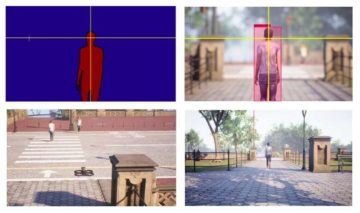 Emerging technologies such as artificial intelligence (AI) algorithms, mobile robots and unmanned aerial vehicles (UAVs) could enhance practices in a variety of fields, including cinematography. In recent years, many cinematographers and entertainment companies specifically began exploring the use of UAVs to capture high-quality aerial video footage (i.e., videos of specific locations taken from above). Researchers at University of Zaragoza and Stanford University recently created CineMPC, a computational tool that can be used for autonomously controlling a drone’s on-board video cameras. This technique, introduced in a paper pre-published on arXiv, could significantly enhance current cinematography practices based on the use of UAVs.
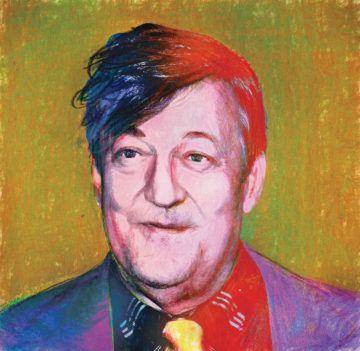 Stephen Fry: I do. I loved him. He was adorable company, but I was also quite scared of him. He was a much tougher figure than I. He didn’t mind being disliked. He didn’t mind being howled down even. He seemed to enjoy it. I can quite imagine Hitchens being on the same platform with a Ben Shapiro perhaps. But I can’t imagine him having come out on the side of Trump. Hitchens just had a style that suited America despite his Britishness. It was the swagger. I miss that the culture doesn’t have enough of these sorts of people. Toward the last year of his life, I would visit another one of them, Gore Vidal, in Los Angeles, where he had his house; it was so overgrown in the garden that it was dark inside. He would retell stories of his great rows with Norman Mailer and Susan Sontag and William Buckley. Their arguments could be mordant and full of venom, but they weren’t as unhappy as so many debates now. There was a kind of joy and pleasure in the fight.
 Recent White House initiatives suggest that addressing climate change has risen to the policy forefront of government at the presidential level for the first time in US history. Last week President Biden convened an online international meeting of heads of state on the issue and committed the US to a dramatic effort to reduce greenhouse gas emissions to a level of 50 percent of emissions in 2005 by the year 2030, which will require unprecedented action and cooperation between government and major industries.
 In a new, well-documented
 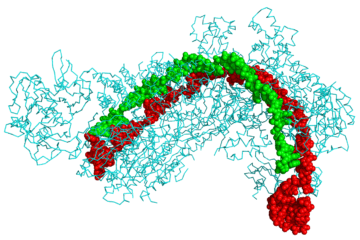 The Nobel prize in chemistry awarded last year to the biochemists Jennifer Doudna and Emmanuelle Charpentier for the genetic modification technique called CRISPR cemented the popular idea that a new era of precision manipulation of hereditary material had arrived. The award came on the heels of the unauthorized use of the technique by the scientist He Jiankui in 2018 in China in an effort to produce individuals (twin girls in this case) resistant to HIV, and a flurry of studies in early 2020 showing that accuracy in altering DNA in a test tube or bacteria in a culture dish, did not hold up when applied to animal embryos. Attempts to modify single genes in human embryos (not intended to be brought to full-term) in fact led to “
 After a decade of fighting for regulatory approval and public acceptance, a biotechnology firm has released genetically engineered mosquitoes into the open air in the United States for the first time. The experiment, launched this week in the Florida Keys — over the objections of some local critics — tests a method for suppressing populations of wild Aedes aegypti mosquitoes, which can carry diseases such as Zika, dengue, chikungunya and yellow fever.