
i ask them about birth
about splitting
inevitable tiny laugh
oh it’s not so bad
your body was built
for this. we have mothered
for centuries. i gesture
to the line of women
behind me. my great
great grandmother
died giving light
my other great
great grandmother
gave light and lived
but not willingly
and that is death too
my other other
great great grandmother
drank (my grandfather
her son was the little boy
retrieving his sleeping mother
from the velvet kentucky
lounges) and my other
other other great great
grandmother i know nothing
of her. all i have
is a picture of a woman
seated, her hands braided
black hair meticulous
middle parted, a face
like medicine, a face
that says I have always been
i am this last woman’s namesake
estefania, meaning – a crown
a garland. that which surrounds or
encircles. the first martyr
a man i love enters the poem
and asks me to put the picture away
she upends him
she upends me too
i tuck her into a tiny
corner of myself
by Estefania Stout Larios
from The Rumpus, 5/27/21
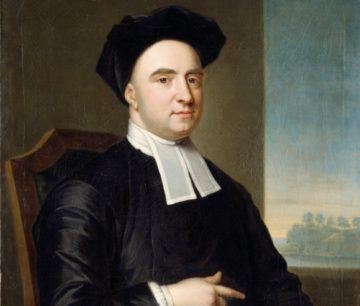 George Berkeley is one of the greatest philosophers of the early modern era. Along with John Locke and David Hume, he was a founder of Empiricism, which championed the role of experience and observation in the acquisition of knowledge. He influenced Kant and John Stewart Mill, and even pre-empted elements of Wittgenstein. His book The Principles of Human Knowledge is a masterwork still set on university philosophy courses the world over, and indeed there is a famous university named after him in California. The celebrated Irishman even inspired a limerick.
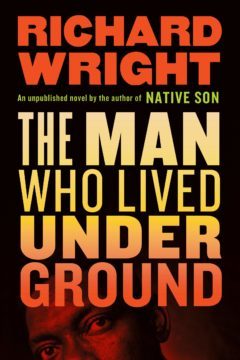 A surrealist and existentialist tale, The Man Who Lived Underground was rejected by several publishers, but the novel found an afterlife via a series of winding roads. The rejections led Wright to condense the narrative, in particular cutting the lengthy description of police violence in the novel’s opening, and turn it into a short story that was published in 1944. That story was admired by Wright’s friend and mentee, Ralph Ellison. Later, after winning the National Book Award in 1953 for Invisible Man, Ellison stated that his novel had been inspired by Fyodor Dostoevsky’s Notes From Underground. While he and Wright had fallen out by this time, Wright’s influence on the novel was hard to deny. Despite this fact, Invisible Man entered the American literary canon, while Wright’s story languished in obscurity. In the popular imagination, he became known as the author of Native Son, Black Boy, and (for those interested in anti-colonialism) The Color Curtain, but not as the originator of invisible men living underground. That honor remained Ellison’s.
 I am going to try to account for the reasons painters have consistently felt it OK to take note of the critiques aimed at the validity of their art form but almost always dismiss them in practice. A lot of what I have to say here is well-known in the mainly unspoken way things can get well-known. So I am trying to spell out what I think many people already know, and what I believe most painters do think.
 One day last August, as they struggled to figure out whether to lift Covid-19 restrictions, the supervisors of Placer County, California, convened a panel of experts. It was a reasonable move. If being a local official could be thankless in normal times, the pandemic had made it nearly impossible. Federal messaging had been hopelessly muddled. Rules meant to stop viral spread came with painful side effects. One constituent insisted the sheriff enforce lockdowns; another called stay-at-home-orders an economic death sentence. Wanting advice from doctors and professors was hardly surprising.
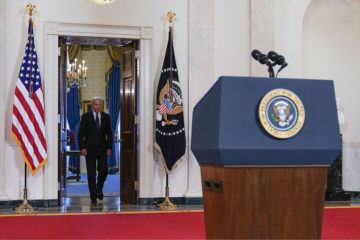 For decades, the Democratic Party has stood by Israel in times of war and peace.
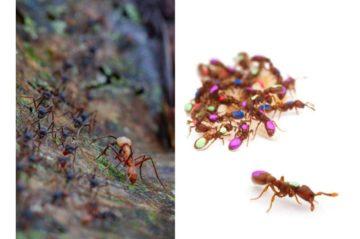 Army ants form some of the largest insect societies on the planet. They are quite famous in popular culture, most notably from a terrifying scene in Indiana Jones. But they are also ecologically important. They live in very large colonies and consume large amounts of arthropods. And because they eat so much of the other animals around them, they are nomadic and must keep moving in order to not run out of food. Due to their nomadic nature and mass consumption of food, they have a huge impact on arthropod populations throughout tropical rainforests floors.
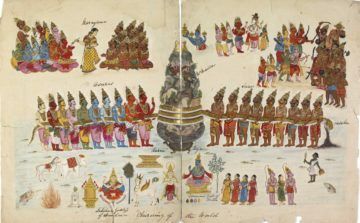 I believe that the books and stories we fall in love with make us who we are, or, not to claim too much, the beloved tale becomes a part of the way in which we understand things and make judgments and choices in our daily lives. A book may cease to speak to us as we grow older, and our feeling for it will fade. Or we may suddenly, as our lives shape and hopefully increase our understanding, be able to appreciate a book we dismissed earlier; we may suddenly be able to hear its music, to be enraptured by its song.
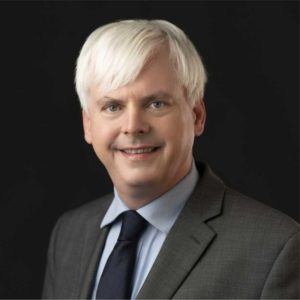 Democracy posits the radical idea that political power and legitimacy should ultimately be found in all of the people, rather than a small group of experts or for that matter arbitrarily-chosen hereditary dynasties. Nevertheless, a good case can be made that the bottom-up and experimental nature of democracy actually makes for better problem-solving in the political arena than other systems. Political theorist Henry Farrell (in collaboration with statistician
  When we first traveled to
  Along with fish, aluminium and Björk, Eve Online is one of Iceland’s biggest exports. Launched in 2003, it is a science-fiction project of unprecedented scale and ambition. It presents a cosmos of 7,500 interconnected star systems, known as New Eden, which can be travelled in spaceships built and flown by any individual. In-game professions vary. There are miners, traders, pirates, journalists and educators. You are free to work alone or in loose-knit corporations and alliances, the largest of which are comprised of tens of thousands of members.
 The American Land Museum is a network of landscape exhibition sites being developed across the United States by the Center for Land Use Interpretation and other agencies. The purpose of the museum is to create a dynamic contemporary portrait of the nation, a portrait composed of the national landscape itself. Selected exhibition locations represent regional land use patterns, themes, and development issues. Within each exhibit location are a number of specified experiential zones with collections of material artifacts in the landscape, landmarks selected from among the field of existing structures.
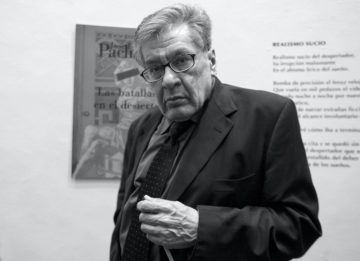 Reading Battles in the Desert, one will note the special magic of Pacheco’s writing — that simplicity, so deceptive and so masterful. The narrative voice is a well-calibrated device gliding through the reality of things, stories, and emotions, always giving the impression that memory never betrays. “Pacheco’s craft and mastery make writing look easy,” writes Luis Jorge Boone in “José Emilio Pacheco: Un lector fuera del tiempo” (“José Emilio Pacheco: a reader outside of time”), an essay on the author’s work. “Achieving that almost magical ease took Pacheco years of rewrites, edits, cuts. The layers upon layers of work the author put into his books over the years is legendary.”
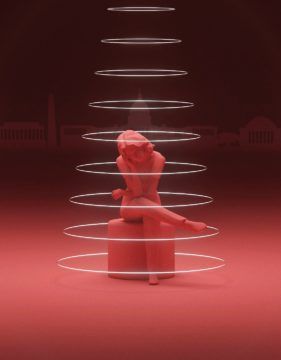 During the final weeks of the Trump Administration, a senior official on the National Security Council sat at his desk in the Eisenhower Executive Office Building, across from the West Wing, on the White House grounds. It was mid-November, and he had recently returned from a work trip abroad. At the end of the day, he left the building and headed toward his car, which was parked a few hundred yards away, along the Ellipse, between the White House and the Washington Monument. As he walked, he began to hear a ringing in his ears. His body went numb, and he had trouble controlling the movement of his legs and his fingers. Trying to speak to a passerby, he had difficulty forming words. “It came on very suddenly,” the official recalled later, while describing the experience to a colleague. “In a matter of about seven minutes, I went from feeling completely fine to thinking, Oh, something’s not right, to being very, very worried and actually thinking I was going to die.”
 I
I