
Jonathan Shaw in Harvard Magazine:
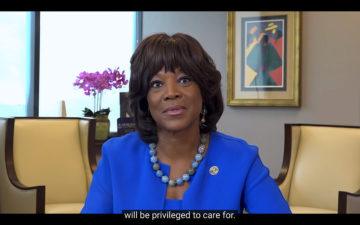 “YOU ARE GRADUATING AT AN INFLECTION POINT in the history of health care,” Valerie Montgomery Rice, M.D. ’87, president and dean of the Morehouse School of Medicine, told graduates of Harvard Medical School (HMS) and the Harvard School of Dental Medicine in Thursday afternoon’s Class Day address. That same sentiment echoed throughout the virtual ceremony, as nearly every speaker’s remarks were colored by the experience of the pandemic, and by the knowledge that this year’s class of doctors and dentists would be entering a changed world. Nicholas Paul DeMeo, D.M.D. ’21, said that after the past year, he and his classmates “have only grown stronger in our mission to alleviate suffering.” Alumni Relations chair A.W. Karchmer, M.D. ’64, noted how COVID-19 had brought out the best in health-care practitioners but “exposed weaknesses and some of the worst aspects of our health-care system.” And Jamaji Chilaka Nwanaji-Enwerem, M.D. ’16, Ph.D. ’18, M.P.P. ’21, spoke of a newfound awareness: “We often reflect on the vulnerability of our patients, how we serve them, offering them strength in their moments of suffering,” he said. “But during this pandemic, when stockpiles of masks and other protective equipment ran low, new light was shone on our vulnerability.”
Montgomery Rice—whose daughter, Jayne Rice, M.D. ’20, graduated in the family’s living room during last year’s virtual Commencement—picked up these threads. Born and raised in Macon, Georgia, she recalled the culture shock of her arrival in Boston in the 1980s and the “small but instructive moments” at Harvard that yielded lessons about the same cultural and racial divides that were laid bare this past year, in COVID-19’s disproportionate toll on communities of color, and in the so-called “mask wars” often driven more by ideology than by science. She urged graduates to take seriously the idea of universal connection underlying public health: “COVID-19 has taught us that the health of each person not only affects the health of every person, but, literally, can bring the world to its knees. For the past year, the pandemic has shut down life as we knew it. We cannot ignore the fact that our individual survival is linked together in one humanity—no matter the color of our skin, our background, age, sexual orientation…. Every health inequity reduces the quality of life for everyone else.”
More here.
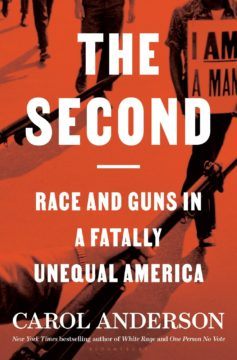 In “The Second: Race and Guns in a Fatally Unequal America,” the historian Carol Anderson argues that the Second Amendment to the United States Constitution, which provides for a “well regulated militia” and “the right of the people to keep and bear arms,” offers “a particularly maddening set of double standards where race is concerned.” On the one hand, she claims that slaveholding founding fathers insisted on the inclusion of the Second Amendment in the Bill of Rights in order to assure themselves of a fighting force willing to suppress slave insurrections. On the other hand, she maintains that racist practices have deprived Blacks of access to arms that might have enabled them to defend themselves in the absence of equal protection of law.
 Aftab’s new album
 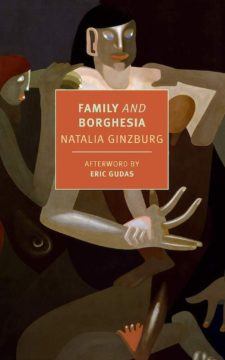 I WAS 24 years old when I met Natalia Ginzburg in Rome. I had just come from three weeks of intensive study of Italian at the Universita per Stranieri di Perugia (University for Foreigners in Perugia), and before that had managed to pass an Italian reading comprehension test for a graduate program that I never completed. With the misplaced confidence of the young, I assumed I’d be able to conduct an adequate conversation with her. During the Italian course at Perugia, the teacher had introduced us to Ginzburg’s early essays collected in Le piccole virtù (The Little Virtues) and I was immediately enamored of them. Every lucid, plangent sentence enchanted my ears and twisted my heart. The essay “Broken Shoes” considered the condition of her shoes as she walked through Rome after the fascists murdered her husband, preceded by a spell of political exile with their children in a village in the Abruzzi region. The essays about their life in that town sketched the mutually generous friendships that developed between her family and the local people.
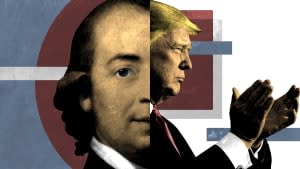 There are many ways to understand the tendency roiling liberal-democratic politics in recent years, from the outcome of the Brexit vote and the presidency of Donald Trump to the surge in support for antiliberal politicians and parties across Europe, Asia, and the Americas. It’s been variously described as an explosion of right-wing populism, a resurgence of nationalism, a renewed flowering of xenophobia and racism, even a rebirth of fascism. But what all of these theories are striving to explain is a pervasive collapse of faith in multiculturalism as an organizing principle of free societies.
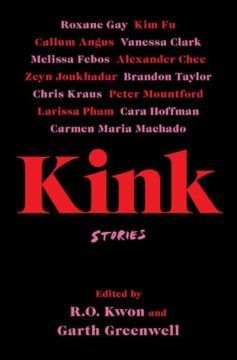 Kink, a new anthology of short fiction edited by R. O. Kwon and Garth Greenwell, intends to “[c]lose some of the distances between our solitudes” by collecting kinky sex-centered stories written by 15 authors of different races, sexual orientations, gender identities, and ethnicities. A quick look at the writers’ bios, though, shows how remarkably alike they are. Five of them graduated from, or currently teach at, the University of Iowa’s MFA program. Almost all are famous in the world of contemporary literary fiction — in addition to the editors, Kink’s contributors include Roxane Gay, Chris Kraus, Carmen Maria Machado, Alexander Chee, and Brandon Taylor. The kink, too, is pretty one-note. There’s a lot of BDSM, most of it light: boot-licking, choking, spitting, and slapping.
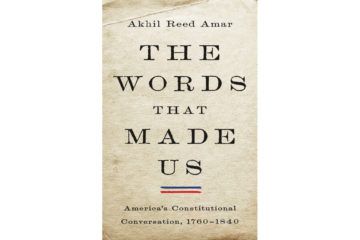 Who wrote the Declaration of Independence? Thomas Jefferson is generally credited as its author, but Akhil Reed Amar believes there’s a better answer. “America did,” Amar argues in “The Words That Made Us: America’s Constitutional Conversation, 1760-1840.”
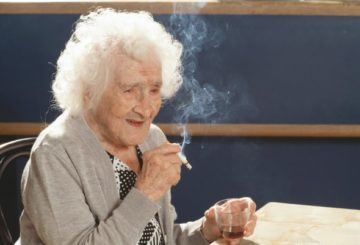 The chorus of the theme song for the movie Fame, performed by actress Irene Cara, includes the line “I’m gonna live forever.” Cara was, of course, singing about the posthumous longevity that fame can confer. But a literal expression of this hubris resonates in some corners of the world—especially in the technology industry. In Silicon Valley, immortality is sometimes elevated to the status of a corporeal goal. Plenty of big names in big tech have sunk funding into ventures to
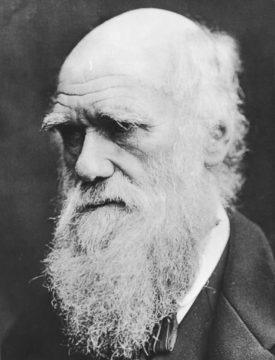 Last week the prestigious and normally staid journal Science kicked up a fuss by running a short essay on Charles Darwin that provoked the anti-woke.
 President
 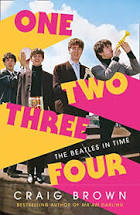 Wait, not another book about the Beatles? Surely that story’s bones have been picked clean by now? What saves One Two Three Four from being just another Beatles indulgathon is how the author has reworked the standard biography template. His take is a seductive miscellany of essays, insider accounts, opinions, flight-of-fancy yarns, and more. Much of it is sourced from already published material but Brown also includes his own opinions and anecdotes. Somehow he has managed to create a uniquely fresh perceptive on a well-worn story.
 “FILING FOR DIVORCE,”
  The international body representing stem-cell scientists has torn up a decades-old limit on the length of time that scientists should grow human embryos in the lab, giving more leeway to researchers who are studying human development and disease. Previously, the International Society for Stem Cell Research (ISSCR) recommended that scientists culture human embryos for no more than two weeks after fertilization. But on 26 May, the society said it was relaxing this famous limit, known as the ‘14-day rule’. Rather than replace or extend the limit, the ISSCR now suggests that studies proposing to grow human embryos beyond the two-week mark be considered on a case-by-case basis, and be subjected to several phases of review to determine at what point the experiments must be stopped.