
From Phys.Org:
 Research conducted by Qiang et al has discovered a link between a protein in red blood cells and age-related decline in cognitive performance. Published in the open access journal PLOS Biology on 17th June 2021, the study shows that depleting mouse blood of the protein ADORA2B leads to faster declines in memory, delays in auditory processing, and increased inflammation in the brain. As life expectancies around the world increase, so are the number of people who will experience age-related cognitive decline. Because the amount of oxygen in the blood also declines with age, the team hypothesized that aging in the brain might be naturally held at bay by adenosine receptor A2B (ADORA2B), a protein on the membrane of red blood cells which is known to help release oxygen from the blood cells so it can be used by the body. To test this idea, they created mice that lacked ADORA2B in their blood and compared behavioral and physiological measures with control mice.
The team found that as the mice got older, the hallmarks of cognitive decline—poor memory, hearing deficits, and inflammatory responses in the brain—were all greater in the mice lacking ADORA2B than in the control mice. Additionally, after experiencing a period of oxygen deprivation, the behavioral and physiological effects on young mice without ADORA2B were much greater than those on normal young mice. Thus, aging in the brain is naturally reduced by ADORA2B, which helps get oxygen to the brain when needed. Further testing will be needed to determine whether ADORA2B levels naturally decline with age and whether treatment with drugs that activate ADORA2B can reduce cognitive decline in normal mice.
More here.
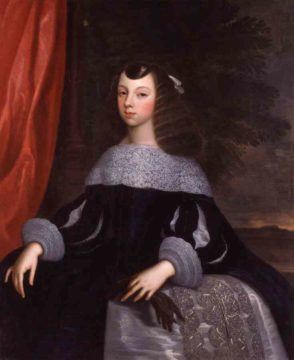 From our school days, it is drilled into us Indians that Bombay was gifted by the Portuguese to the British as a wedding present when Charles II of England married Catherine of Braganza. There was, however, much more to the royal union than the one-line summary suggests. It was 360 years ago, on June 23, 1661, that the Luso-English treaty was endorsed during the regency of Dona Luisa de Gusmão. The treaty, which sealed the union of Charles II (1630-1685) and Catarina de Bragança (1638-1705), included several articles and clauses that had more to do with diplomacy than marital bliss. Under article 11, the Portuguese gave up the “seven islands” of Bombay in exchange for English military help to defend the pepper port of Cochin and recover the island of Ceylon. Also under the treaty, England secured Tangier in North Africa, trading privileges in Brazil and the East Indies, religious and commercial freedom in Portugal, and two million Portuguese crowns (about £300,000). In return, Portugal obtained British military and naval support (which would prove to be decisive) in her fight against Spain and liberty of worship for Catherine.
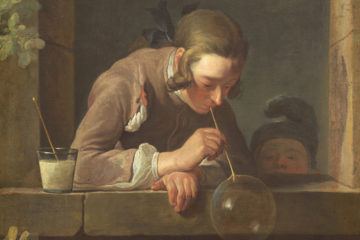 What do the roof of the Munich Olympic Stadium, Glinda the Good Witch, Disney’s Cinderella, the art series “Unweave a Rainbow” by neo-surrealist painter Ariana Papademetropoulos, Sir Isaac Newton, the first “viral” ad campaign of the late Victorian era, and morose Dutch still-life paintings have in common? They all reflect a preoccupation with soap bubbles, with shiny, shimmery, and iridescent spheres that we tend to associate with children and play.
 “I have written about it and used it up,” says the narrator of “Home,” a story Munro published a few years after Lives of Girls and Women. In it she imagines returning to her hometown to care for her ailing father. But Munro never did—she never used it up, and Del also comes to understand she won’t have to leave home to find material. It is all around her, inexhaustible though latent, for what she must learn to do—the job of any writer—is to take the parochial and make it universal. “People’s lives, in Jubilee as elsewhere,” she says, “were dull, simple, amazing and unfathomable.”
 White men who had a Black neighbor when they were growing up are more likely to be Democrats and less likely to be Republican, an influence that can last several decades later.
 Deisseroth, 49, is talking in the lush, squirrel-filled garden of his house in Palo Alto, northern California, where he has spent much of the pandemic looking after his four young children. But he has had much else on his mind. He has been finishing his book, Connections: A Story of Human Feeling, an investigation into the nature of human emotions. He has been meeting with psychiatric patients over Zoom as well as putting in night shifts as an emergency hospital psychiatrist. And he has fitted all of this around his day job, which is using tiny fibre-optic cables to fire lasers into the brains of mice that he has infected with cells from light-sensitive algae and then observing what happens, millisecond by millisecond, when he turns individual neurons on or off.
 Many great books have been written in prison. The works that comprise this troubling genre draw together the horrors of incarceration and the state of the outside world, merging the two distinct but inextricably linked spheres. Despite this convergence, when Mohamedou Ould Slahi scrawled pages beneath the dingy half-light of a Guantánamo prison cell, he could not have envisioned the reception his writings would meet beyond those concrete walls. His words went on to circulate in a world that, over the course of the 14 years he was held without charge, he was unsure he would ever see again.
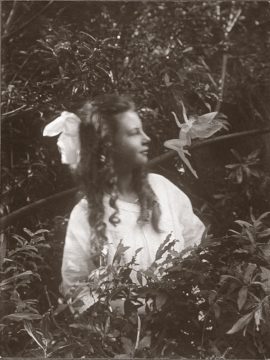 Conan Doyle was a true believer in ghosts, afterlives, psychics, magical beings, other worlds—a conviction strengthened by the deaths of his son, brother, two brothers-in-law, and two nephews in or shortly after World War I. He was fervent and evangelical, determined to use his eminent literary reputation to add credence to otherwise dismissed possibilities. Maybe he hoped that the almost mythical rationality of Sherlock Holmes could lend some excess coherency to the supernatural predilections of his creator. This is why the photographs were so urgent, why the private scenes of play between two Yorkshire girls became so central. The fundamental principle of Sherlock Holmes is that every problem can be solved if one only looks hard enough. There are no secrets, no mysteries, only missed details: everything you need to know is right in front of you. Pull out the magnifying glass. Zoom in. Enhance! And there they are. The fairies are right there.
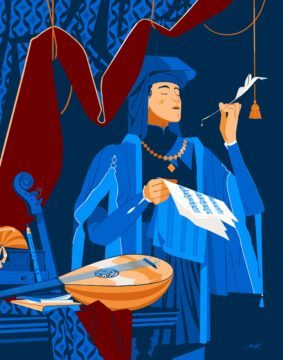 The singer and composer Josquin Desprez traversed his time like a diffident ghost, glimpsed here and there amid the splendor of the Renaissance. He is thought to have been born around 1450 in what is now western Belgium, the son of a policeman who was once jailed for using excessive force. In 1466, a boy named Gossequin completed a stint as a choirboy in the city of Cambrai. A decade later, the singer Jusquinus de Pratis turned up at the court of René of Anjou, in Aix. In the fourteen-eighties, in Milan, Judocus Despres was in the service of the House of Sforza, which also employed Leonardo da Vinci. At the end of the decade, Judo. de Prez joined the musical staff at the Vatican, remaining there into the reign of Alexander VI, of the House of Borgia. The name Josquin can be seen carved on a wall of the Sistine Chapel. In 1503, the maestro Juschino took a post in Ferrara, singing in the presence of Lucrezia Borgia. Not long afterward, Josse des Prez retired to Condé-sur-l’Escaut, near his presumed birthplace, serving as the provost of the local church. There he died, on August 27, 1521. His tomb was destroyed during the French Revolution.
 In the most basic sense, a coup is an illegal takeover of government power by an individual or faction. A coup can be attempted by members of the existing government and political system or those outside of it. A coup can also involve both groups working together towards the same goal of overthrowing the government. The connotative meaning, symbolism, and emotional valence of the word “coup” is something much broader:
  More than 49,000 years ago, a family of Neanderthals set up camp in a cave high in Siberia’s Altai Mountains, overlooking a river valley where bison, red deer, and wild horses roamed. In the cave’s main gallery, a teenage girl lost a tooth, perhaps while gnawing on bison that her father or his kin had hunted in the sweeping grasslands.
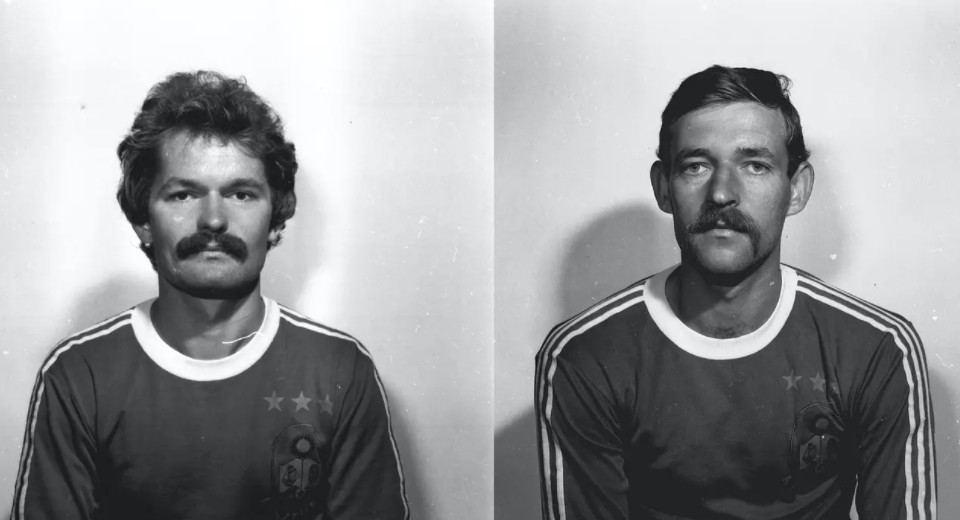 Before the 1990s, “football book” was considered an oxymoron. Down at the bottom of the literary totem pole, even below self-help books sold in airports, was football writing.
 In California, wildfire has always been a fact of existence. Every year, from June through September, some sky somewhere in the state fills with smoke. But since 2017, when the Tubbs Fire tore through Santa Rosa, fires have shifted from the periphery of collective attention into the burning spotlight. Unlike those in years before, the Tubbs Fire did not confine itself to wildland but cut its path through a city. And unlike fires in years before, it came so fast that people didn’t have time to get out. Some took shelter in swimming pools while the flames washed over them. Twenty-two people died. At the time, it was the most destructive wildfire in California history.
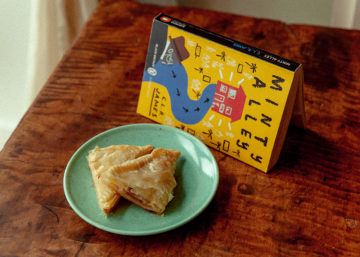 The strength and value of the ordinary man is a through line in James’s diverse body of work, and nowhere is this interest more evident than in Minty Alley, which eschews the world stage in favor of a single yard in a back alley in Port of Spain. In this book, Haynes, a young, passive middle-class intellectual, is forced after his mother’s death to rent lodgings in a working-class neighborhood, the kind of place where men kept mistresses and things that were improper to discuss occurred, according to the James documentary Every Cook Can Govern. Here, Haynes’s life is vastly, if temporarily, enriched by the people he meets and the relationships he develops. James himself was not from such a neighborhood, but while conducting research for the book, he interviewed local women about their lives. The results are, as Evaristo writes in her introduction, “a story about a Caribbean community in relationship with itself” and “a peek into a society of nearly one hundred years ago, which shows us that while the circumstances are different, our essential passions, preoccupations and ambitions remain the same.”