
Akwaeke Emezi in The Paris Review:
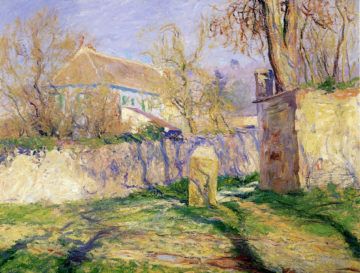 In Akwaeke Emezi’s new book, Dear Senthuran: A Black Spirit Memoir, the writer traces their experience as an ọgbanje, an Igbo term that refers to a spirit born into a human body, through letters to friends, family, and lovers. In the below excerpt Emezi describes trying to find community within their M.F.A. program and their discovery that working fearlessly could be a form of worldbending.
Dear Kathleen,
Sometimes, you remember me better than I remember myself. I think that’s important in a friendship—to hold reflections of people for them, be a mirror when they start fading in their own eyes. I hope I do the same thing for you, too. I can’t wait for you to get here for Christmas; I know Germany has been hard on you this fall.
The last time we texted, you wrote, I need you and our time this break. I know what you mean. The world can be a grit that sands away at us, and love can be a shelter from that. If this godhouse in the swamp is a wing, then I imagine you arriving and joining me underneath it, where we make syrup with the chocolate habaneros from my garden and sit out on the haint-blue porch. I wish the house was bigger, five or seven bedrooms instead of three, so I could fit more of us in here. We are safer with each other. We see the worlds we’re trying to make, and we lend our power to each other’s spells. I was steaming baos in my kitchen today and I got so excited to show you this house, my house. Just a year ago, you came down to the swamp for Christmas and we stayed in that sublet and cooked fish fresh from the lake. And now I have this house, this land, and the shock of what I made happen still makes me reel when I look at it fully. You think I’d be used to it by now, the way I can make things come true, but every year it expands. Every year I make bigger and bigger things happen—and it’s not just me, obviously. It’s my chi and the deityparents and God and so on, but I have to say yes first and I have to do the work and I can’t believe it works.
You know how people are so in awe of Octavia Butler’s journal, the way she wrote down what she wanted with her books? I think it’s because written worldbending resonates so widely.
More here.
 O
O Marco D’Eramo in The New Left Review’s Sidecar:
 Frankie Thomas in The Paris Review:
 W-3, Bette Howland’s memoir of her stay in a psychiatric hospital following an overdose, was first published in 1974, and comes to us now following the reissue, last year, of her 1978 collection of stories,
  Is Poe really the most influential American writer? Note that I didn’t say “greatest,” for which there must be at least a dozen viable candidates. But consider his radiant originality. Before his death in 1849 at age 40, Poe largely created the modern short story, while also inventing or perfecting half the genres represented on the bestseller list, including the mystery (“The Murders in the Rue Morgue,” “The Gold-Bug”), science fiction (“The Facts in the Case of M. Valdemar,” “The Conversation of Eiros and Charmion”), psychological suspense (“The Tell-Tale Heart,” “The Cask of Amontillado”) and, of course, gothic horror (“The Fall of the House of Usher,” “The Masque of the Red Death,” the incomparable “Ligeia”).
 When I’m stuck—and I’m stuck all the time—I look at “
 T
T WILLIAM LOGAN: I doubt critics of a critical temper are dying out, but grumpy critics rarely remain grumpy very long. John Simon, whose temperament even I sometimes found captious, was still growling into his 90s. A number of critics of my generation and the generation after came out roaring in their 20s but stopped writing criticism within a decade. Critics who fail to go along to get along are punished, supposedly. It may not be entirely untrue — I’ve been told twice that I was on track to win some small award, which went sideways when one of the judges raged about my criticism. If that’s the punishment the world metes out, it’s a revenge small and pathetic — and hilarious.
 The
The  I was startled when the phone rang while I was shaving. It was 7 am. The press attaché for Giorgio Armani called me in my Milan hotel room to tell me the designer wanted to have dinner with me that night. It was more a summons than an invitation. Mr. Armani was the sacred cow, the designer Mr. Fairchild was enthralled with, which is why almost all of his senior editors in New York City wore only Armani’s clothing—purchased with generous press discounts supplemented by the occasional, ostensibly forbidden unreported gift.