
A Veteran is Surprised by Militarization
We came down from the Chiricahua Mountains,
went even closer to the border, hiked rocky
hillsides off-road, spotted a five-striped sparrow,
so fine, yet overshadowed by the rotor noise
of the sporadic helicopter overhead. Our guide
said to hold up our binoculars, let them know
we were only birdwatchers, and we complied,
having already passed trucks stopped in the desert,
unloading ATVs that armed and armored men
rode off. Earlier, I’d asked about the tethered
gray dirigibles in the otherwise cloudless sky,
was told they were platforms for surveillance.
Overseas for decades, much of it in conflict
areas, I’d never seen such heavy arms, such war
materiel in my country, not outside military
bases. The border sun was bright, our pace
slow, but still, I had to close my eyes, breath
caught with twinges of fear and vertigo, darkness
in waves like a mirage, waves of sparrows fallen
by vertiginous plunge or slow slump, in the desert,
unseen by any person, me among them.
by Sandra Gustin
from The Poetry Foundation
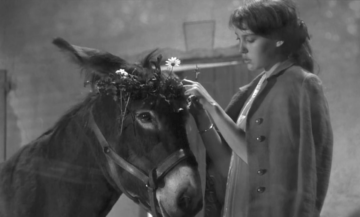 Is there any bit of popular philosophical wisdom more useless than the pseudo-Epictetian injunction to “live every day as if it were your last”? If today were my last, I certainly would not have just impulse-ordered an introductory grammar of Lithuanian. Much of what I do each day, in fact, is premised on the expectation that I will continue to do a little bit more of it the day after, and then the day after that, until I accomplish what is intrinsically a massively multi-day project. If I’ve only got one more day to do my stuff, well, the projects I reserve for that special day are hardly going to be the same ones (Lithuanian,
 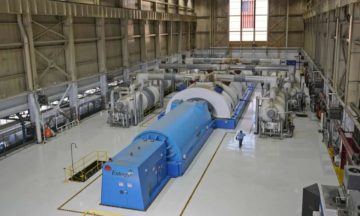 It’s a nightmare we should have seen coming. In Germany, nuclear power formed around a third of the country’s power generation in 2000, when a Green party-spearheaded campaign managed to secure the gradual closure of plants, citing health and safety concerns. Last year, that share fell to 11%, with all remaining stations scheduled to close by next year. A recent paper found that the last two decades of phased nuclear closures led to an increase in CO2 emissions of
  Iran’s presidential election on June 18 was the most farcical in the history of the Islamic regime – even more so than the 2009 election, often called an “electoral coup.” It was less an election than a chronicle of a death foretold – the death of what little remained of the constitution’s republican principles. But, in addition to being the most farcical, the election may be the Islamic Republic’s most consequential.
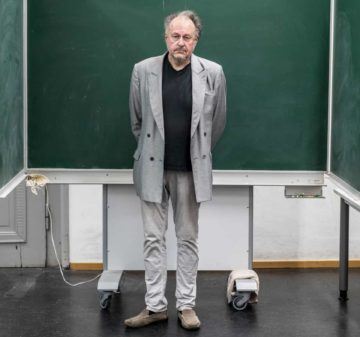 The name of the initiative was Project Cassandra: for the next two years, university researchers would use their expertise to help the German defence ministry predict the future.
 Last October, while waging the government’s new campaign against Islamic forms of “separatism,” French Interior minister Gérald Darmanin complained on television that he was frequently “shocked” to enter a supermarket and see a shelf of “communalist food” (cuisine communautaire).
 To live on a day-to-day basis is insufficient for human beings; we need to transcend, transport, escape; we need meaning, understanding, and explanation; we need to see over-all patterns in our lives. We need hope, the sense of a future. And we need freedom (or, at least, the illusion of freedom) to get beyond ourselves, whether with telescopes and microscopes and our ever-burgeoning technology, or in states of mind that allow us to travel to other worlds, to rise above our immediate surroundings. We may seek, too, a relaxing of inhibitions that makes it easier to bond with each other, or transports that make our consciousness of time and mortality easier to bear. We seek a holiday from our inner and outer restrictions, a more intense sense of the here and now, the beauty and value of the world we live in.
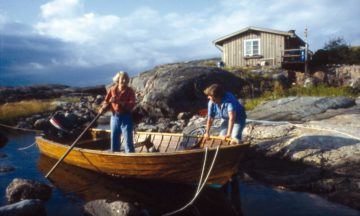 Tove Jansson’s writing is different. She has wonderful passages in which entire landscapes are made by peering at blades of grass and scraps of bark. Yet her main Moomin adventures are startlingly catastrophic. For all the light clarity of the prose – which is comic, benign and quizzical – these books show places gripped by ferocious forces, laid waste by storms and floods and snows. They speak (but never obviously) of characters resonating to the winds and seas around them. They include visions that now read like warnings of climate change: “the great gap that had been the sea in front of them, the dark red sky overhead, and behind, the forest panting in the heat”.
 Almost 75 years ago John Gunther produced his amazing profile of our country, “Inside U.S.A.” — more than 900 pages long, and still riveting from start to finish. It started out with a first printing of 125,000 copies — the largest first printing in the history of Harper & Brothers — plus 380,000 more for the Book-of-the-Month Club. It was the third-biggest nonfiction best seller of 1947 (ahead of it, only Rabbi Joshua Loth Liebman’s “Peace of Mind” and the “Information Please Almanac”). It was a phenomenon, but not a surprise: Gunther’s first great success, “Inside Europe,” published in 1936, had helped alert the world to the realities of fascism and Stalinism; “Inside Asia” and “Inside Latin America” followed, with comparable success — all three of these books were among the top sellers of their year, as would be “Inside Africa” and “Inside Russia Today,” yet to come. His “Roosevelt in Retrospect” (1950) is one of the best political biographies I’ve ever come across, a mere 400 pages long and pure pleasure to read. Like “Inside U.S.A.,” it is out of print — please, American publishers, one of you make them reappear.
 Wolfgang Streeck in the New Left Review‘s Sidecar:
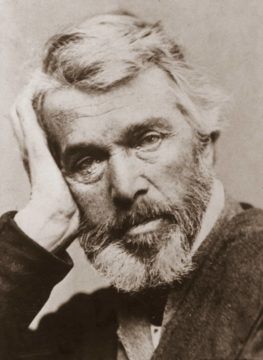 Matthieu Queloz in Aeon:
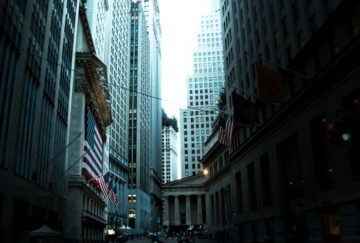 Robert Pollin and Gerald Epstein in Boston Review:
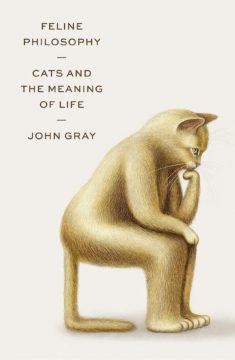 Paul J. D’Ambrosio in the LA Review of Books:
 A
A When reptile breeder Steve Sykes saw that two particular