
Category: Recommended Reading
Hans Küng (1928 – 2021)
Winferd Rembert (1945 – 2021)
Why Read the Classics?
Abdelfattah Kilito in The Baffler:
 WHAT IS THE POINT of reading the ancients? They are not of our world. They are peacefully asleep and do not want us to wake them. Let the dead bury their dead. We may hesitate a moment in our judgement and suppose that there are, perhaps, benefits and advantages to be gained from their company. Yet we immediately turn our faces away from them, admitting: we ought to read them, but we don’t. The matter remains a mysterious aspiration.
The strange thing is that despite not reading them, we behave as though we have read them and lay claim to the knowledge of their production. Personally, I have not read the Iliad, but I know the gist of it—and by the way, who reads Don Quixote? Most know about it only through the drawings of Gustave Doré or by way of a paragraph in the pages of a school textbook. This applies just as well to the majority of works designated as “classic.” What does this designation mean? Italo Calvino presented fourteen definitions of it, opening with the statement that the classic book is one which the reader says they re-read and never says they are currently reading.
It is commonly understood that every literature has a particular temporal sequence and a unique nomenclature for its stages. As a simple example, the French researcher in the literature of the Middle Ages is designated a “médiéviste.” (Paul Zumthor[1] is among the distinguished researchers in this field). Is it possible to apply this description to a researcher interested in Arabic texts in their particular era, regardless of whether the researcher is Arab or non-Arab? This seems to me quite farfetched, since the term “Middle Ages” does not align with Arab history, nor does it agree with what we know of the development of Arabic literature. Every literature has its own periodization, hierarchy, classic texts, and even classical age. According to the French, as it is known, the classical age par excellence is the seventeenth century.
More here.
Cynthia Ozick, Smasher of Idols
Giles Harvey in The New Yorker:
 Few writers have borne witness to the slow-healing bruises of early neglect more memorably than Cynthia Ozick, whose own first novel, “Trust” (1966), didn’t appear until she’d reached the practically geriatric age of thirty-seven. “There one sits, reading and writing, month after month, year after year,” Ozick has said of her long pre-print limbo. “There one sits, envying other young writers who have achieved a grain more than oneself. Without the rush and brush and crush of the world, one becomes hollowed out. The cavity fills with envy.” As it happened, “Trust,” a six-hundred-and-fifty-page homage to Henry James, Ozick’s once and future inspirator, did little to enhance her name recognition. (“Nobody has ever read it,” she said several decades later, only mildly overstating the case.) In the end, it was envy itself that became the means of her literary ascent.
…To publish a novel in your early twenties is impressive; to publish one at the age of ninety-three is something else altogether. That is the age that Ozick turns on April 17th, a few days after the publication date of her latest book, which bears the self-ironic title “Antiquities” (Knopf). A brisk work of some thirty thousand words, it explores her favorite subjects—envy and ambition, the moral peril of idolatry—in her favorite form. As you might expect, it also has much to say about last things, and the long perspectives open to the human mind as it approaches its terminus.
“The limitless void that awaits us” is much on the mind of Ozick’s narrator, as well it might be. Lloyd Wilkinson Petrie, a retired lawyer, is getting on in years. It is 1949, and Petrie has come to live at Temple Academy, the esteemed Westchester boarding school he attended in his youth. The school, long defunct, has lately been converted into a retirement home for its trustees, all former pupils. Each has agreed to write a short memoir of his school days as part of a sort of institutional history. What sounds like a harmless exercise in group nostalgia soon takes on an air of the macabre as Petrie’s recollections bring into the light things better left in darkness.
More here.
Saturday, April 10, 2021
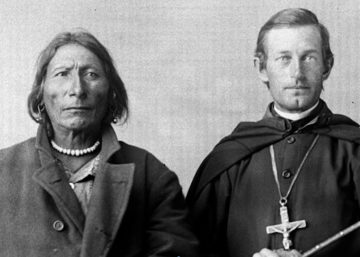
It’s astounding that HBO’s new docuseries Exterminate All the Brutes even exists
 Alissa Wilkinson in Vox:
“A certain view of history contends that the historical narrative is just one fiction among others,” Raoul Peck’s deep, gravelly voice asserts near the beginning of Exterminate All the Brutes. But this view is wrong, he says. Some narratives are rooted in fact; others were made up to satisfy the powerful. “There is,” Peck declares, “no such thing as alternative facts.”
The four-part documentary series, now streaming on HBO Max, is not just Peck’s attempt to set the record straight, to pry apart fact and fiction. It’s a multilayered, serpentine, superlative recasting of history, in which Peck argues that many things we are taught as truth are actually the winners’ preferred version of the facts. His aim, he says, is to “deconstruct the official narrative.” That project, of course, has been ongoing for a long while, and several influences are discussed in the series, including Howard Zinn (A People’s History of the United States), Roxanne Dunbar-Ortiz (An Indigenous People’s History of the United States), and Sven Lindqvist (whose book by the same title inspired this series).
But doing the work in a visual and aural medium makes it all the more arresting. Each episode of Exterminate All the Brutes illustrates, in damning detail, the long arm of the construct of “whiteness” and white supremacy, a force much bigger than one country or one historical period. Then, it seeks to break that arm’s vice grip on our future.
More here.
“Marx’s Old Mole is Right Beneath the Surface”
 David Barsamian interviews Noam Chomsky in Boston Review:
DB: One of the topics you discuss in the book [Consequences of Capitalism: Manufacturing Discontent and Resistance, coauthored with Marv Waterstone] is the connection between David Hume, the eighteenth-century Enlightenment philosopher, and Antonio Gramsci, the noted twentieth-century Marxist thinker. What’s that connection?
NC: Hume was a great philosopher. He wrote an important essay, “Of the First Principles of Government” (1741), one of the classic texts on what we now call political philosophy or political science. He opens his study by raising a question. He’s surprised, he says, to see the “easiness” with which people subordinate themselves to power systems. That’s a mystery, because the people themselves really have the power. Why do they subject themselves to masters? The answer, he says, must be consent: the masters succeed in what we now call manufacturing consent. They keep the public in line by their belief that they must subordinate themselves to power systems. And he says this miracle occurs in all societies, no matter how brutal or how free.
Hume was writing in the wake of the first democratic revolution, the English revolution of the mid-seventeenth century, which led to what we call the British constitution—basically, that the king will be subordinate to parliament. Parliament at that time basically meant merchants and manufacturers. Hume’s close friend, Adam Smith, wrote about the consequences of the revolution. In his own famous book The Wealth of Nations (1776), he pointed out that the now sovereign “merchants and manufacturers” are the true “masters of mankind.” They used their power to control the government and to ensure that their own interests are very well taken care of, no matter how “grievous” the effect on the people of England—and even worse, on those who are subject to what he called “the savage injustice of the Europeans,” referring mainly to the British rule in India.
More here.
John Rawls at 100 | Glenn Loury & Joshua Cohen
Alan Page Arriaga reads from Six Scripts for Not I
Saturday Poem
I’m a Fool to Love You
Some folks will tell you the blues is a woman,
Some type of supernatural creature.
My mother would tell you, if she could,
About her life with my father,
A strange and sometimes cruel gentleman.
She would tell you about the choices
A young black woman faces.
Is falling in love with the devil
In blue terms, the tongue we use
When we don’t want nuance
To get in the way,
When we need to talk straight?
My mother chooses my father
After choosing a man
Who was, as we sing it,
Of no account.
This made my father look good,
That’s how bad it was.
He made my father seem like an island
In the middle of a stormy sea,
He made my father look like a rock.
And is the blues the moment you realize
You exist in a stacked deck,
You look in a mirror at your young face,
The face my sister carries
And you know it’s the only leverage
You’ve got?
Does this create a hurt that whispers
How you going to do?
Is the blues the moment
You shrug your shoulders
And agree, a girl without money
Is nothing, dust
To be pushed around by any old breeze?
Compared to this,
My father seems, briefly,
To be a fire escape.
This is the way the blues works
Its sorry wonders,
Makes trouble look like
A feather bed,
Makes the wrong man’s kisses
A healing.
by Cornelius Eady
from The Autobiography of a Jukebox
Carnegie Mellon University Press, 1997)
Power Causes Brain Damage
Jerry Useem in The Atlantic:
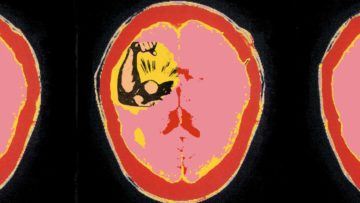 If power were a prescription drug, it would come with a long list of known side effects. It can intoxicate. It can corrupt. It can even make Henry Kissinger believe that he’s sexually magnetic. But can it cause brain damage? When various lawmakers lit into John Stumpf at a congressional hearing last fall, each seemed to find a fresh way to flay the now-former CEO of Wells Fargo for failing to stop some 5,000 employees from setting up phony accounts for customers. But it was Stumpf’s performance that stood out. Here was a man who had risen to the top of the world’s most valuable bank, yet he seemed utterly unable to read a room. Although he apologized, he didn’t appear chastened or remorseful. Nor did he seem defiant or smug or even insincere. He looked disoriented, like a jet-lagged space traveler just arrived from Planet Stumpf, where deference to him is a natural law and 5,000 a commendably small number. Even the most direct barbs—“You have got to be kidding me” (Sean Duffy of Wisconsin); “I can’t believe some of what I’m hearing here” (Gregory Meeks of New York)—failed to shake him awake.
What was going through Stumpf’s head? New research suggests that the better question may be: What wasn’t going through it?
The historian Henry Adams was being metaphorical, not medical, when he described power as “a sort of tumor that ends by killing the victim’s sympathies.” But that’s not far from where Dacher Keltner, a psychology professor at UC Berkeley, ended up after years of lab and field experiments. Subjects under the influence of power, he found in studies spanning two decades, acted as if they had suffered a traumatic brain injury—becoming more impulsive, less risk-aware, and, crucially, less adept at seeing things from other people’s point of view.
More here.
How Millennials Are Seizing Power and Rewriting the Rules of American Politics
Michael Kazin in The New York Times:
 Perhaps the most striking political change that occurred during the stormy reign of Donald J. Trump is one his devotees utterly abhorred: the growth of a sizable left outside and inside the Democratic Party. Young radicals and middle-aged white suburban dwellers both flocked to “the Resistance,” under whose militant rubric one could do anything from marching in a demonstration to starting a Facebook page to canvassing for a favored candidate. During his second run for the White House even more than during his first, Bernie Sanders inspired millions of young people of all races to imagine living in a nation with strong unions and a robust welfare state instead of the “neoliberal” order long favored by leaders of both major parties. And, for many Berniecrats, socialism became the name of their desire instead of a synonym for state tyranny.
The journalist David Freedlander’s slim new book, “The AOC Generation,” is a keenly observant narrative, albeit an entirely sympathetic one, about the young women and men most responsible for the upsurge on the left that infused the Democrats with their abundant energy, cleverness and grievances. At the center of his story is Representative Alexandria Ocasio-Cortez, who may need no introduction but still might blush to read this glowing portrayal by a reporter who lives in her New York City district and appears to have interviewed only people who share his sentiments.
Freedlander calls the congresswoman, who is a wizard of social media, the “avatar of this new generation.” He describes his heroine as an “electric” orator and quotes one of her college friends, who recalls, “Everybody I knew was in love with her.”
More here.
Kim Gordon with Rachel Kushner
On Félix Fénéon
Emmelyn Butterfield-Rosen at Artforum:
 The bulk of Fénéon’s art writing has never been translated. For anglophone audiences, he is probably better known for his “Novels in Three Lines,” a litany of more than one thousand mini-tragedies and absurdities published anonymously in 1906 during the half year he spent writing news items for Le Matin, an American-style mass-circulation newspaper founded by a disciple of William Randolph Hearst. These faits divers, of which Luc Sante published an acclaimed translation in 2007, make for reading that is melancholy but piquant. They include random reports such as “On the left shoulder of a newborn, whose corpse was found near the 22nd Artillery barracks, a tattoo: a cannon.” Or: “The sinister prowler seen by the mechanic Gicquel near Herblay train station has been identified: Jules Ménard, snail collector.”
more here.
Rachel Kushner’s Essays
Dwight Garner at the New York Times:
 Her own motorcycles come to include an orange 500 cc Moto Guzzi, a Kawasaki Ninja and a Cagiva Elefant 650. Her boyfriends tended to be mechanics.
In what might be this book’s best essay, “Girl on a Motorcycle,” she describes riding the Kawasaki, when she was 24, in the Cabo 1000, a dangerous and illegal 1,000-mile race down the Baja Peninsula, often on unpaved roads.
She describes herself as “kinetic and unfettered and alone.” At one point she hits 142 miles per hour. She is going nearly as fast when another biker pulls out in front of her and she is forced off the road and wipes out. There are predatory ambulances; there are bad Samaritans.
more here.
Friday, April 9, 2021
Warty Pig
Morgan Meis at Slant Books:
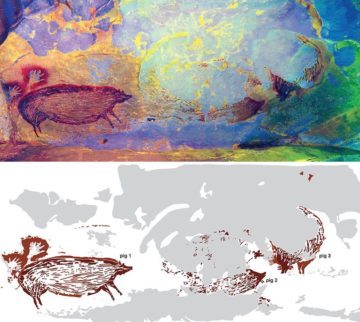 The warty pig in question is a depiction on the inside of a cave in Indonesia. The painting was discovered last year. It was painted, the carbon daters say, about 45,000 years ago. That’s more than 10,000 years older than the famous paintings at the Chauvet Cave in France. Warty pig is, for now at least, the oldest work of representational art, by far, that exists anywhere in the world. 45,000 years. A long time. Also not a long time, geologically speaking. Just a blip. For us, though, for us, a very long time.
Anyway, the painter of warty pig, whoever this person was, seems to have been working on a domestic scene going on between at least three warty pigs. And what might have been the important business amongst the warty pigs on the island of Sulawesi during the forty-fifth-thousand-and-first century BCE? Well, the Sulawesi warty pig lives on the island to this very day. So, we have a pretty good sense of what the pig would have been doing 45,000 years ago. It would have been wandering around in the mornings and early evenings, rooting around in the underbrush looking for goodies to eat. It would have been working out whatever things needed to be worked out in the small social groups in which the pigs tend to live. Maybe that’s what the cave painting is showing us, an impromptu meeting of warty pigs 45,000 years ago. Unfortunately, the images of the other pigs have been lost to us but for a few scraps of color and shape. We’ll never know exactly what was the greater context for this image.
But here are a few things that I love about this fragment that has passed down to us from the deepest recesses of the past.
More here.
Why Bumblebees Love Cats
Stefano Mancuso in Longreads:
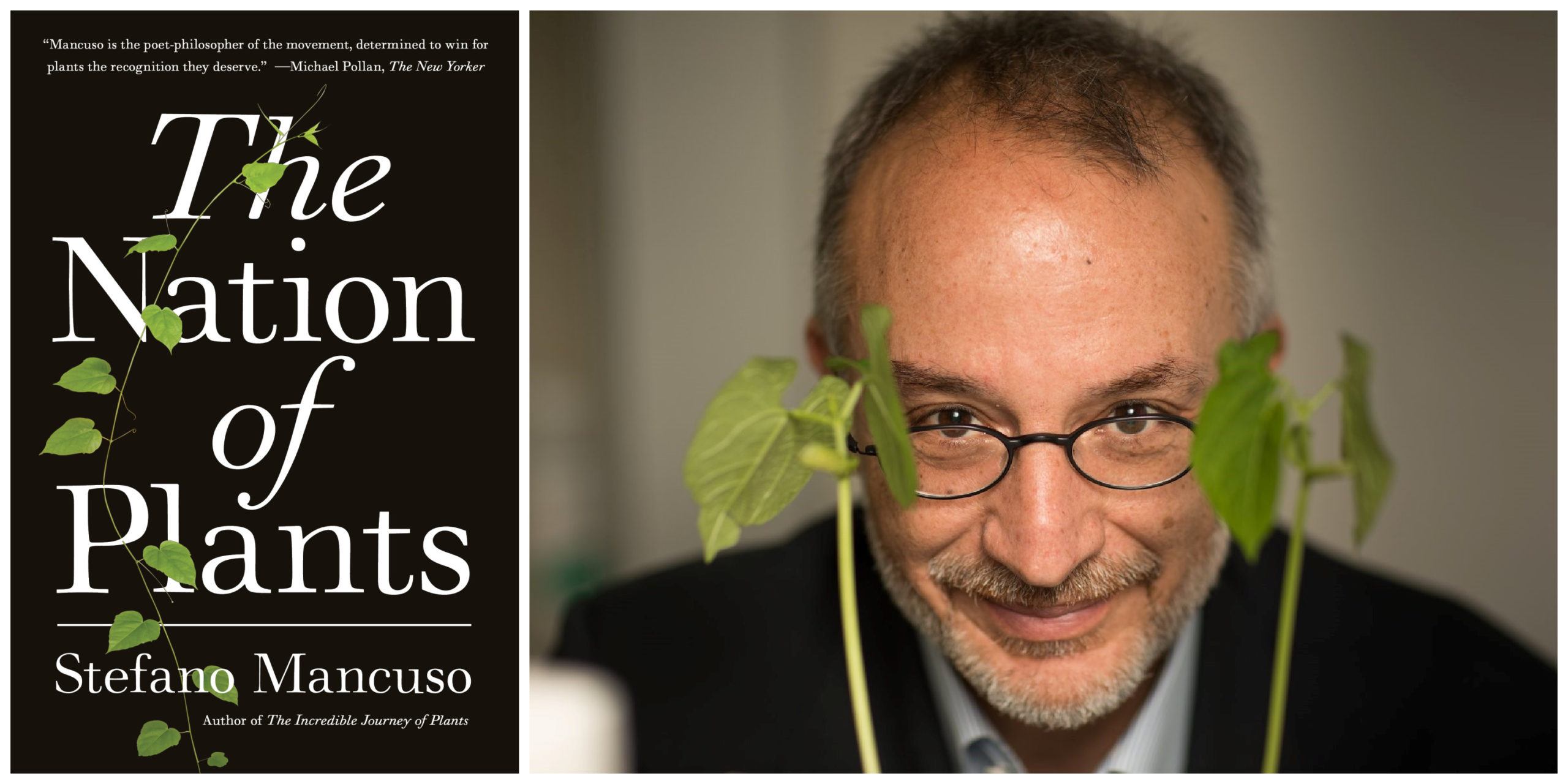 Darwin writes: what animals could you imagine to be more distant from one another than a cat and a bumblebee? Yet the ties that bind these two animals, though at first glance nonexistent, are on the contrary so strict that were they to be modified, the consequences would be so numerous and profound as to be unimaginable. Mice, argues Darwin, are among the principal enemies of bumblebees. They eat their larvae and destroy their nests. On the other hand, as everyone knows, mice are the favorite prey of cats. One consequence of this is that, in proximity to those villages with the most cats, one finds fewer mice and more bumblebees. So far so clear? Good, let’s go on.
Bumblebees are the primary pollinators of many vegetable species, and it is common knowledge that the greater the amount and the quality of pollination the greater the number of seeds produced by the plants. The number and the quality of seeds determines the greater or lesser presence of insects, which, as is well known, are the principal nutriment of numerous bird populations. We could go on like this, adding one group of living species to another, for hours on end: bacteria, fungi, cereals, reptiles, orchids, would succeed one another without pause, one by one, until we ran out of breath, like in those nursery rhymes that connect one event to another without interruption. The ecological relationships that Darwin brings to our attention tell us of a world of bonds much more complex and ungraspable than had ever previously been supposed. Relationships so complex as to connect everything to everything in a single network of the living.
More here. [Thanks to Tony Cobitz.]
Populism is merely a symptom, Treatment must target the underlying disease
Callum Watts in Prospect:
 Over the past decade, populism has emerged as an invasive species which has disrupted a previously stable political ecosystem. Liberal democracies across the world have been left in disarray, and occasional victories by establishment parties offer only temporary respite from its onslaught. That is an interpretation that Prospect readers—and all “right-thinking” opinion—will by now have heard many times.
However, in reality, populism is a symptom of the dysfunction, not the cause. It is a corrective response to a political organisation that is already suffering from an underlying pathology. Like many reactions, it can certainly sometimes end up doing more harm than good. But there is no hope in dealing with it decisively—still less of achieving full health to our polity—if the underlying issue isn’t addressed.
To grasp the nature of populism and how to address it, we must first understand what it means to govern well. Opinions will of course differ on the exact criteria. But there would surely be broad support for the inclusion of three qualities: it is legitimate, effective and provident.
More here.
“Seasons” by Future Islands
Friday Poem
Bone of My Bone Flesh of My Flesh
I can’t always refer to the woman I love,
my children’s other mother,
as my darling, my beloved,
sugar in my bowl. No.
I need a common, utilitarian word
that calls no more attention to itself
than nouns like grass, bread, house.
The terms husband and wife are perfect for that.
Hassling with PG&E
or dropping off dry cleaning,
you don’t want to say,
The light of my life doesn’t like starch.
Don’t suggest spouse—a hideous word.
And partner is sterile as a boardroom.
Couldn’t we afford a term
for the woman who carried that girl in her arms
when she was still all promise,
that boy curled inside her womb?
And today, when I go to kiss her
and she says “Not now, I’m reading,”
still she deserves a syllable or two—if only
so I can express how furious
she makes me. But
maybe it’s better this way—
no puny pencil-stub of a word.
Maybe these are exactly the times
to drag out the whole galaxy
of endearments: Buttercup,
I should say, lambkin, mon petit chou.
by Ellen Bass
from The Human Line
Copper Canyon Press, 2007