Edward Gore: Fashionista

Walker Caplan at Lit Hub:

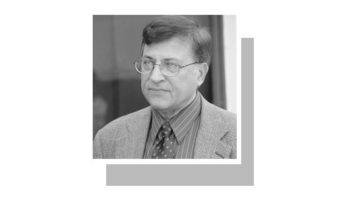
Gorey favored huge fur coats paired with jeans, sweaters, sneakers, and ever-present small gold hoops in each ear. His constantly-donned coats earned him a 1978 write-up in the New York Times titled “Portrait of the Artist as a Furry Creature.” (Gorey eventually auctioned off his coat collection and donated the money to PETA.)

A 1992 New Yorker profile described Gorey thus: “Beneath a baldish head and trifocals he wears a thick cloud of mustache and a white beard in the profuse, flowing style of a grand British litterateur. His voice is high, nasal and campy. He wears a gold earring in each ear, and heavy rings on his fingers.” This description could easily be decoupled from Gorey and attached to one of his illustrated characters.

more here.

Why Work Lost Its Worth

Rowan Williams at The New Statesman:

One of the most vacuous idioms we use about our moral and social debates is the idea of being “on the side of history”. The plain meaning of this is that “history” – the record of human actions – has an inevitable trajectory, and we had better get on board with it or suffer the consequences.

Readers of this magazine will know from John Gray’s regular and well-aimed ­diatribes on this subject that such language is a clumsy adaptation of religious notions of a purpose at work in human affairs. In this world-view, the only significant question is who is predestined to win, so that we can align ourselves safely with tomorrow’s orthodoxies and power systems.

One thing in common between the two very different books under review is that they both – despite occasional lapses – implicitly challenge any notion of history having a “side”.

more here.

Friday Poem

……. Across the visible sky is run.
We too, of our lives, must one day:
We never know, my Lydia, nor want
……. To Know of nights before or after
……. The little while that we may last.

2.
To be great, be whole: nothing that’s you
……. Should exaggerate or exclude.
In each thing, be all. Give all you are
……. In the least you ever do.
The whole moon, because it rides so high,
……. Is reflected in each pool.

Discontinuous Poems

The frightful reality of things
Is my everyday discovery.
Each thing is what it is.
How can I explain to anyone how much
I rejoice over this, and find it enough?

To be whole, it is enough to exist.

I have written quite a number of poems
And may write many more, of course.
Each poem of mine explains it.

by Fernando Pessoa
from the
Poetry Foundation

First monkey–human embryos reignite debate over hybrid animals

Nidhi Subbaraman in Nature:

Scientists have successfully grown monkey embryos containing human cells for the first time — the latest milestone in a rapidly advancing field that has drawn ethical questions.

In the work, published on 15 April in Cell1, the team injected monkey embryos with human stem cells and watched them develop. They observed human and monkey cells divide and grow together in a dish, with at least 3 embryos surviving to 19 days after fertilization. “The overall message is that every embryo contained human cells that proliferate and differentiate to a different extent,” says Juan Carlos Izpisua Belmonte, a developmental biologist at the Salk Institute for Biological Studies in La Jolla, California, and one of the researchers who led the work. Researchers hope that some human–animal hybrids — known as chimaeras — could provide better models in which to test drugs, and be used to grow human organs for transplants. Members of this research team were the first to show in 20192 that they could grow monkey embryos in a dish for up to 20 days after fertilization. In 2017, they reported a series of other hybrids: pig embryos grown with human cells, cow embryos grown with human cells, and rat embryos grown with mouse cells3.

…In the study, researchers fertilized eggs extracted from cynomolgus monkeys (Macaca fascicularis) and grew them in culture. Six days after fertilization, the team injected 132 embryos with human extended pluripotent stem cells, which can grow into a range of cell types inside and outside an embryo. The embryos each developed unique combinations of human and monkey cells and deteriorated at varying rates: 11 days after fertilization, 91 were alive; this dropped to 12 embryos at day 17 and 3 embryos at day 19.

More here.

How to Buy Happiness

Arthur C Brooks in The Atlantic:

In 2010, two Nobel laureates in economics published a paper that created a tidal wave of interest both inside and outside academia. With careful data analysis, the researchers showed that people believe the quality of their lives will increase as they earn more, and their feelings do improve with additional money at low income levels. But the well-being they experience flattens out at around $75,000 in annual income (about $92,000 in today’s dollars). The news materially affected people’s lives—especially the part about happiness rising up to about $75,000: In the most high-profile example, the CEO of a Seattle-based credit-card-payment company raised his employees’ minimum salary to $70,000 (and lowered his own salary to that level) after reading the paper.

This January, another economist published a new paper on the subject that found that even beyond that income level, well-being continues to rise. That’s not to imply (as much of the popular press did) that money can buy happiness off into infinity. The new study simply suggests that the drop-off occurs, on average, at higher income levels. I graphed the raw income data from the study and found that happiness flattens significantly after $100,000; at even higher levels there is very little extra well-being to be had with more income.

The lesson remains the same as it was a decade ago: At low levels, money improves well-being. Once you earn a solid living, however, a billionaire is not likely to be any happier than you are. Yet for the most part, this truth remains hard for people to grasp. Americans work and earn and act as if becoming richer will automatically raise our happiness, no matter how rich we might get. When it comes to money and happiness, there is a glitch in our psychological code.

Understanding this can help us build happier lives. Even further, it uncovers strategies for using income at all levels to raise well-being.

More here.

Thursday, April 15, 2021

Non-Fungible Future

Mostafa Heddaya in The American Prospect:

Long before the advent of non-fungible tokens, some advocates of digital art argued that there is no meaningful distinction between a “virtual” object and a “physical” one. Such a division, they believed, partakes of the fallacy of “digital dualism,” the imprecise belief that a file is somehow less “real” than a painting on canvas, when in fact both are products of mind and time accreted to the permanence of matter. Less arty or newfangled is the old law of property. A contract is a ghost story for adults: It turns vaporous whatevers—labor time, carbon, pixel—into a coin struck by the handshake of exchange and the creep of law. Ownership was always a song and a dance and a fusillade.

Now, cryptocurrency evangelists, like the social media billionaire Winklevoss twins, have announced with NFTs a radical “liberation” of art. Taking to Twitter on March 21, Cameron Winklevoss inveighed:

NFTs liberate art. Traditional art is confined to time and space. You have to be in the right city, go to a museum, be invited to someone’s home, etc. Anyone, anywhere with an Internet connection can view NFTs and take them in. This is a huge breakthrough

A perspective adequate to evaluating all such pulpit palpitations about NFTs would find nothing new here. NFTs are essentially contracts for the sale and ownership of what amounts to a link. Generally, this is even less than a privative right to a digital object—typically JPEG or TIFF image files, formats created in 1992 and 1986, respectively. The works to which NFTs correspond are stored elsewhere, on an independent database that is marginally more secure than Dropbox or Google Drive (the origins of all such distributed systems date to the 1960s).

More here.

Archaeologists find “lost golden city” buried under sand for 3,400 years

Jennifer Ouellette in Ars Technica:

A team of Egyptian archaeologists has unearthed what some describe as an industrial royal metropolis just north of modern-day Luxor, which incorporates what was once the ancient Egyptian city of Thebes (aka Waset). The archaeologists dubbed the site “the lost golden city of Luxor,” and they believe it may have been devoted to manufacturing decorative artifacts, furniture, and pottery, among other items.

Hieroglyphic inscriptions found on clay caps of wine vessels at the site date the city to the reign of the 18th-dynasty pharaoh Amenhotep III (1386-1353 BCE), whose generally peaceful tenure was marked by an especially prosperous era, with Egypt at the peak of its international power. (Mud bricks at the site were also marked with Amenhotep III’s cartouche.) There are more surviving statues of Amenhotep III than any other pharaoh. He was buried in the Valley of the Kings, and his mummy was discovered in 1889. Analysis revealed that Amenhotep III died between 40 and 50 years of age, and he likely suffered from various ailments in his later years (most notably arthritis, obesity, and painful abscesses in his teeth).

More here.

The Disintegration of the ACLU

James Kirchick in Tablet:

Think of the American Civil Liberties Union during the last two decades of the 20th century, and a certain type of person invariably comes to mind: shrewd, thick-skinned, and possessed of an unwavering—some might say irritating—commitment to principle. The men and women of the ACLU were liberals in the most honorable, but increasingly obsolescent, meaning of the term. They understood that the measure of democracy lies in the impartial application of its laws, and were prepared to defend anyone whose constitutional rights were trampled upon, irrespective of their political views or the repercussions that mounting such a defense might entail.

The archetypical ACLU figure was also often Jewish, as immortalized in the 2003 Onion story, “ACLU Defends Nazis’ Right to Burn Down ACLU Headquarters.” That joke was based upon the real-life case of National Socialist Party of America v. Village of Skokie, wherein the organization represented a group of neo-Nazis who were denied a permit to march through a Chicago suburb that was home to a significant number of Jewish Holocaust survivors.

More here.

Thursday Poem

Discontinuous Poems

Though all my poems are different,
Because each thing that exists is always proclaiming it.

Sometimes I busy myself with watching a stone,
I don’t begin thinking whether it feels.
I don’t force myself to call it my sister,

But I enjoy it because of its being a stone,
I enjoy it because it feels nothing,
I enjoy it because it is not at all related to me.

At times I also hear the wind blow by
And find that merely to hear the wind blow makes
…….. it worth having been born.

I don’t know what others will think who read this;
But I find it must be good because I think it
…….. without effort,
And without the idea of others hearing me think,
Because I think it without thoughts,
Because I say it as my words say it.

Once they called me a materialist poet
And I admired myself because I never thought
That I might be called by any name at all.
I am not even a poet: I see.
If what I write has any value, it is not I who am
…….. valuable.
The value is there. In my verses.
All this has nothing whatever to do with any will
…….. of mine.

by Fernando Pessoa
from the Poetry Foundation

Editorial note: Until I read this poem I’d never encountered a poem that so accurately expresses what writing a poem is, is about, or for that matter, what the creative experience itself is. —Jim


What Monkeys Can Teach Humans about Resilience after Disaster

Lydia Denworth in Scientific American:

In September 2017, when Hurricane Maria hit Puerto Rico, the storm first made landfall on a small island off the main island’s eastern coast called Cayo Santiago. At the time, the fate of Cayo Santiago and its inhabitants was barely a footnote in the dramatic story of Maria, which became Puerto Rico’s worst natural disaster, killing 3,000 people and disrupting normal life for months.

But more than three years on, the unfolding recovery on the tiny island has something interesting to tell us about the critical role of social connections in fostering resilience. Santiago is home to some 1,500 rhesus macaques who have been closely observed by scientists for decades. To everyone’s surprise, nearly all the monkeys survived the storm. That made their response to the devastation of Maria, which wiped out 60 percent of the island’s vegetation, an unusual natural experiment. How would they cope? How would the competition for resources—food and shade—play out? Scientists also wondered whether the trauma of having experienced the storm might make the animals strengthen their existing bonds. Would they solely rely on their closest friends, as many humans have had to do during the COVID-19 pandemic?

The monkeys reacted by changing their social order, it turned out. The macaques built broader and more tolerant social networks, according to a paper published today in Current Biology. “It’s a wholesale shift in the level of connectedness across the population,” says neuroscientist Michael Platt of the University of Pennsylvania, who is co-senior author of the study.

More here.

The Israel Prize Is Meant to Unify. More Often, It’s Mired in Controversy

Isabel Kershner in The New York Times:

JERUSALEM — The annual Israel Prize ceremony is supposed to be an august and unifying event, a beloved highlight of the Independence Day celebrations that fall on Thursday this year. This being Israel, it is rarely without controversy. The latest ruckus goes to the heart of the political divides and culture wars rocking the country’s liberal democratic foundations even as it remains lodged in a two-year leadership crisis. The prize is the state’s most prestigious honor, traditionally awarded to 10 or more citizens or organizations for outstanding contributions to the sciences, culture and society. The scandal began about a month ago, when Education Minister Yoav Gallant, whose ministry oversees the prize, refused to honor one winner, Oded Goldreich, a professor of mathematics and computer science at the Weizmann Institute of Science.

Mr. Gallant, from the conservative Likud party, asserts that Professor Goldreich supports the international, pro-Palestinian campaign to boycott Israel, even though the professor has said he is neutral on the issue — now a touchstone of the dominant right-wing camp’s test of loyalty and patriotism. Over the years, the Supreme Court has fielded requests from outside critics to disqualify several laureates from across the political spectrum. This year, unusually, the selection committee that chose Professor Goldreich itself turned to the Supreme Court to complain that Mr. Gallant had overstepped his authority: The education minister grants the prize but has no say over the committee’s choices.

“Once again, we are required, in what has turned into a repetitive ritual, to engage in the Israel Prize,” the panel of three judges lamented in a ruling issued last week. “Indeed,” they added, “it is regrettable that such a prestigious and renowned award and such a unifying and uplifting event as the Israel Prize ceremony has turned into an almost constant source of disagreement and division.”

More here.

On The Anti-Totalitarianism of Simone Weil

Wen Stephenson at The Baffler:

It’s hard if not impossible to imagine a figure of Weil’s stature in the intellectual and political culture of today’s left, the only region of the political spectrum where she might possibly fit. And not just because of her religiosity, which would of course instantly ghettoize her. It’s also because she’s so hard to pin down with any neat, easy label—or rather, because the labels are too many and apparently conflicting. (She’d be eaten alive on Twitter from all sides—or, worse, simply shunned and ignored.) “An anarchist who espoused conservative ideals,” Zaretsky writes in his opening pages, “a pacifist who fought in the Spanish Civil War, a saint who refused baptism, a mystic who was a labor militant, a French Jew who was buried in the Catholic section of an English cemetery, a teacher who dismissed the importance of solving a problem, the most willful of individuals who advocated the extinction of the self: here are but a few of the paradoxes Weil embodied.”

more here.

Rewriting the Story of the Palestinian Radical

Rozina Ali at The New Yorker:

Beyond erasing this diversity, casting Palestinian radicalism as innately Islamic severs resistance from the essential question of land and geography. The novel reflects this: Nahr’s status as the daughter of Palestinian refugees in Kuwait certainly affects her life—she is pushed out of an official dance troupe, and her family’s allegiance is suspected after Saddam Hussein’s invasion. But being Palestinian doesn’t take hold as a political reality until she lives in her ancestral homeland. What fuels her fight isn’t a divine commandment about good and evil; it is the land itself. Nahr observes settlers encroaching on a Palestinian village, and wonders how Bilal and his mother have been able to keep them away from their land. She visits her mother’s childhood home, in Haifa, and picks figs from a tree her grandfather planted, before being chased off by a Jewish woman who now lives there. She helps to redirect water from a pipe meant for settlers to the olive groves. There is violence inflicted upon this land, but Abulhawa centers its beauty: “I was content to just sit there in the splendid silence of the hills, where the quiet amplified small sounds—the wind rustling trees; sheep chewing, roaming, bleating, breathing; the soft crackle of the fire; the purr of Bilal’s breathing,” Nahr reflects. “I realized how much I had come to love these hills; how profound was my link to this soil.”

more here.

Wednesday, April 14, 2021

A COVID Counterfactual for Europe

Yanis Varoufakis in Project Syndicate:

Imagine that the coronavirus pandemic, rather than undermining confidence in the European Union, had strengthened it. Imagine that COVID-19 had persuaded EU leaders to overcome years of acrimony and fragmentation. Imagine that it had catalyzed the emergence this year of a stronger, more integrated bloc to which the world looked for global leadership.

Imagine. It isn’t hard to do.

At the end of February 2020, two weeks before the World Health Organization declared a pandemic, the EU Council had already instructed the European Commission to coordinate Europe’s war against the coronavirus. Within days, the Commission compiled a list of essential gear in short supply across Europe, from protective equipment to intensive care units, and placed orders with manufacturers. It also convened Cov-Comm, a committee of top epidemiologists and representatives of EU public health systems to offer daily guidance. Liberated from the need to procure essential supplies and work out optimal travel and social distancing strategies, national governments concentrated on implementing the emergent EU plan.

More here.

How India’s ‘Mango Man’ Grew a Tree With 300 Flavors

Kalpana Sunder in Atlas Obscura:

Three varieties from Khan’s famous tree

It is a mango tree like no other. Standing tall in a nursery near Lucknow, the capital of Uttar Pradesh, its massive canopy is large enough to seat 15 people for a picnic and its branches hang heavy with fruit. Unlike the young trees it towers over, though, the texture of the leaves on each branch is different: Some are dull green or olive green; others are glossy and vibrant. The mangoes on each branch look different too: round, oval, or kidney shaped, some green, some yellow, and others with hues of orange, pink, and purple. That’s because this magical mango tree grows more than 300 varieties.

Over a video call, Kalimullah Khan, 80, known as the “Mango Man,” introduces me to his creation. Stocky and bearded in a crisp, white kurta pyjama, he sits under its canopy and points out varieties, each identified by a tiny label on its green pedicle: Dasheri mangoes from a nearby village, Himsagar from West Bengal, Langra from Bihar. And of course the prized Alphonso mango, whose sweet, creamy, saffron-colored pulp is in high demand domestically and internationally.

More here.

Earthly Anecdotes

John Palattella in The Point:

A year ago, there was no snow on the ground, and I was thinking about icebergs. “We’d rather have the iceberg than the ship,” begins the first stanza of Elizabeth Bishop’s “The Imaginary Iceberg,” and continues,

although it meant the end of travel.
Although it stood stock-still like cloudy rock
and all the sea were moving marble.

These lines came to me when I was reading, walking or cooking, was alone or sharing someone’s company, and they came in all kinds of weather. “The Imaginary Iceberg” is a poem that I love, although at the time I could not remember when I had last read it. Yet there it was, its first four lines on repeat in my mind’s ear, a phantom verse.

It was March and I was in Jena, a small city in eastern Germany. The nearest sea was 340 miles to the north; the nearest icebergs, at least 2,000 miles to the northwest. The nearest body of water was the river that meandered through my neighborhood and onward through fields of winter wheat. I lived in Jena for six months, and the only memorable bits of marble I saw there were the busts of Goethe, Schiller and Hegel perched atop columns on the university campus, where those men had once taught. Otherwise, Bishop’s lines reminded me of nothing I saw around me.

More here.  [Thanks to Holly Case.]

Wednesday Poem

Empty Souls

…… Tibetan prayer flags
…… flap in the wind
…… no one to talk to

Why Tower Air? I ask as my husband packs a suitcase to get ready to attend his
mother’s funeral. Because it’s a bargain, he says.

Wouldn’t you rather fly a major carrier?

I pull a card from my Tarot deck. Out of the 78 possibilities, it’s the Tower that shows
up. Flames shoot from the top of a crumbling brick tower while a couple with shock
imprinted on their faces falls through the air, crowns flying. There’s no soft landing
in sight.

I plead with my husband to book with another airline, but he says he’ll be fine. I
shouldn’t put such faith in divination. As I entertain a couple of acquaintances, the
phone rings. My husband’s voice sounds far away.

…… dusk signals the jasmine to release its scent

I’m at Kennedy. We had to make an emergency landing. While flames shot from the
engine, the pilot told us to put our heads in our laps and brace for impact. The silence
was so thick, no one could make a sound. I took my wallet from my jacket, placed it in
the seat pocket facing me, just in case my body couldn’t be identified. And then I saw
a newspaper headline which seemed so vivid and real—son dies in plane crash after
attending mother’s funeral.
It was the most bizarre experience. I thought my life was
over, that I’d never see you again. When we got off the plane, some people actually
kissed the ground. Everyone is shaken including the pilot’s wife. It was her husband’s
last flight before retirement.

While my guests stuff themselves on tacos and guacamole, I try to regain composure.
Don’t sweat the small stuff, they tell me. Get over it. Move on. Come eat. I want to
throw them both out but instead I bite my tongue until it aches. I count the minutes
until they’re out of my space.

…… the cat brings home a screech owl

I sense disappointment in my brother-in-law’s voice. Had there been a fatal accident,
he’d inherit all of the mother’s estate. I so need to vent, but my next-door neighbor,
who caught a blip about it on the news, is nonchalant.

During break in qi gong class, my husband tries to tell a classmate about the incident,
but the instructor glares at him as if to say, keep your sad stories to yourself.

…… The taste
…… of loneliness
…… evening meal

by Alexis Rotella
from Rattle #70, Winter 2020