
Mir Ali Hosseini in The Philosophical Salon:
 As a refugee from the war-stricken Old World, where ethnic homogeneity had remained the defining principle of every citizenry, Arendt saw in the American republic the promise of a body politic, which absorbed newcomers without forcing them to adapt to a pre-determined homogeneity—even though she became increasingly critical of the cultural conformity of American “mass society.”
In 1973, two years before her passing, when Arendt was asked in an interview with French television about her impression dominante of America as a European, she replied in English:
“Mon impression dominante…Well, see, this is not a nation-state. America is not a nation-state, and Europeans have a hell of a time to understand this simple fact which, after all, they could know theoretically. This country is united neither by heritage, nor by memory, nor by soil, nor by language, nor by origin from the same. There are no natives here. The natives were the Indians. , and these citizens are united only by one thing—and that is a lot. That is, you become a citizen of the United States by simple consent to the Constitution.”
As Robert Bernasconi has argued, this idealized picture of the American republic is deeply problematic.
More here.
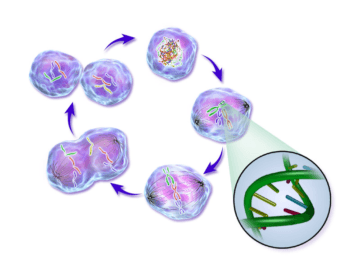 At the heart of all cancers is a fundamental problem: a cell—and eventually innumerable cells—that won’t stop dividing. This runaway growth is what forms a tumor, and the abnormal cellular processes that drive this growth can help tumors withstand the cancer treatments intended to kill them. Despite more than six decades of research into the mechanisms that cells use to divide, some of the nuts and bolts of the process remain a mystery. Scientists want to better understand these mechanisms in hopes of targeting them and potentially shutting down the uncontrolled growth of some tumors. New research from three collaborating teams of scientists in the United States and Europe appears to have found one of these mechanisms, uncovering a previously unknown check on dividing cells: a protein called AMBRA1. By limiting tumor growth, the researchers showed, AMBRA1 serves as an important
  For better or worse, genetic testing of embryos offers a potential gateway into a new era of human control over reproduction. Couples at risk of having a child with a severe or life-limiting disease such as cystic fibrosis or Duchenne muscular dystrophy have used preimplantation genetic testing (PGT) for decades to select among embryos created through in vitro fertilization (IVF) for those that do not carry the disease-causing gene. But what new iteration of genetic testing could tempt healthy, fertile couples to reject our traditional time-tested and wildly popular process of baby making in favor of hormone shots, egg extractions and DNA analysis?
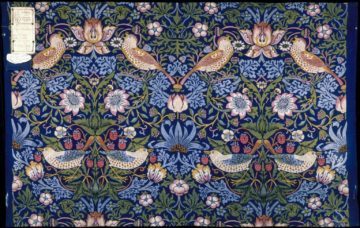 The systems featured in Morris’s designs often suggest conflict and attrition at the micro level along with harmony at the grander scale. Within the system of the design, principles of growth relate to his conception of the forces of nature and history. He constructed his designs to mirror and even exceed the powerful generative abilities of nature; he also intended them to be vectors for the energies of history.
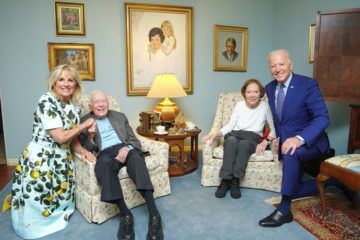 I kept looking at the recently infamous—now half-forgotten—picture of the Bidens visiting the Carters. The photo was taken and passed around feverishly almost two months ago, when I saw it repeatedly on my scroll and dragged the file onto my desktop, and I haven’t been able to forget it since. Everyone else moved on to Joyce Carol Oates negging Mad Men, Elon Musk going on SNL, Bennifer 2.0, and a bunch of other things I’m forgetting, but here I am, late at night, still staring at little Rosalynn, little Jimmy, big Jill, and big Joe. Also the armchairs, the blue-green walls, the blue-blue carpeting, the “unfinished” cameo-style paintings of the Carters, the blank canvas keyed to the off-white upholstery of their chairs. I’ve reviewed the institutional sheen on those cabinets, zoomed in on the trio of mask-like ceramics facing up to the ceiling on the side table, pondered the bulbous bronze bookends holding a three-volume set of something important on that same table. But mostly I’ve been staring at the little Carters and the big Bidens, trying to understand what is so transfixing to me there. And I think I finally have an answer. So at the risk of disrespecting the immutable orientation of our media universe, I want to return to the topic that was on everyone’s minds on May 3, 2021. I want to turn and watch the sunset.
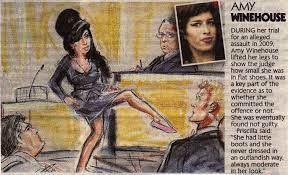 Society loves courtroom dramas – they allow the viewer to consume the uncertainty of someone else’s life as opposed to fixating on their own. (I am as guilty of this as anyone: I’ve watched courtroom dramas every week religiously in the past, especially Primal Fear and The Lincoln Lawyer.) We get hooked on the interrelations of characters, the impending catastrophe, the emotional mind games played by the press, lawyers, and bogeymen criminals. The allure of the genre, I believe, has to do with the hidden nature of the legal scenario. Films, television shows, and podcasts purport to expose the mystery of the courtroom, and the private lives of those tangled up in its web.
 “Creep” was subsequently excised from the band’s set list
  For more than a year now, scientists and clinicians have been trying to understand why some people develop severe COVID-19 whereas others barely show any symptoms. Risk factors such as age and underlying medical conditions
 Thirty years ago, Albert O Hirschman published a short book that infuriated conservatives called
  O
O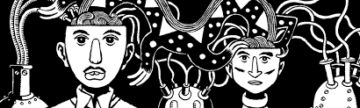 My father, a neurologist, once had a patient who was tormented, in the most visceral sense, by a poem. Philip was 12 years old and a student at a prestigious boarding school in Princeton, New Jersey. One of his assignments was to recite Edgar Allan Poe’s The Raven. By the day of the presentation, he had rehearsed the poem dozens of times and could recall it with ease. But this time, as he stood before his classmates, something strange happened. Each time he delivered the poem’s famous haunting refrain—“Quoth the Raven ‘Nevermore’ ”—the right side of his mouth quivered. The tremor intensified until, about halfway through the recitation, he fell to the floor in convulsions, having lost all control of his body, including bladder and bowels, in front of an audience of merciless adolescents. His first seizure.
 I have said it before, probably irritatingly, and I will say it again several more times: one of the most remarkable literary projects of this century is being undertaken right now, as we speak, by the social historian David Kynaston. Since 2007 he has been publishing a series of books about Britain between the years 1945 and 1979, when Margaret Thatcher came to power. There have been three so far: Austerity Britain: 1945–51, Family Britain: 1951–57, and Modernity Britain: 1957–1962—roughly 2,300 pages, or 135 pages per year. If you are going to treat a country as a person, full of personality, development, joy, tragedy, regression, and contradictions—and that is what Kynaston does—then an allocation of 135 per year is actually pretty disciplined. (If, in the year 2070, someone embarks on a similar project, then the year 2020 will demand several hundred thousand words of its own.) These wonderful books deal with politics and town planning, sport and literature, music and movies, cities and the countryside, and a rather gripping narrative somehow emerges, in the same way that improvising jazz soloists find melodies.