
Natalie Wolchover in Quanta:
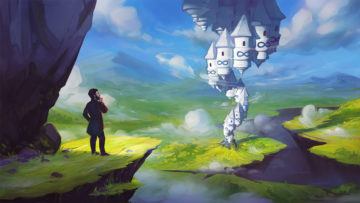 In October 2018, David Asperó was on holiday in Italy, gazing out a car window as his girlfriend drove them to their bed-and-breakfast, when it came to him: the missing step of what’s now a landmark new proof about the sizes of infinity. “It was this flash experience,” he said.
Asperó, a mathematician at the University of East Anglia in the United Kingdom, contacted the collaborator with whom he’d long pursued the proof, Ralf Schindler of the University of Münster in Germany, and described his insight. “It was completely incomprehensible to me,” Schindler said. But eventually, the duo turned the phantasm into solid logic.
Their proof, which appeared in May in the Annals of Mathematics, unites two rival axioms that have been posited as competing foundations for infinite mathematics. Asperó and Schindler showed that one of these axioms implies the other, raising the likelihood that both axioms — and all they intimate about infinity — are true.
“It’s a fantastic result,” said Menachem Magidor, a leading mathematical logician at the Hebrew University of Jerusalem. “To be honest, I was trying to get it myself.”
Most importantly, the result strengthens the case against the continuum hypothesis, a hugely influential 1878 conjecture about the strata of infinities.
More here.
 Concerns were raised about the 2020 hurricane season even before it officially began, as above-average air and water temperatures in the Gulf signaled an elevated chance of supercharged storms. When Hurricane Laura struck the southwest coast of Louisiana late last August, it carried with it 150 mile-per-hour winds and a storm surge of roughly ten feet. It was the strongest hurricane to hit Louisiana since 1856, causing around $17.5 billion in damages and killing thirty-three. Six weeks later, the same area was hit by yet another powerful hurricane that dumped fifteen inches of rain onto the storm-ravaged city of Lake Charles. Recently, climate researchers looked at over ninety peer-reviewed scientific articles on tropical cyclones and concluded that anthropogenic global warming was—to no one’s surprise—making storms more powerful. Meanwhile, Louisiana continues to heat up, with cities throughout the state experiencing up to an extra month of extreme heat when compared to fifty years ago.
 People who want to deplatform a speaker or deep-six a book love to point out that the First Amendment only applies to government. But socially and culturally, the notion that people have a right to say what they think and read what they want is much broader than that. That is why common dismissals—you can still get the book online, the speaker has plenty of other ways to express herself, books go out of print all the time—sound flip.
 In any normal summer, Spain’s famous Playa de la Castilla – a perfect 20km (12 mile) long stretch of sand backed by the Doñana nature reserve and close to the resort of Matalascañas, Huelva – would have been covered by the footprints of visiting tourists. But in June 2020 with international flights banned due to Covid-19, the beach was uncharacteristically quiet. Two biologists – María Dolores Cobo and Ana Mateos – who were strolling along the peaceful beach, nonetheless found many footprints. These, however, were made by a very different kind of visitor.
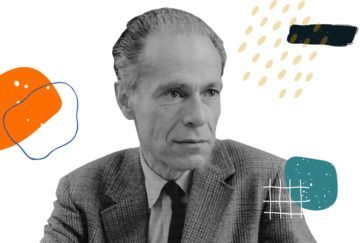 Simon Torracinta in Boston Review: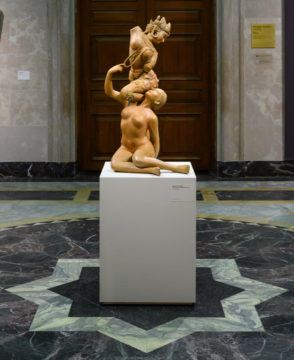
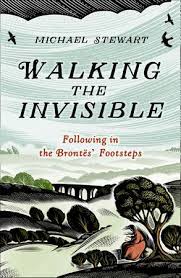 Stewart travels through the north of England, across moors and meadows, up mountains and through cities and villages and along coastal paths. He also voyages into the inner lives of the Brontës, showing how external place shaped their internal landscapes, how the wild fuelled their imagination.
 He published a few books that went mostly unnoticed, but there were rumors of a trunk in his room stuffed with his true life’s work. After his death in 1935, the trunk was discovered, brimming with notes and jottings on calling cards and envelopes, whatever paper appeared to be handy. They were authored not only by Pessoa but by a flock of his personas (“heteronyms,” he called them): a doctor, a classicist, a bisexual poet, a monk, a lovesick teenage girl. Among his writings was a sheaf of papers that would become his masterpiece: “The Book of Disquiet,” a mock confession in sly, despairing aphorisms and false starts — “The active life has always struck me as the least comfortable of suicides.” In total, Pessoa created dozens of heteronyms, most complete with biographies, bodies of work, reviews and correspondence. He was awed, and a little afraid of his mind, its “overabundance.” What relation did it bear to a family history of nervous instability?
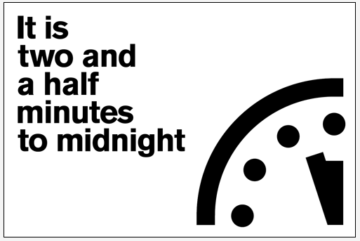 It made headlines recently when the
 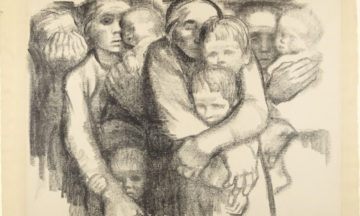 The short life of Simone Weil, the French philosopher, Christian mystic and political activist, was one of unrelenting self-sacrifice from her childhood to her death. At a very young age, she expressed an aversion to luxury. In an action that prefigured her death, while still a child, she refused to move until she was given a heavier burden to carry than her brother’s. Her death in Ashford in England in 1943, at just 34, is attributed to her apparent refusal to eat – an act of self-denial, in solidarity with starving citizens of occupied France, which she carried out despite suffering from tuberculosis. For her uncompromising ethical commitments, Albert Camus described her as ‘the only great spirit of our time’.
 You shall know them by their aspirations. Or so one might think, judging by the manifold ways in which Americans brand themselves by the things they seek to acquire and the ideals they seek to live by. Americans of all classes and identities aspire to various things, of course. The pursuit of happiness remains a central element of their national creed. But the meritocratic class has become the aspirational class par excellence. Aspiration connotes movement upward, and the meritocrat lives proudly and ostentatiously (some might even say overbearingly) in tireless pursuit of better. Little wonder that meritocrats come to think that what they and their offspring aspire to is manifestly and even morally superior to what others strive after.
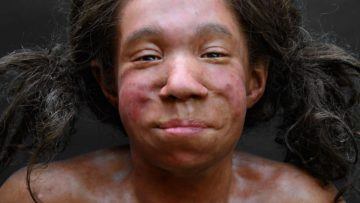
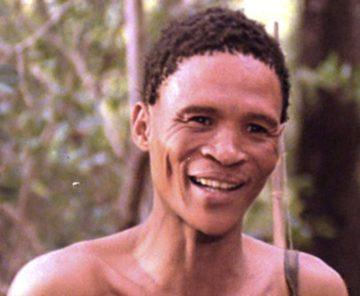 Now that Prometheus has basically granted every lowly lab tech superhuman powers, it’s like drinking from a data firehose if you love ancient DNA. And the more we know, the clearer it looks that genetically, all the humans on our planet group into basically three genetic types. You could think of them as 1. the very-diverse, 2. the not-very-diverse 3. the very-not-diverse (and if we’re being thorough: 4. a recent hybrid of 2 and 3.)