
Prabhat Patnaik in the Boston Review:
 It has been four decades since neoliberal globalization began to reshape the world order. During this time, its agenda has decimated labor rights, imposed rigid limits on fiscal deficits, given massive tax breaks and bailouts to big capital, sacrificed local production for multinational supply chains, and privatized public sector assets at throwaway prices.
The result today is a perverse regime defined by the free movement of capital, which moves relatively effortlessly across international borders, even as free movement of the people is ruthlessly controlled by a sharp increase in income inequality and a steady winnowing of democracy. No matter who comes to power, no matter what promises are made before elections, the same economic policies are followed. Since capital, especially finance, can leave a country en masse at extremely short notice—precipitating an acute financial crisis if its “confidence” in a country is undermined—governments are loath to upset the status quo; they pursue policies favorable to finance capital and indeed demanded by it. The sovereignty of the people, in short, is replaced by the sovereignty of global finance and the domestic corporations integrated with it.
More here.
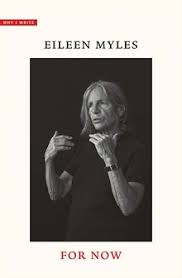 So here is my ask. I want fiction by “men” in which they go into real detail about the internal mechanics of their own masculinity. I want evidence of that interiority on the page. Does it exist. All I’ve ever seen is silence or violence. I mean he’s perpetually doing it, the performance of being a man in writing, but he concomitantly refuses its existence except when there’s a glitch, meaning a woman, a queer, or an oddly behaving man. It’s like the only way a man ever talks about gender at all is by talking about them. Never talking about how it is to be a man.
 TM: The epigraph to your poem “Cotton Candy” is from John Donne: “To go to heaven, we make heaven come to us.” In its original context, the line appears: “All their proportion’s lame, it sinks, it swells; / For of meridians and parallels / Man hath weaved out a net, and this net thrown / Upon the heavens, and now they are his own. / Loth to go up the hill, or labour thus / To go to heaven, we make heaven come to us. / We spur, we rein the stars, and in their race / They’re diversely content to obey our pace.” I love your epigraphic eye here. Who is Donne to you, as both poet and legacy? Why choose these lines in particular from his poem?
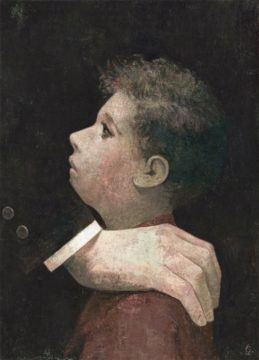 In 2017, a German man who goes by the name Marco came across an article in a Berlin newspaper with a photograph of a professor he recognized from childhood. The first thing he noticed was the man’s lips. They were thin, almost nonexistent, a trait that Marco had always found repellent. He was surprised to read that the professor, Helmut Kentler, had been one of the most influential sexologists in Germany. The article described a new research report that had investigated what was called the “Kentler experiment.” Beginning in the late sixties, Kentler had placed neglected children in foster homes run by pedophiles. The experiment was authorized and financially supported by the Berlin Senate. In a report submitted to the Senate, in 1988, Kentler had described it as a “complete success.”
 Blaise Pascal was a renowned French polymath of the 17th century, scientist, philosopher, mathematician, inventor, and later in life a theologian. Among his many contributions was an attempt to prove by logical means the existence of God, which came to be known as Pascal’s Wager. Stated simply, Pascal reasoned that not believing in God, if there was one, would damn you to eternal suffering. Conversely, believing in God, if there wasn’t one, would cost you little in this life and nothing once you were dead. Therefore, the only sensible course of action was to believe in God.
 “It feels qualitatively different this time.” There are few people I know in South Africa who don’t think this about the
  How can data be biased? Isn’t it supposed to be an objective reflection of the real world? We all know that these are somewhat naive rhetorical questions, since data can easily inherit bias from the people who collect and analyze it, just as an algorithm can make biased suggestions if it’s trained on biased datasets. A better question is, how do biases creep in, and what can we do about them? Catherine D’Ignazio is an MIT professor who has studied how biases creep into our data and algorithms, and even into the expression of values that purport to protect objective analysis. We discuss examples of these processes and how to use data to make things better.
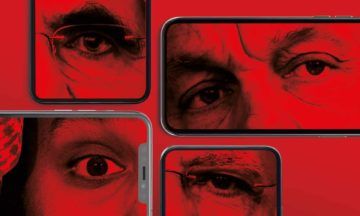 Human rights activists, journalists and lawyers across the world have been targeted by authoritarian governments using hacking software sold by the Israeli surveillance company NSO Group, according to an investigation into a massive data leak.
 Byung-Chul Han tells us in The Disappearance of Rituals, that ‘symbolic perception, as recognition, is the perception of the permanent’. In a world that often seems to be determined by change, by transient experiences, names are an anomaly. They are stubborn things, pushing back against the relentless march of time. Ages change, job titles, citizenship, but names we carry with us. In defiance of a life in constant motion. When we name newborns, we are trying to locate them in the world by carving out their distinction from others, as absolute immutable entities. Some part of that distinction will follow them through the trajectory of their life. Names endure, names remain.
 I’d like to set up an experiment to chart the sadness—try to find out where it comes from, where it goes—to trace it, in that melody (whichever variation) as it threads across Manhattan from the Lower East Side straight across the river, more or less west, into the suburbs of New Jersey and whatever lies beyond. This would require, I’m guessing, maybe a hundred saxophonists stationed along the route on tops of buildings, water towers, farther out on people’s porches (with permission), empty parking lots, at intervals determined by the limits of their mutual audibility under variable conditions in the middle of the night, so each would strain a bit to pick it up and pass it on in step until they’re going all at once and all strung out along this fraying thread of melody for hours, with relievers in reserve. There’s bound to be some drifting in and out of phase, attenuation of the tempo, of the sadness for that matter, of the waveform, what I think of as the waveform of the whole thing as it comes across the river losing amplitude and sharpness, rounding, flattening, and diffusing into neighborhoods where maybe it just sort of washes over people staying up to hear it or, awakened, wondering what is that out there so faint and faintly echoed, faintly sad but not so sad that you can’t close your eyes again and drift right back to sleep.
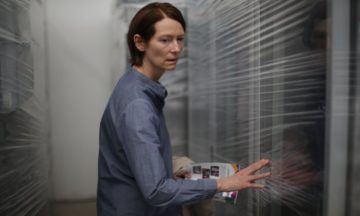 Memoria is a beautiful and mysterious movie, slow cinema that decelerates your heartbeat.
 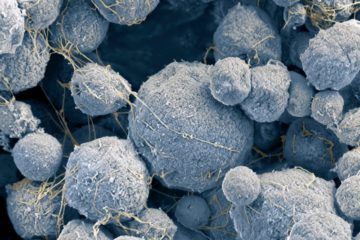 The Borg have landed — or, at least, researchers have discovered their counterparts here on Earth. Scientists analysing samples from muddy sites in the western United States have found novel DNA structures that seem to scavenge and ‘assimilate’ genes from microorganisms in their environment, much like the fictional Star Trek ‘Borg’ aliens who assimilate the knowledge and technology of other species. These extra-long DNA strands, which the scientists named in honour of the aliens, join a diverse collection of genetic structures — circular plasmids, for example — known as extrachromosomal elements (ECEs). Most microbes have one or two chromosomes that encode their primary genetic blueprint. But they can host, and often share between them, many distinct ECEs. These carry non-essential but useful genes, such as those for antibiotic resistance.
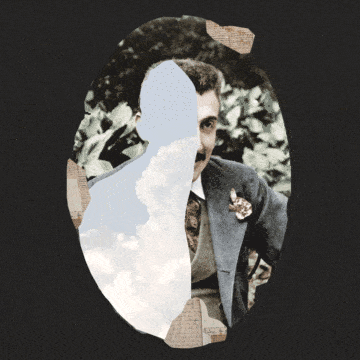 One morning a few weeks ago, I sent my friend a Proust text. It was a photo of a page from Swann’s Way, and it took several attempts for me to capture the near-page-length sentence in its entirety. Next to me, my 2-year-old daughter slowly guided a spoonful of oatmeal into her mouth, noticing my struggle. “Daddy, what are you doing?” she asked. The answer: being insufferable. My friend’s response shortly thereafter confirmed this: “It’s too early for me to follow this sentence.”
 Once upon a time, I decided to start answering the question “Where are you from?” with “The middle of the Pacific Ocean.” I never followed through, though I still think it’s a good answer. I have spent so much of my life bouncing back and forth between the United States and India that, for me, the concept of home is more like a stationary probability distribution — a phrase that I filched from a statistics paper once, and which is likely to make less sense to most people than “the middle of the Pacific Ocean.” After all, the latter at least counts as a place.
 The summer wasn’t meant to be like this. By April, Greene County, in southwestern Missouri, seemed to be past