David Remnick in The New Yorker:
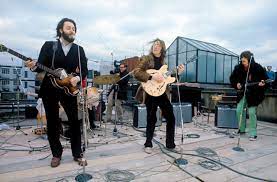 Early evening in late summer, the golden hour in the village of East Hampton. The surf is rough and pounds its regular measure on the shore. At the last driveway on a road ending at the beach, a cortège of cars—S.U.V.s, jeeps, candy-colored roadsters—pull up to the gate, sand crunching pleasantly under the tires. And out they come, face after famous face, burnished, expensively moisturized: Jerry Seinfeld, Jimmy Buffett, Anjelica Huston, Julianne Moore, Stevie Van Zandt, Alec Baldwin, Jon Bon Jovi. They all wear expectant, delighted-to-be-invited expressions. Through the gate, they mount a flight of stairs to the front door and walk across a vaulted living room to a fragrant back yard, where a crowd is circulating under a tent in the familiar high-life way, regarding the territory, pausing now and then to accept refreshments from a tray.
Their hosts are Nancy Shevell, the scion of a New Jersey trucking family, and her husband, Paul McCartney, a bass player and singer-songwriter from Liverpool. A slender, regal woman in her early sixties, Shevell is talking in a confiding manner with Michael Bloomberg, who was the mayor of New York City when she served on the board of the Metropolitan Transportation Authority. Bloomberg nods gravely at whatever Shevell is saying, but he has his eyes fixed on a plate of exquisite little pizzas. Would he like one? He narrows his gaze, trying to decide; then, with executive dispatch, he declines.
McCartney greets his guests with the same twinkly smile and thumbs-up charm that once led him to be called “the cute Beatle.” Even in a crowd of the accomplished and abundantly self-satisfied, he is invariably the focus of attention. His fan base is the general population. There are myriad ways in which people betray their pleasure in encountering him—describing their favorite songs, asking for selfies and autographs, or losing their composure entirely.
This effect extends to friends and peers. Billy Joel, who has sold out Madison Square Garden more than a hundred times, has spent Hamptons afternoons over the years with McCartney. Still, Joel told me, “he’s a Beatle, so there’s an intimidation factor. You encounter someone like Paul and you wonder how close you can be to someone like that.”
More here.

 With admirable clarity, Sumantra Bose’s Kashmir at the Crossroads helps to explain the tensions and the motives of the various parties involved in the intractable Kashmir conflict, including Chinese cartographers, Indian Hindu nationalists, Pakistani intelligence officers, violent jihadists and the group that barely gets a look in, the Kashmiris themselves. Landlocked and surrounded by three antagonistic nuclear powers with claims on their land, the Kashmiris are always the last ones to have a say over their own future.
 A young musician attends the conservatory, a young artist studies at the academy, but the young writer has nowhere to go. You view this as an injustice. Not so. Schools for musicians and painters provide first and foremost technical knowledge you’d be hard pressed to acquire on your own in relatively short order. What is the writer to learn at his institute? Any ordinary school is all it takes to push a pen across the page. Literature holds no technical secrets, or at least secrets that can’t be plumbed by a gifted amateur (since no diploma will help the talentless). It’s the least professional of all artistic callings. You may take up writing at twenty or seventy. You may be a professor or an autodidact. You may skip your high school diploma (like Thomas Mann) or receive honorary doctorates at multiple universities (again like Mann). The road to Parnassus is open to all. In principle at least, since genes have the final say.
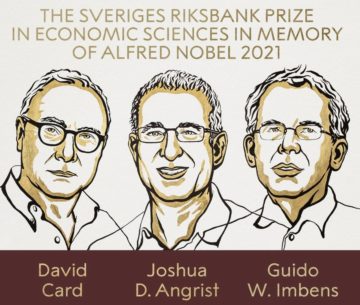 The Nobel Prize goes to David Card, Joshua Angrist and Guido Imbens. If you seek their monuments look around you. Almost all of the empirical work in economics that you read in the popular press (and plenty that doesn’t make the popular press) is due to analyzing natural experiments using techniques such as difference in differences, instrumental variables and regression discontinuity. The techniques are powerful but the ideas behind them are also understandable by the person in the street which has given economists a tremendous advantage when talking with the public. Take, for example, the famous minimum wage study of
  Researchers at the DZNE and the University Medical Center Göttingen (UMG) have identified molecules in the blood that can indicate impending dementia. Their findings, which are presented in the scientific journal EMBO Molecular Medicine, are based on human studies and laboratory experiments. University hospitals across Germany were also involved in the investigations. The biomarker described by the team led by Prof. André Fischer is based on measuring levels of so-called microRNAs. The technique is not yet suitable for practical use; the scientists therefore aim to develop a simple blood test that can be applied in routine medical care to assess dementia risk. According to the study data, microRNAs could potentially also be targets for dementia therapy.
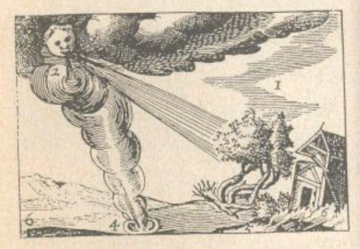 What is weather? Its etymology is not, as one may have hoped, connected to “whether”, as in “that which may be either one way, or the other” —“Whether the picnic is on or not depends on whether it rains”—, though both words have equally fascinating Germanic pedigrees. The modern German Wetter originally described the sort of ferocious wind you might encounter at a mountain peak, and later took on the primary connotation of “bad weather”, or, as is said in German, Unwetter, where the prefix that ordinarily signifies negation or absence, Un-, comes instead to indicate intensification (as in Untier — seemingly “non-animal” but literally “monster”, or Unkraut — seemingly “non-herb” but literally “weed”). At the outset then we may say that weather, strangely, is something the negative instances of which are also its paradigm instances. Yet the German and English words for “weather” are outliers among European languages, while far more commonly the term that is used is the same as the word for “time”: French le temps, Romanian timpul (or the variant Slavic-rooted vremea); even the Finno-Ugric pocket of Hungary calls both time and weather by the same word: idő. Already from this lexical tour we may infer that at some earlier stage what we today call “weather” was conceptualized primarily in a phenomenological sense, as the most basic experience of “in-the-world-ness”. Yet the overlapping history of these two concepts, time and weather, should only make us wonder at the profoundly different connotations each would come to have in late modernity.
 It is more than 150 years since scientists proved that
  Whenever there’s a leak of documents from the remote islands and obscure jurisdictions where rich people hide their money, such as this week’s release of the
  Hip-hop artist Childish Gambino (aka actor
  Not long after I moved into my first apartment, I started keeping an archive.
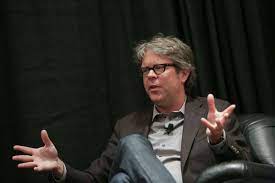 Jonathan Franzen, the novelist who has been lauded and reviled as few figures in contemporary American letters ever are,
 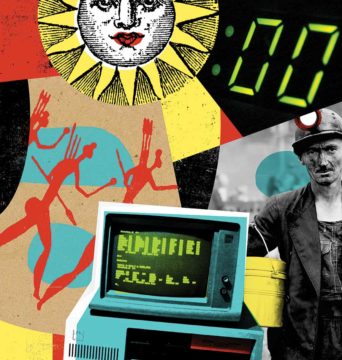 Aaron Benanav in The Nation (Illustration by Tim Robinson):