
Hasan Altaf in The Paris Review:
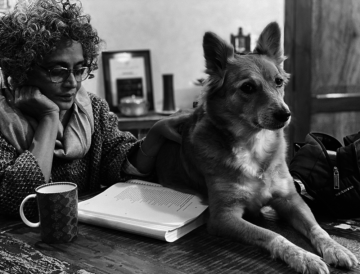 After her first novel, The God of Small Things (1997), Arundhati Roy did not publish another for twenty years, when The Ministry of Utmost Happiness was released in 2017. The intervening decades were nonetheless filled with writing: essays on dams, displacement, and democracy, which appeared in newspapers and magazines such as Outlook, Frontline, and the Guardian, and were collected in volumes that quickly came to outnumber the novels. Most of these essays were compiled in 2019 in My Seditious Heart, which, with footnotes, comes to nearly a thousand pages; less than a year later she published nine new essays in Azadi.
To see that two-decade period as a gap, or the nonfiction as separate from the fiction, would be to misunderstand Roy’s project; when finding herself described as “what is known in twenty-first-century vernacular as a ‘writer-activist,’ ” she confessed that term made her flinch (and feel “like a sofa-bed”). The essays exist between the novels not as a wall but as a bridge. Roy’s subject and obsession is, throughout, power: who has it (and why), how it is used (and abused), the ways in which those with little power turn on those with less—and, importantly, how to find beauty and joy amid these struggles. The God of Small Things is a novel focused on one family, while The Ministry of Utmost Happiness has a larger scale, but in the questions they ask and the themes they explore, both novels are as “political” as any of her essays. Her essays, in turn, are as powerfully and lovingly written as her fiction, with the same suspicion of purity, perfection, and simple stories.
More here.
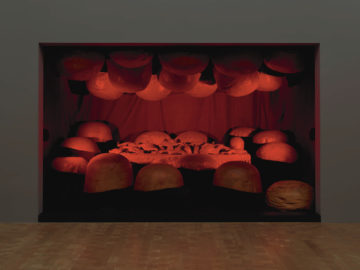 Kusama’s Narcissus Garden and Bourgeois’s Ventouse both feature gleaming globes on flat surfaces. And both, I believe, come from a similar place—the land of daddy complexes and phallic fetishes. (I’m not the first to notice some parallels between Kusama and Bourgeois; in 2017 Sotheby’s S|2 gallery in London presented a joint show, as did Peter Blum Gallery in 2001.)
 “I loved it when my tits or my cock or my asshole would destroy my own ego with their needs,” writes Dodie Bellamy in The Letters of Mina Harker. It’s true that these body parts and many others assert themselves vehemently throughout the text, which is already a riot of warring impulses and contradictory or just chorusing voices. Most writing strives to unify impulses, to find harmony between the heart (or whatever) and the mind, the corporeal and the spiritual, the story and its narrator. Dodie begins this book by disassembling that expectation, mocking it as she discards it, bringing it up again and again only to find it eternally lacking. Formal contrivance can never compete for long with what’s real and right in front of us. This book interrupts itself often to critique itself, or tell the story of its own creation, or take a break from itself to eat a snack, jerk off, begin again.
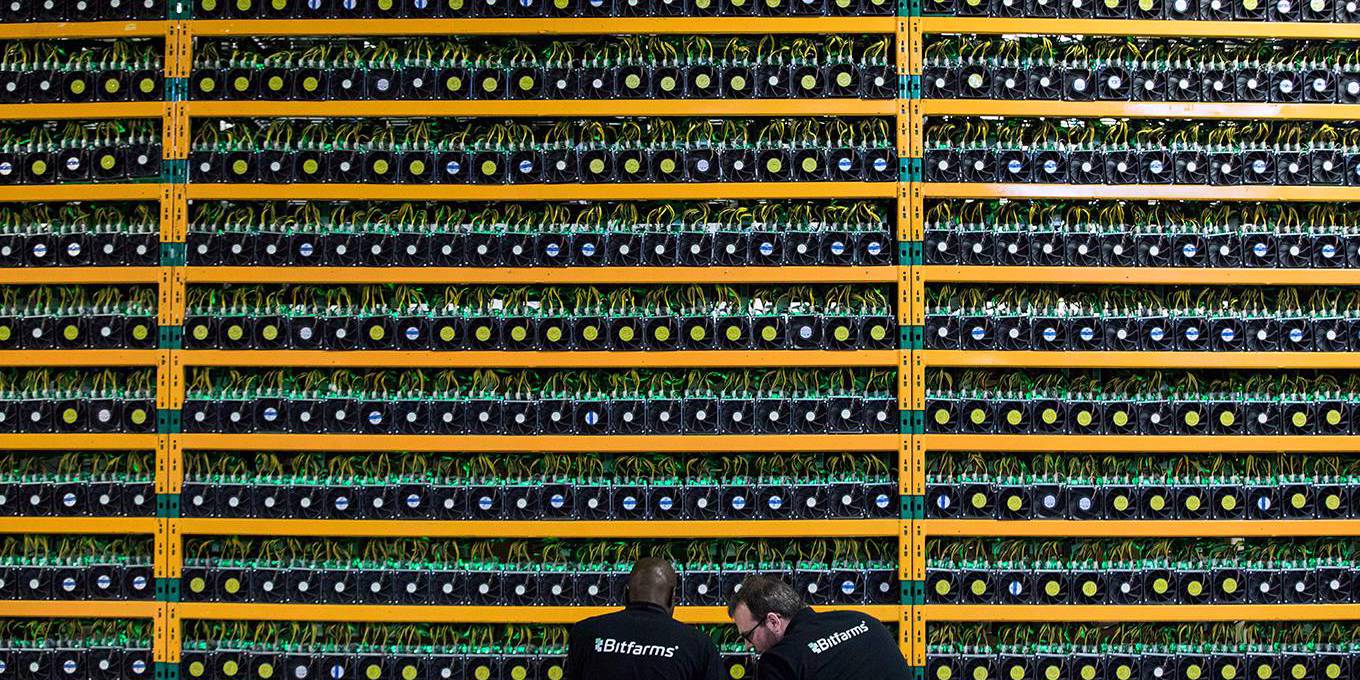 With the price of Bitcoin reaching new highs, and El Salvador and Cuba deciding to accept it as legal tender, cryptocurrencies are here to stay. What implications will this have for money and politics?
 My inspiration for this essay comes from reading a paper entitled ‘
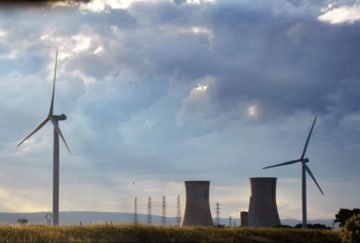 For half a century the debate around nuclear energy has produced more heat than light, inspiring impassioned discourse on all sides. But given the many urgent imperatives for rapidly transitioning our energy systems from high- to low-carbon—and from centralized and vulnerable to decentralized and resilient—in the very near future, an even-handed, impartial reckoning with nuclear power is perhaps more important than ever.
 Nearly three years ago,
  I
I  Renewable energy seems set to repeat many of the mistakes of fossil fuels. Though wind and solar power will not degrade the conditions for life on planet earth, the geography and corporate structure of these industries concentrate benefits and exclude communities in the style of Big Oil. The neighbors tend to notice—and to complain. So-called “
 Those of us who think that that
 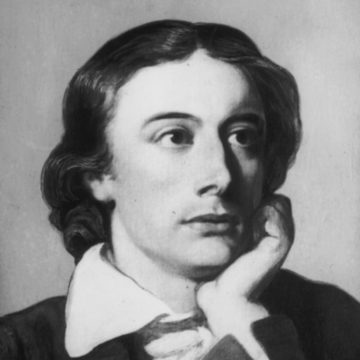 Curiosity is very closely related to one of my most highly prized traits, what Keats called “negative capability”… “when a man is capable of being in uncertainties, mysteries, doubts, without any irritable reaching after fact and reason.” There’s whiff of Romantic mysticism about this, for sure, but I see it primarily as openness to complexity, comfort with ambiguity, patience with not knowing. (If you’ve never read it, “
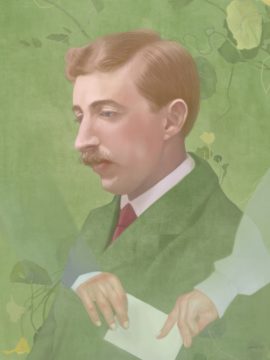 Cynthia Ozick’s surprisingly scalding and chaotic
  For many of us over the last year and more, our waking experience has, you might say, lost a bit of its variety. We spend more time with the same people, in our homes, and go to fewer places. Our stimuli these days, in other words, aren’t very stimulating. Too much day-to-day routine, too much familiarity, too much predictability. At the same time, our dreams have gotten more
 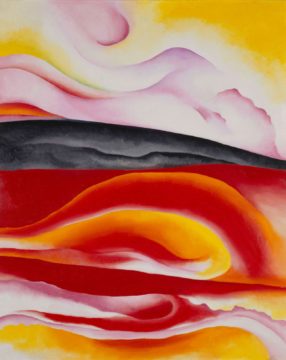 The works carry a metaphysical meaning, as well as a geographical one. With the skulls and antlers, bones and shells, O’Keeffe creates a secular iconography. For her, these subjects did not represent death but something vital and lasting. A bone found in the desert is like a shell found on the beach: both are forms defined by function, both are beautiful and enduring evidence of life. O’Keeffe’s images and juxtapositions are mysterious, but she wasn’t a member of the Surrealist movement, which deliberately juxtaposed objects without connections to one another. Her intention was quite different: these objects have a deep connection—one that we recognize on an intuitive level. “Pelvis with the Distance,” from 1943, shows a smooth, white bone, all curves and slopes and openings. It is suspended, high in the air, above a line of low, undulant blue hills. This physical juxtaposition—the celestial locus of the bone, the earth-hugging horizon below—creates a majestic sweep of space. O’Keeffe places the viewer aloft, level with the bone, high up in the empyrean. The supernatural height, the mystery, the hallucinatory beauty of the object—all combine to create a sense of the sublime.