
From Medical Xpress:
 Immunotherapy is a promising strategy to treat cancer by stimulating the body’s own immune system to destroy tumor cells, but it only works for a handful of cancers. MIT researchers have now discovered a new way to jump-start the immune system to attack tumors, which they hope could allow immunotherapy to be used against more types of cancer.
Their novel approach involves removing tumor cells from the body, treating them with chemotherapy drugs, and then placing them back in the tumor. When delivered along with drugs that activate T cells, these injured cancer cells appear to act as a distress signal that spurs the T cells into action.
“When you create cells that have DNA damage but are not killed, under certain conditions those live, injured cells can send a signal that awakens the immune system,” says Michael Yaffe, who is a David H. Koch Professor of Science, the director of the MIT Center for Precision Cancer Medicine, and a member of MIT’s Koch Institute for Integrative Cancer Research.
In mouse studies, the researchers found that this treatment could completely eliminate tumors in nearly half of the mice.
More here.
 Teaching writing, unlike most other kinds of teaching, is an intervention, closer to therapy than to any transmissible instruction. But with all the fussing about craft — anyone who teaches has a personal punch-list — we almost never hear about or get close to the real business, the meld. Maybe because each teacher is different and each interaction draws on a unique set of human variables.
 In an increasingly data-driven world, mathematical tools known as wavelets have become an indispensable way to analyze and understand information. Many researchers receive their data in the form of continuous signals, meaning an unbroken stream of information evolving over time, such as a geophysicist listening to sound waves bouncing off of rock layers underground, or a data scientist studying the electrical data streams obtained by scanning images. These data can take on many different shapes and patterns, making it hard to analyze them as a whole or to take them apart and study their pieces — but wavelets can help.
 Sheng, a professor of composition at the University of Michigan’s School of Music, Theater, and Dance, said he was sorry for showing a 1965 film version of Othello, starring Laurence Olivier in blackface, during an undergraduate class last month. In the first apology, sent to students shortly after the class ended, he called the film’s use of blackface “racially insensitive and outdated” and wrote that it was “wrong for me” to show it. He promised they would discuss the issue in the next class. As it turns out, he wouldn’t get that chance.
 Yet the fact remains that
  The wager made by Atkins is that if reality can be derealized by such technologies, it might also be rediscovered there, and this might occur in a few ways. First, he believes that, once outmoded, technology passes over to the side of “base materiality”; its very clunkiness becomes a reality effect. Atkins adapts the term corpsing—the moment when an actor breaks character and so dispels the illusion of the performance—“to describe a kind of structural revelation more generally”; his examples are when a vinyl record jumps or a streaming movie buffers. To corpse a medium is to expose its materiality, even to underscore its mortality, and in this moment the real might poke through. Second, punctuated by the gestural tics of the Atkins avatar, The Worm is also rife with manufactured glitches—sudden blurs, flares, beeps, and crackles—and these apparent cracks in the artifice might provide another opening to the real. Although these reality effects are artificial, “they baffle the signs of reality by parodying them, engendering a new kind of realism.”7 Third, if the real might be felt when an illusion fails, so too might it be sensed when that illusion is “glazed with effects to italicize the artifice,” that is, when illusionism is pushed to a hyperreal point.
 In a laboratory in Israel, an incubator drum spins on a bench. The two glass bottles attached to the drum contain mouse embryos, each the size of a grain of rice, with translucent, pulsing hearts.
 It can happen here. The “it” ought to be obvious by now: an authoritarian or even fascist regime in the United States. That was a big reason why Harvard professor Steven Levitsky, along with his colleague Daniel Ziblatt, published the 2018 book “
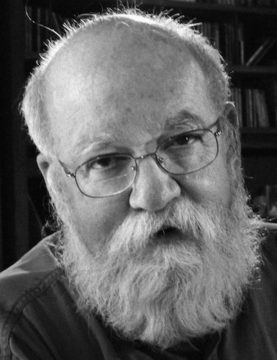 Genevieve Lloyd has done much to promote serious engagement with Baruch Spinoza and has demonstrated many ways in which Spinoza can inform and challenge current debates in the philosophical mainstream. In her article in this issue, Lloyd invites us to challenge the simplistic caricature of Spinoza as a paradigm ‘rationalist’, thus providing us with rich insights into the subtleties of Spinoza’s naturalist view on minds, knowledge, and reason. This more accurate picture, however, offers a striking similarity to the work of Daniel Dennett. Indeed, Spinoza and Dennett are alike in sharing their fervent opposition to Descartes’ conception of mind and body.
 Lloyd [2021] herself alludes to Dennett when she suggests that a serious engagement with Spinoza might allow us to provide an alternative framing of the problem of consciousness—one that replaces the current metaphors with what Dennett [1991: 455] would describe as novel ‘tools of thought’. While Lloyd [2017] has addressed the connection between Spinoza and the problem of consciousness in a previous publication, little has been made of the connection between these two Anti-Cartesian conceptions of the mind.
 Testimony by former Facebook employee Frances Haugen, who holds a degree from Harvard Business School, and a series in the Wall Street Journal have left many, including
  If you are concerned about the well-being of the United States and interested in what the country could do to help itself, stop what you are doing and read historian Geoffrey Kabaservice’s superb 2012 book,
 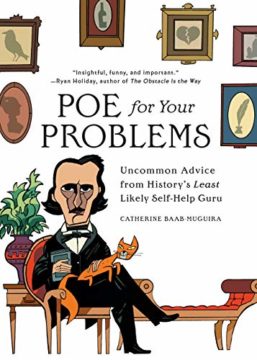 “Live your best life.” It’s one of the most common, yet worthless, aphorisms offered today. Chipper, insipid, and surprisingly relativistic (it fits arsonists as well as anybody), this meaningless maxim is the Tic-Tac of modern aspiration, boasting all the nuance and depth of Target word-art or pastel Instagram posts. Fed up with such drivel, and equally skeptical of the therapy-industrial complex, writer Catherine Baab-Muguira urges us in her debut book of nonfiction to take the exact opposite tack: to live our worst life instead.
 Towards what seemed like the halfway point of his show in London last night, Dave Chappelle announced to the crowd he was going to tell us something he was refusing to tell the media. He wanted us to know, he said while looking sadly at the floor, that his quarrel was not with the gay or the trans communities . No, no. Looking up and raising an index finger, he explained: ‘I’m fighting a corporate agenda that needs to be addressed.’ Thinking we still had another hour of the show to go, we cheered. ‘You fight those corporate vampires, Dave!’ we thought. He then let us know, whenever it was possible, that we should be kind to one another. Very shortly after that he raised his thumbs aloft and walked off stage: 45 minutes. Friday night tickets are £160. You show those corporate vamp… oh.