Melinday Moyer in Scientific American:
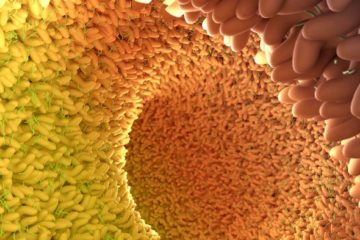 The body’s constellation of gut bacteria has been linked with various aging-associated illnesses, including cardiovascular disease and type 2 diabetes. Now a study has found that aging itself is associated with microbiome changes, and that these alterations are distinct from those connected to diseases or medication use. The findings raise the possibility that shifts in gut bacteria help drive the aging process—and that protecting these microbes could help people lead longer, healthier lives.
In the new study, published in Cell Reports on September 28, researchers at Cedars-Sinai Medical Center in Los Angeles sampled bacteria from the small intestines of 251 people between the ages of 18 and 80 who were undergoing upper endoscopies, when a doctor sticks a small probe down the throat and past the stomach. Usually, researchers study gut bacteria through stool samples. But those microbes, coming from the very end of the bowel, can be quite different from bacteria in the small intestine, closer to the stomach. That’s where most digestion and nutrient absorption occurs. “All the magic happens in the small intestine,” says study co-author Mark Pimentel, a gastroenterologist at Cedars-Sinai.
After analyzing the samples, the researchers found that aging was linked with changes in bacterial populations. Older people had more bacteria from the families Enterococcaceae, Lactobacillaceae, Enterobacteriaceae and genus Bacteroides, “and those are all groups of bacteria that can cause disease in humans,” says Heidi J. Zapata, an infectious disease specialist and immunologist at the Yale School of Medicine, who was not involved in the study. E. coli bacteria, which belong to the Enterococcaceae family, for instance, can cause diarrhea and urinary tract infections. Overall bacteria diversity also declined as people got older, going down as people headed towards age 80. Low diversity has been linked to health problems too, Pimentel says. Studies have found a relationship between low bacterial diversity and Crohn’s disease, irritable bowel syndrome and colorectal cancer, among other conditions.
More here.
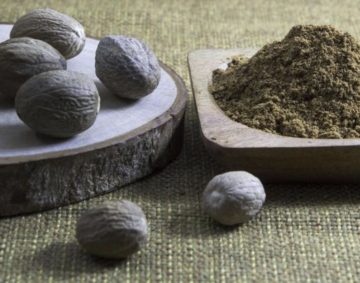 To this day nobody knows exactly what transpired in Selamon on that April night, in the year 1621, except that a lamp fell to the floor in the building where Martijn Sonck, a Dutch official, was billeted.
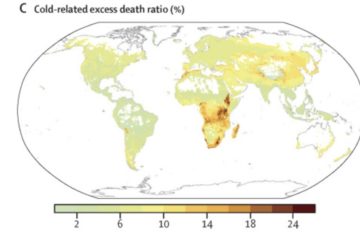 People are most likely to die of extreme cold in Sub-Saharan Africa, and most likely to die of extreme heat in Greenland, Norway, and various very high mountains. You’re reading that right – the cold deaths are centered in the warmest areas, and vice versa.
 Francis Fukuyama: It’s a really old doctrine. And I think there are several reasons that it’s been around for such a long time: A pragmatic, political reason; a moral reason; and then there’s a very powerful economic one.
 The life and work of Stephen Crane derived gravity from brevity. Not one of his novels is much more than a hundred pages long, and they and his short stories strip language to its potent minimum. Crane’s short but prodigious life—he died, of tuberculosis, five months before his 29th birthday—observed the same concision. His hold on the public imagination has also lacked longevity. Crane’s most famous novel, The Red Badge of Courage (1895), is no longer required reading in American schools, and his other greatest hits—Maggie: A Girl of the Streets (1893), “The Open Boat” (1897), The Monster (1898), “The Bride Comes to Yellow Sky” (1898), and “The Blue Hotel” (1898)—have fallen out of the cultural conversation.
 “Many of his poems are at best rococo vases of an eighteenth century artificiality, insisted on in our strenuous age though thrones go toppling down.” Such was
  I
I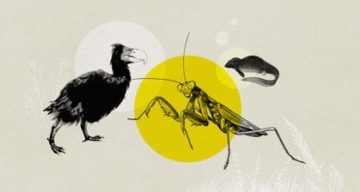 While it can sometimes seem like humanity is hell-bent on environmental destruction, it’s unlikely our actions will end all life on Earth. Some creatures are sure to endure in this
  T
T Czesław Miłosz, one of the greatest poets and thinkers of the past hundred years, is not generally considered a Californian. But the Polish-Lithuanian Nobel laureate spent four decades in Berkeley—more time than any other single place he lived. His debut collection in America, a short Selected Poems in 1973, was published by a small New York house, Seabury Press. Introduced by Kenneth Rexroth, the collection of about fifty poems included many from Ocalenie, the book that had appeared in Warsaw in 1945.
 Tickled by sunlight, life teems at the ocean surface. Yet the influence of any given microbe, plankton, or fish there extends far beyond this upper layer. In the form of dead organisms or poop, organic matter rains thousands of feet down onto the seafloor, nourishing ecosystems, influencing delicate ocean chemistry, and sequestering carbon in the deep sea.
 It’s not surprising that the narrative we’ve heard a lot lately is that such theories exploded over the past 18 months. It’s common to see headlines
 On July 8, 1962, just after 11 pm, the sky over Hawaii turned, in a moment, from black to blazing. Streetlights went out, all at once; radios stopped working. For several minutes, a red orb, edged in purple, surrounding a luminous yellow core, made the night as bright as day. It then dimmed, slowly, receding into color-changing auroras. When these lights faded, they left behind a spectral glow that persisted for hours and could be seen throughout the Pacific.