
Dan Falk in Undark:
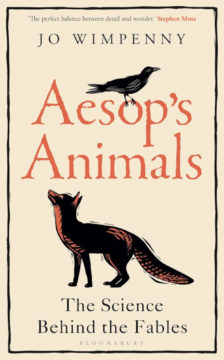 Several chapters into “Aesop’s Animals: The Science Behind the Fables,” zoologist and science writer Jo Wimpenny explains that, as a very young girl, she sometimes wanted to be a dog. (In a footnote she credits growing up in Wales for encouraging her “to think outside the box.”) This childhood fantasy, as the reader can readily imagine, involved crawling along the ground on all fours. But that only gets one part-way toward doghood, as the grown-up Wimpenny would come to realize.
For starters, we humans rely primarily on our senses of sight and hearing, but for dogs, it’s smell that reigns supreme; as she explains, a dog’s sense of smell is somewhere between 10,000 and 100,000 times better than our own. Dogs “can also wiggle their nostrils independently, helping them to pinpoint the direction of a smell,” and there’s some evidence that the left and right nostrils serve slightly different purposes, with the right tuned to “novel and potentially threatening smells,” and the left responding to “familiar, non-aversive smells (such as food) and scent from other species (such as human sweat for tracking purposes).” Who knew?
More here.
 Though the Taliban has once again taken power in Afghanistan, they have come back at a rather inopportune time. Across the Muslim world, many seem to be souring on Islamists, defined as those who derive legitimacy from Islam and advocate for modern states to be governed along Islamic precepts, both economically and judicially. Over the last few years, Islamist governments have fallen out of power across the Middle East and Africa, haemorrhaged support in Turkey, and failed to make headway in Southeast Asia.
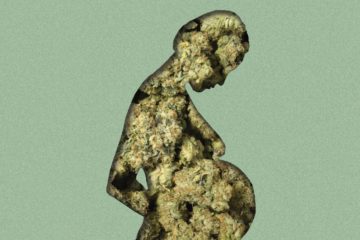 Modern motherhood is a marvel and a minefield. An obstacle course of risk-reward calculations for which we will be judged. And pregnancy serves a sort of boot camp, with every decision feeling more monumental than the last, as a legion of friends, family, caregivers, influencers, and experts (real and imagined) readily dispense opinions on all of it. Sushi. Unpasteurized cheese. Cold cuts. Cardio. Retinol. Highlights. Gardening. Wine.
 Finding a life partner is considered a major milestone – one that requires deliberation and careful assessment. We want someone whose long-term plans match our own: someone to whom we’re attracted, someone with whom we feel comfortable sharing our home, finances and, maybe, children. This person is our life partner, after all – naturally, we assume we’ll take care with the decision.
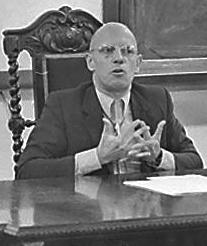 Alain Supiot in the New Left Review:
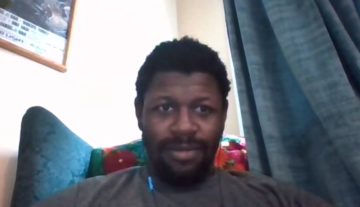 An Interview with Olúfẹ́mi Táíwò in The Drift:
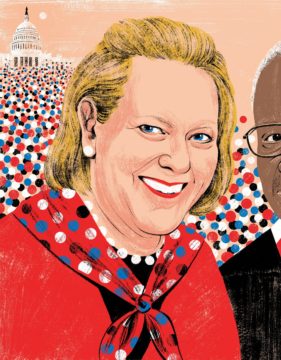 In December, Chief Justice John Roberts released his year-end report on the federal judiciary. According to a
 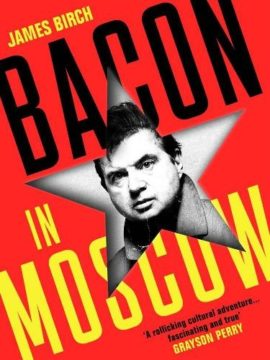 I
I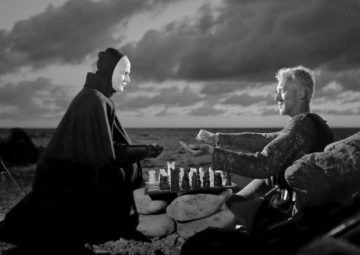 We’re in a room on the ground floor of a hotel, the bed facing a wall of curtained windows that in turn faces the street. It is nighttime. Rain is coming down, steadily, reflectively, a stream of passersby visible through the curtains, which are sheer. Everyone is moving in the same direction, bent slightly forward and holding an umbrella, from left to right, the good direction, from past to future, the opposite of where Death leads the knight and the squire and the monk and the smith and the mute in their final dance against the backdrop of time in Ingmar Bergman’s The Seventh Seal. The umbrella is the canopy of the heavens; the rain is never going to let up. We can see the passersby but they can’t see us, though Eric has turned a light on above his side of the bed.
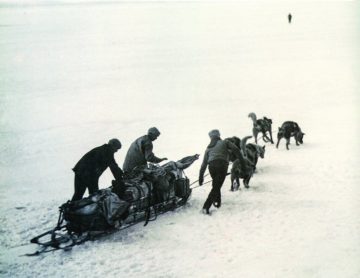 Here is a test. Scott, Shackleton, Mawson, Amundsen — who comes next? As surely as “10” follows the pattern 2, 4, 6, 8, by almost any measure “Fiennes” is the name that should come after the other four synonymous with Antarctic exploration. To give him his full moniker, Sir Ranulph Twisleton-Wykeham-Fiennes has probably man-hauled sledges farther, endured more blizzards and lost more fingertips to frostbite than the rest of them put together.
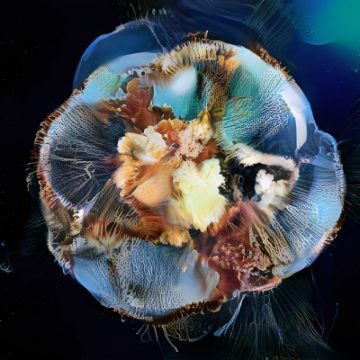 The creature appears to be, at first glance, a parrot, with bright feathers in yellow, red, green, and blue. But another look, and one sees that it’s shaped more like a duck, or perhaps two ducks melded into one. What looks like an eye might really be the wing of a butterfly. The more closely one looks at the image, the more the creature is unrecognizable; it dissolves into a strange jumble of component parts, which seem to add up to nothing, and then cohere once again into something both familiar and unknown.