
Daniel James Sharp in Areo:
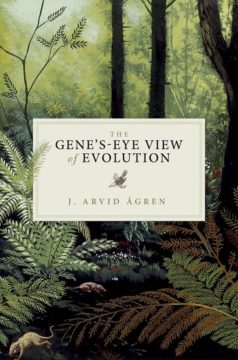 An Oxford undergraduate once wrote a brilliant answer to an exam question about the logic of natural selection, ending with the statement: “And here I rely heavily on the words of Richard Dawkins.” When the exam marker, one Marian Stamp Dawkins, noticed this, she wrote in the margin of the paper: “Yes. Don’t we all?”
J. Arvid Ågren relates this anecdote (originally told by Stamp Dawkins herself) in his recent book, The Gene’s-Eye View of Evolution—and he notes how apt it is: Richard Dawkins has had an enormous influence on evolutionary biology since the 1976 publication of his first book, The Selfish Gene (critics and supporters both agree with this—they just differ over whether it is a good thing). The Selfish Gene explains and argues for the gene’s-eye view: the idea that natural selection can best be understood as taking place at the level of the gene, rather than at the level of the individual organism, group or species.
And yet, there has been no recent comprehensive overview until now of the gene’s-eye view that Dawkins did so much to extend and popularise. Thank goodness for Ågren, then: as he notes, evolution is our modern creation story and the gene’s-eye view “strikes right at the heart of the question of what evolution is, and how we go about studying it.”
More here.
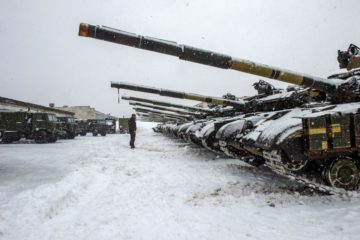 So much is being written about the Russian invasion of Ukraine that more on the situation on the ground is unnecessary. Certainly, it is premature for a post-mortem on causes and responsibilities of a conflict that came on so quickly and unexpectedly. But it is not a bad time to think about medium- and long-term consequences of Putin’s dramatic action, and how the West can recover its equilibrium and face up to a new global challenge.
 A
A  It’s not just their ability to run 42 kilometres that separates marathon runners from the rest of us. They’ve got a secret energy source hidden deep inside: a special bacteria in their gut turns a painful waste material into energy. No doping scandal required!
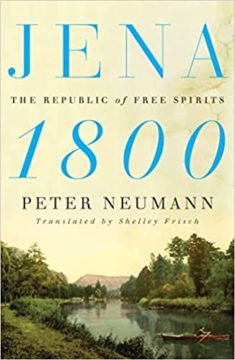 “Perhaps there would be a birth of a whole new era of the sciences and arts,” German romantic thinker Friedrich Schlegel hoped, “if symphilosophy and sympoetry became so universal and heartful that it would no longer be extraordinary for several complementary minds to create communal works of art. One is often struck by the idea that two minds really belong together … to realize their full potential only when joined … an art of amalgamating individuals.”
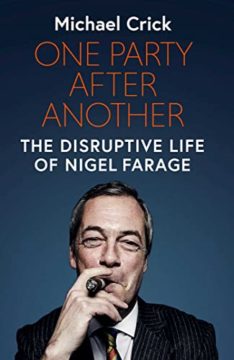 The consequences of Farage’s ubiquity have been seismic, reshaping the UK and the wider political landscape. He sought a referendum on Britain’s membership of the EU and then a hard Brexit, and ultimately got everything he wanted. The Conservative Party’s embrace of a form of English nationalism was partly a response to the threat that Farage posed. The near-silence of the Labour leader, Keir Starmer, on the subject of Brexit is a form of vindication for him. Starmer knows that Brexit is having calamitous consequences but does not dare to say so. No wonder Michael Crick concludes that ‘it’s hard to think of any other politician in the last 150 years who has had so much impact on British history without being a senior member of one of the major parties at the time’.
 Jessica Swoboda: What are the biggest challenges of academic writing?
 Although the speed
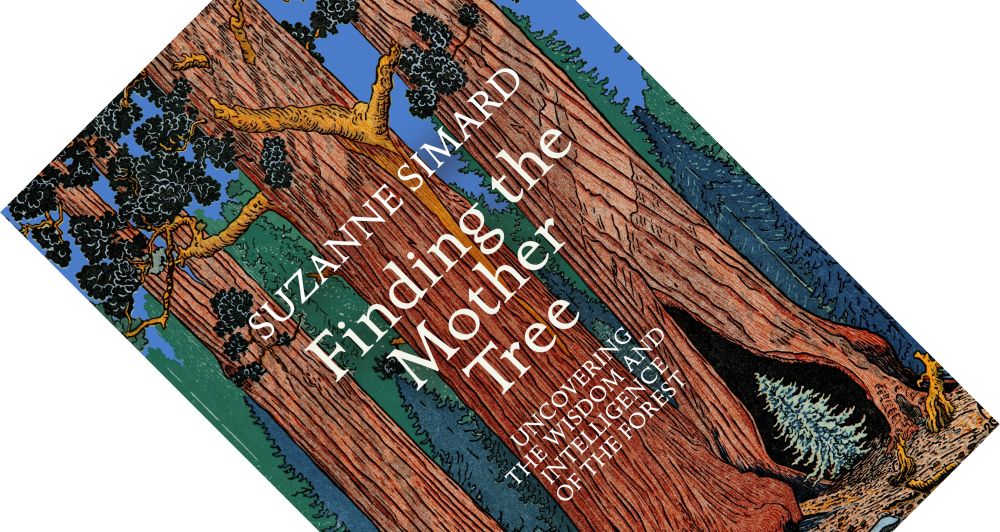 The idea that trees communicate and exchange nutrients with each other via underground networks of fungi has captured the popular imagination, helped along by the incredibly catchy metaphor of a “wood-wide web”. Suzanne Simard, a Professor of Forest Ecology at the University of British Columbia, has developed this idea more than anyone else and happily talks of mother trees nurturing their offspring. This idea has not been without controversy in scientific circles, if only for its anthropomorphic language. I was both sceptical and curious about her ideas. High time, therefore, to give her scientific memoir Finding the Mother Tree a close reading.
 I was in Eastern Europe in 1989, reporting on the revolutions that overthrew the ossified communist dictatorships that led to the collapse of the Soviet Union. It was a time of hope. NATO, with the breakup of the Soviet empire, became obsolete. President Mikhail Gorbachev reached out to Washington and Europe to build a new security pact that would include Russia. Secretary of State James Baker in the Reagan administration, along with the West German Foreign Minister Hans-Dietrich Genscher, assured the Soviet leader that if Germany was unified NATO would not be extended beyond the new borders. The commitment not to expand NATO, also made by Great Britain and France, appeared to herald a new global order. We saw the peace dividend dangled before us, the promise that the massive expenditures on weapons that characterized the Cold War would be converted into expenditures on social programs and infrastructures that had long been neglected to feed the insatiable appetite of the military.
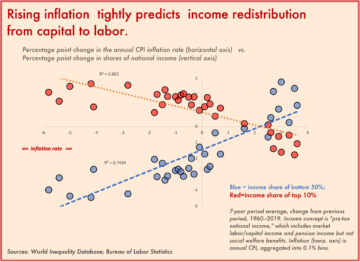 Seth Ackerman over at his substack:
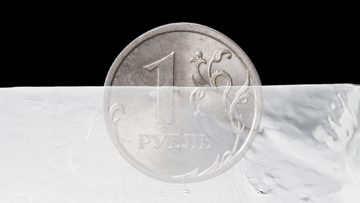 Faith Hillis in The Atlantic: