
Category: Recommended Reading
Kwame Anthony Appiah on race, nationalism and identity politics
Mark Vendevelde in Financial Times:
 Please use the sharing tools found via the share button at the top or side of articles. Copying articles to share with others is a breach of FT.com T&Cs and Copyright Policy. Email [email protected] to buy additional rights. Subscribers may share up to 10 or 20 articles per month using the gift article service. More information can be found here.
https://www.ft.com/content/7d9678e0-ab1b-11e8-89a1-e5de165fa619
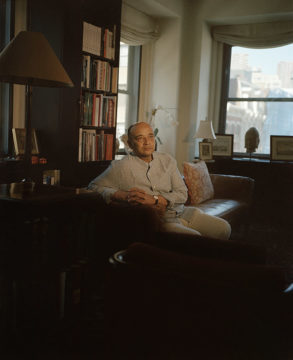
Kwame Anthony Appiah is a black, gay, American man who is descended from aristocrats and speaks English with one of those BBC accents you pick up at the better British schools. You probably think these facts tell you a certain amount about him. Highlight text Appiah, a professor of philosophy in New York, knows such badges matter — he has made a career studying concepts like blackness and gayness, social labels that guide us through humanity’s ungraspable diversity — but he wants you to know that most of what they signify is pure baloney. Consider race. Thomas Jefferson, often described as one the most enlightened of American thinkers, thought black people smelled worse than whites, required less sleep, had comparably good memories, but couldn’t master geometry. Today no one could count such outrageous views as enlightened; but as Appiah understood, they were the product of a time in which white colonialists had used the idea of an inferior race to justify mass exploitation. “The truth is that there are no races,” he declared in a 1985 essay that earned him fame among philosophers and social theorists, and notoriety among some of his African-American peers. “The ‘whites’ invented the Negroes in order to dominate them,” he later wrote in the award-winning essay collection In My Father’s House (1992).
More here. (Note: At least one post throughout the month of February will be devoted to Black History Month. The theme for 2022 is Black Health and Wellness)
Thursday, February 24, 2022
How sensitivity readers corrupt literature
Kate Clanchy in Unherd:
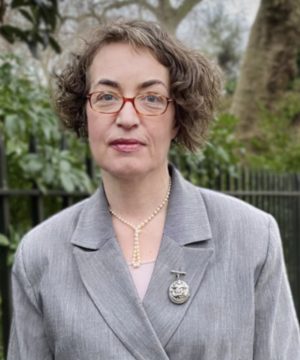 What did the sensitivity readers say? And did I care? Of all the aspects of the recent attempt to cancel my work, the one that seems to fascinate most people is the moment when my publishers sent my Orwell Prize-winning memoir, Some Kids I Taught and What They Taught Me, to be assessed by experts who would detect and reform its problematic racism and ableism.
Of course I cared. I’m horrified that people found prejudice and cruelty in my book. And I went into the process willingly: I’ve always enjoyed and benefited from editing and saw this as an extension. I did an initial rewrite — there were many things I was eager to change — in the autumn of 2021 and sent it off full of interest and optimism. I received the reports on it before Christmas. They were never formally used and I share the content here — anonymously, of course — because sensitivity reads are being used more and more widely, and mine gives a valuable insight into how they might work with non-fiction and memoir.
More here.
A supernova could light up the Milky Way at any time and astronomers will be watching
Davide Castelvecchi in Nature:
 Masayuki Nakahata has been waiting 35 years for a nearby star to explode.
He was just starting out in science the last time it happened, in February 1987, when a dot of light suddenly appeared in the southern sky. This is the closest supernova seen during modern times; and the event, known as SN 1987A, gained worldwide media attention and led to dramatic advances in astrophysics.
Nakahata was a graduate student at the time, working on what was then one of the world’s foremost neutrino catchers, the Kamiokande-II detector at the Kamioka Underground Observatory near Hida, Japan. He and a fellow student, Keiko Hirata, spotted evidence of neutrinos pouring out of the supernova — the first time anyone had seen these fundamental particles originating from anywhere outside the Solar System.
Now, Nakahata, a physicist at the University of Tokyo, is ready for when a supernova goes off.
More here.
Understanding Putin’s narrative about Ukraine is the master key to this crisis
Jonathan Steele in The Guardian:
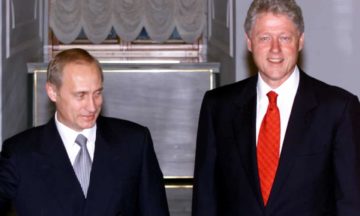 An increasing number of politicians and media analysts claim Putin may be mentally unstable, or that he is isolated in a bubble of yes-men who don’t warn him of dangers ahead. Many commentators say he is trying to restore the Soviet Union or recreate a Russian sphere of influence on his country’s borders, and that this week’s intrusion into eastern Ukraine is the first step towards an all-out attack on Kyiv to topple its government and even move against the Baltic states. None of these assertions is necessarily true.
The Russian president is a rational man with his own analysis of recent European history. Coming from a former Communist, his blaming of Lenin for giving excessive scope to local nationalism in drawing up the Soviet constitution is remarkable. Similarly, his criticism of the way national elites destroyed the Soviet Union in its final years is sharp.
Does he want to turn the clock back? People often quote his statement “the demise of the Soviet Union was the greatest geopolitical catastrophe of the century”. But it bears pointing out that he enlarged on it later, saying: “Anyone who doesn’t regret the passing of the Soviet Union has no heart. Anyone who wants it restored has no brains.”
It is crucially important for those who might seek to end or ameliorate this crisis to first understand his mindset.
More here.
E. O. Wilson: The Coevolution of Genes and Culture
Scientists Think They’ve Found ‘Mitochondrial Eve’s’ First Homeland
Brandon Spektor in Live Science:
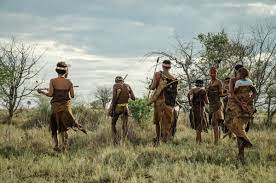 Two hundred thousand years ago, the earliest shared ancestors of every living human on Earth rested their feet at a verdant oasis in the middle of Africa’s Kalahari Desert. Here, in a patchwork of now-extinct lakes, forests and grasslands known as the Makgadikgadi paleowetland, our greatest grandmothers and -grandfathers hunted, gathered and raised families for tens of thousands of years. Eventually, as Earth’s climate changed, shifts in rainfall opened up fertile new paths through the desert. For the first time, our distant relatives had the chance to explore the unknown, putting behind them what a team of researchers now calls “the ancestral homeland of all humans alive today.”
…”We’ve known for a long time that humans originated in Africa and roughly 200,000 years ago,” study author Vanessa Hayes, a geneticist at the Garvan Institute of Medical Research and University of Sydney, both in Australia, said in a news conference. “But what we hadn’t known until this study was where, exactly this homeland was.”
More here. (Note: At least one post throughout the month of February will be devoted to Black History Month. The theme for 2022 is Black Health and Wellness)
Aleshea Harris Stages Black Life
Hilton Als in The New Yorker:
“What I’m interested in is disrupting these really narrow ideas that people unfortunately still have about Blackness onstage,” Harris says.
 “I’m just trying to get authentically to that,” the actress Stephanie Berry told her director, Whitney White, as they stood in a spacious rehearsal room in the East Village in mid-January. They were working out a bit of business that might or might not end up in “On Sugarland,” Aleshea Harris’s third full-length play, which premières at New York Theatre Workshop on March 3rd. “On Sugarland” was inspired by “Philoctetes,” Sophocles’ play about an expert archer plagued by chronic pain and exiled because of the smell of a wound on his foot. (A snake bit him while he was walking on sacred ground; so much for hubris.) Sophocles’ character may be powerful and gifted, but he is also set apart by the stench of his difference. Eventually, the god Heracles promises to heal Philoctetes’ foot if he returns to Troy to fight in the Trojan War. This is the mythology that jump-starts Harris’s new play, which is itself about mythology: one myth being that, by serving your country, you are protecting your community and yourself; another being that love can vanquish pain.
“On Sugarland” is sour with heartache and bristling with unexpected words and sounds. Saul (Billy Eugene Jones) is a vet who wants to reënlist, despite the fact that part of his foot was torn off in combat. Being in the military gives him an identity and makes him a model for his son, Addis (Caleb Eberhardt), who wants nothing more than to be a soldier, just like his dad. There is love in this story about the search for identity, but it’s a love surrounded by grief: Saul pines for a female officer who died in the service, and he’s the kind of guy who’s enthralled by the erotics of absence.
More here. (Note: At least one post throughout the month of February will be devoted to Black History Month. The theme for 2022 is Black Health and Wellness)
Thursday Poem
The Bones of My Father
1
There are no dry bones
here in this valley. The skull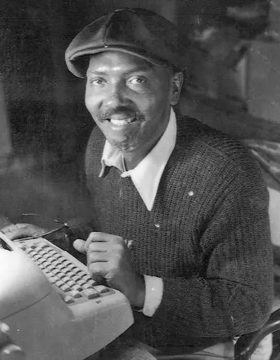
of my father grins
at the Mississippi moon
from the bottom
of the Tallahatchie,
the bones of my father
are buried in the mud
of these creeks and brooks that twist
and flow their secrets to the sea.
but the wind sings to me
here the sun speaks to me
of the dry bones of my father.
2
There are no dry bones
in the northern valleys, in the Harlem alleys
young / black / men with knees bent
nod on the stoops of the tenements
and dream
of the dry bones of my father.
And young white longhairs who flee
their homes, and bend their minds
and sing their songs of brotherhood
and no more wars are searching for
my father’s bones.
3
There are no dry bones here.
We hide from the sun.
No more do we take the long straight strides.
Our steps have been shaped by the cages
that kept us. We glide sideways
like crabs across the sand.
We perch on green lilies, we search
beneath white rocks…
THERE ARE NO DRY BONES HERE
The skull of my father
grins at the Mississippi moon
from the bottom
of the Tallahatchie.
by Etheridge Knight
from The Essential Etheridge Knight
University of Pittsburg Press, 1986
Wednesday, February 23, 2022
Yale’s Happiness Professor Says Anxiety Is Destroying Her Students
David Marchese in the New York Times Magazine:
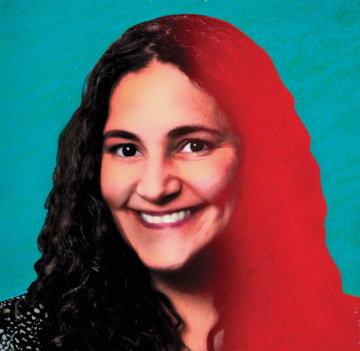 Since the Yale cognitive scientist Laurie Santos began teaching her class Psychology and the Good Life in 2018, it has become one of the school’s most popular courses. The first year the class was offered, nearly a quarter of the undergraduate student body enrolled. You could see that as a positive: all these young high-achievers looking to learn scientifically corroborated techniques for living a happier life. But you could also see something melancholy in the course’s popularity: all these young high-achievers looking for something they’ve lost, or never found. Either way, the desire to lead a more fulfilled life is hardly limited to young Ivy Leaguers, and Santos turned her course into a popular podcast series “The Happiness Lab,” which quickly rose above the crowded happiness-advice field. (It has been downloaded more than 64 million times.) “Why are there so many happiness books and other happiness stuff and people are still not happy?” asks Santos, who is 46. “Because it takes work! Because it’s hard!”
More here.
Evolutionary scenarios for the future of SARS-CoV-2
Donald S. Burke in Stat News:
 In the ongoing struggle of SARS-CoV-2’s genes versus our wits, the virus that causes Covid-19 relentlessly probes human defenses with new genetic gambits. New variants of this coronavirus with increasing transmissibility have sprung up every few months, a scenario that is likely to continue.
Some experts believe that the pandemic appears to be on an evolutionary slide toward becoming endemic, a “new normal” in which humans and the virus co-exist, as we currently do with influenza. But coronaviruses are clever. While an endemic resolution may be in sight, SARS-CoV-2 could still shock the human species with a devastating evolutionary leap.
Here are four possible scenarios, each taken directly from the known evolutionary playbook of coronaviruses.
More here.
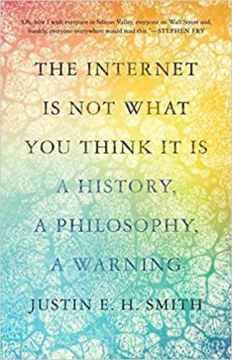
Justin E. H. Smith interviewed by Richard Marshall
Richard Marshall in 3:16:
3:16: What made you become a philosopher?
JS: You’ll get very different answers from me depending on how far back in time we start. I can remember being very little, six years old or so, and feeling deeply puzzled by the matter of why there is something rather than nothing. It wasn’t a pleasant feeling; in fact I would describe it as traumatic — it seemed existence itself must be a mistake and an impossibility. Made me cry like a baby, which I practically was. That puzzlement still flares up sometimes, like a childhood illness lying dormant, but when it does it’s less intense, just like everything else at this point.
Less remotely, I was a high-school dropout and so had to do my first college courses at a two-year institution where what was being taught was not exactly at the cutting-edge of research, and was often a fairly extreme misrepresentation of the various disciplines. When I transferred into the University of California, Davis, I only had two more years left to get my degree, and I had a double major in both philosophy and Russian studies with a focus on Slavic linguistics. This means that by the time I graduated, I had in fact taken very few philosophy courses, and was very lucky to have taken most of them with John Malcolm in ancient philosophy, Paul Teller in philosophy of science and logic, and Richard Wollheim in aesthetics and the philosophy of psychoanalysis. I applied to various programs in both philosophy and Slavic linguistics and I pretty much only got into Columbia in the former, and UCLA in the latter. At that point in my life, all I really wanted to do was to learn more, about as many things as possible, and I still knew sufficiently little about philosophy as an academic discipline to be able to maintain the false belief that it would be a good milieu in which to pursue that goal.
More here.
Brian Greene and Saul Perlmutter talk about The Future of Cosmology
Federer: A Love Story
Leland de la Durantaye at Cabinet Magazine:
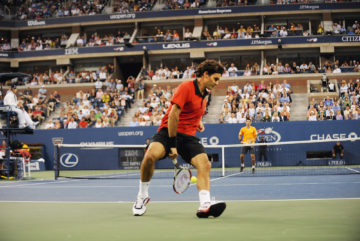 Federer exercised an animal fascination over the children, and myself, that was different from that of Roddick or Murray or the others. This may have had something to do with fame, but many were too young for that. Like most great athletes, like Jordan, Kobe, Zidane, Messi, lions, etc., Federer is more fluid than those around him. His body and being appear to be extremely relaxed until the moment of movement, which is fast, smooth and has something lethal about it. What makes him so unreadable a player (he is famously difficult to anticipate) is this very relaxation, for it is tension that opponents can learn to read, whereas relaxation is illegible. No one arrives so perfectly on time for his meeting with the ball as Federer, not only never too late, but never too early, so that all the momentum of his arrival flows into the shot with what appears to be almost effortless violence. Most professionals do this approximately, often with lots of fine-tuning little steps at the last minute (right before impact, Nadal, for instance, takes a series of hunched mini-steps). Federer does it so exactly that his strides are long, which is only possible thanks to the unearthly sense he obviously has of where his body is in relation to everything, always.
more here.
Strokes Of Genius
Letter To My Son
Ta-Nehisi Coates in Magzter:
Son,
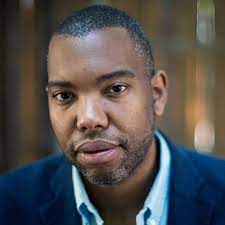 Last Sunday the host of a popular news show asked me what it meant to lose my body. The host was broadcasting from Washington, D.C., and I was seated in a remote studio on the Far West Side of Manhattan. A satellite closed the miles between us, but no machinery could close the gap between her world and the world for which I had been summoned to speak. When the host asked me about my body, her face faded from the screen, and was replaced by a scroll of words, written by me earlier that week.
The host read these words for the audience, and when she finished she turned to the subject of my body, although she did not mention it specifically. But by now I am accustomed to intelligent people asking about the condition of my body without realizing the nature of their request. Specifically, the host wished to know why I felt that white America’s progress, or rather the progress of those Americans who believe that they are white, was built on looting and violence. Hearing this, I felt an old and indistinct sadness well up in me. The answer to this question is the record of the believers themselves. The answer is American history.
There is nothing extreme in this statement. Americans deify democracy in a way that allows for a dim awareness that they have, from time to time, stood in defiance of their God. This defiance is not to be much dwelled upon. Democracy is a forgiving God and America’s heresies torture, theft, enslavement are specimens of sin so common among individuals and nations that none can declare themselves immune. In fact, Americans, in a real sense, have never betrayed their God. When Abraham Lincoln declared, in 1863, that the battle of Gettysburg must ensure “that government of the people, by the people, for the people, shall not perish from the earth,” he was not merely being aspiration. At the onset of the Civil War, the United States of America had one of the highest rates of suffrage in the world. The question is not whether Lincoln truly meant “government of the people” but what our country has, throughout its history, taken the political term people to actually mean. In 1863 it did not mean your mother or your grandmother, and it did not mean you and me. As for now, it must be said that the elevation of the belief in being white was not achieved through wine tastings and ice-cream socials, but rather through the pillaging of life, liberty, labor, and land.
More here. (Note: At least one post throughout the month of February will be devoted to Black History Month. The theme for 2022 is Black Health and Wellness)
The Life Breonna Taylor Lived, in the Words of Her Mother
Ta-Nehisi Coates in The Atlantic:
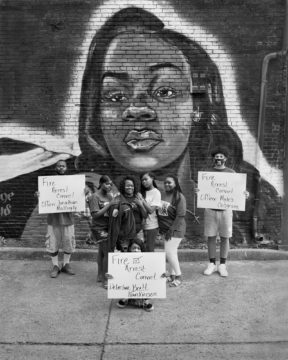 Kenny calls me in the middle of the night. He says, Somebody kicked in the door and shot Breonna. I am dead asleep. I don’t know what he’s talking about. I jump up. I get ready, and I rush over to her house. When I get there, the street’s just flooded with police—it’s a million of them. And there’s an officer at the end of the road, and I tell her who I am and that I need to get through there because something had happened to my daughter. She tells me I need to go to the hospital because there was two ambulances that came through, and the first took the officer and the second took whoever else was hurt. Of course I go down to the hospital, and I tell them why I am there. The lady looks up Breonna and doesn’t see her and says, Well, I don’t think she’s here yet. I wait for about almost two hours. The lady says, Well, ma’am, we don’t have any recollection of this person being on the way.
More here. (Note: At least one post throughout the month of February will be devoted to Black History Month. The theme for 2022 is Black Health and Wellness)
How We Became Post-Modern
Jane O’Grady at Literary Review:
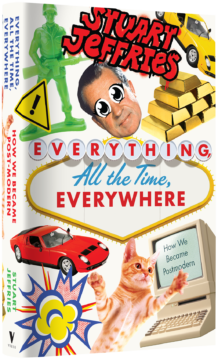 We easily and often apply the label ‘postmodern’ to particular artworks, architecture, activities and ideas; it is harder to specify some common quality of postmodernism that they all share. Far more than other historical phases, ‘postmodernity’ seems almost to have been concocted by those who write about it. The term suggests an impossible realm – after the present yet somehow already present itself; the concept, judging by the copious literature on it, is precisely about imprecision and lack of essence, and better defined by what it is not. Jean-François Lyotard’s much-cited The Postmodern Condition (1979) diagnosed in it an absence of ‘grand narratives’ (Christianity, liberalism, Marxism), which have been abandoned due to lack of faith in the march of progress. We are left instead, in a Waste Land way, with fragments we have shored against our ruin. Now that modernism has exhausted outrage and authenticity, and been domesticated and canonised, all postmodern art and architecture can do is pastiche and appropriate earlier styles, blazoning their own lack of originality. A central principle of postmodernism is ‘intertextuality’, the notion that ‘any text is the absorption and transformation of any other’, in the words of Julia Kristeva.
more here.
Wednesday Poem
Tempest in a Teacup
Prospero
Assume, just for a moment,
I am denied a job
in the factory of my dreams
under the fluorescent lights
of a porcelain white foreman.
It’s orderly and neat.
I feed my family.
No one questions my face.
I raised my son in my likeness,
so he would never go unseen,
bobbing on a wave of expectation,
I set in motion with my back
put into my work, praying
for my country, blessed
with more of me, never worrying
about those who might die,
or those who did, trying
to stir a storm, trying
to stand where I’m standing.
Tuesday, February 22, 2022
Chekhov Large and Small
Bob Blaisdell in the Los Angeles Review of Books:
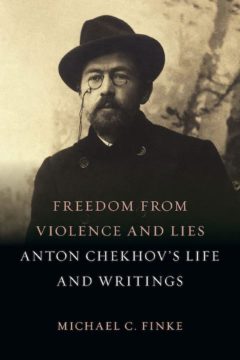 Chekhov is easier to know and read than the other Russian giants. He doesn’t look big or talk big. He’s funny on purpose. He shows us how to read him; he quietly attunes us to place and situation. We observe more than judge his characters’ actions; we detect their mental and emotional states through their physical symptoms. Chekhov began his professional career as a writer while in medical school. Even as he imagined the agitations and disruptions and occasional explosions of his characters, he was always also a doctor. He describes what it feels like to fall in love, to be pregnant and to miscarry, to bully one’s children, to flutter about helplessly while seeking someone to love, to have typhus, to cringe with embarrassment over a bespattering sneeze, to blather like a professor, to be struck dumb by love, to beg for sympathy, to grieve, to menace the innocent, to be conscious of but prey to one’s weaknesses, to be overworked to the point of hallucinating, to be ruthless.
More here.