
Bill Gates in his blog:
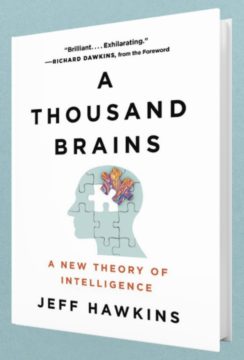 Over the years, I’ve read quite a few books about the brain, most of them written by academic neuroscientists who view it through the lens of sophisticated lab experiments. Recently, I picked up a brain book that’s much more theoretical. It’s called A Thousand Brains: A New Theory of Intelligence, by a tech entrepreneur named Jeff Hawkins.
I got to know Hawkins in the 1990s, when he was one of the pioneers of mobile computing and co-inventor of the PalmPilot. After his tech career, he decided to work with a singular focus on just one problem: making big improvements in machine learning. His platform for doing that is a Silicon Valley–based company called Numenta, which he founded in 2005.
More here.
 R
R In 2017, Karen Kostroff, a renowned oncology surgeon at Northwell Health in the New York Metropolitan area added a new talking point to her standard conversation with breast cancer patients facing tumor removal surgery. These conversations are never easy, because a cancer diagnosis is devastating news. But the new topic seemed to give her patients a sense of purpose, a feeling that their medical misfortune had the potential to do something good for other people.
  Alex Kane in Jewish Currents:
 Daniel J Herman in Aeon:
 Over at Phenomenal World, Lily Hu interviews Olúfẹ́mi Táíwò on climate crisis, reparations, and the use of history:
 A
A “Private Notebooks: 1914-1916” is a strange and intriguing record — illuminating when it comes to Wittgenstein’s preoccupations, his sexual anguish, his continuous struggles with his “work” in philosophy, along with his intermittent comments about his “job” in the military. (Like other writings by Wittgenstein that have been published posthumously, “Private Notebooks” is a bilingual edition, with German and English printed on facing pages.) Perloff also points out that unlike so many other war diaries, Wittgenstein’s includes very little about the larger stakes of the war itself. One exception is an entry that reads like a startlingly cheerful declaration that his own side was doomed: “The English — the best race in the world — cannot lose! We, however, can lose & will lose, if not this year, then the next!”
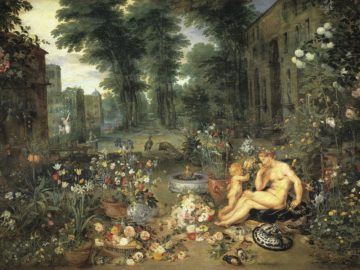 A work of art has the power to transport its viewer to another time and place. Now, the
  Policies to make police forces more representative of communities have centered on race. But race may crudely proxy views and lived experiences, undermining classic theories of representative bureaucracy. To conduct a multi-dimensional analysis, we merge personnel records, voter files and census data to examine roughly 220,000 officers from 97 of the 100 largest local U.S. agencies—over one third of local law enforcement agents nationwide. We show officers skew more White, Republican, politically active, male, and high-income than their jurisdictions; they also surround themselves with similarly unrepresentative neighbors. In a quasi-experimental analysis in Chicago, we find Democratic and minority officers initiate fewer stops, arrests, and uses of force than Republican and White counterparts facing common circumstances. The Black-White behavioral gap is often far larger than the Democratic-Republican gap, a pattern not observed among Hispanic officers. Our results complicate conventional understandings of descriptive representation, highlighting the importance of multi-dimensional perspectives of diversity.
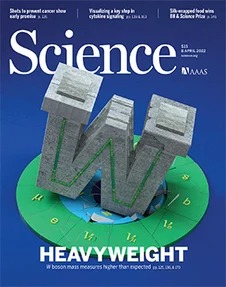 Over the past 60 years, the standard model (SM) has established itself as the most successful theory of matter and fundamental interactions—to date. The 2012 discovery of the Higgs boson only added to the streak of triumphs for the theory (
 One of the most revealing features of the reckoning prompted by the recent horrific attacks on Asians in the United States is the diversity of responses offered by Asian Americans themselves. Undermining the racialized presumption that “Asian Americans” form a homogeneous group, these conflicting views reveal the sociopolitical stratification of some