
Enjoying the content on 3QD? Help keep us going by donating now.
Category: Recommended Reading
Kerala Has Abolished Extreme Poverty
Vijay Prashad in Scheerpost:
 On 1 November 2025, the south-western Indian state of Kerala – home to 34 million people – was declared free from extreme poverty by Chief Minister Pinarayi Vijayan. Kerala is one of the few places in the world to have eradicated extreme poverty, following China, which announced in 2022 that it had eradicated extreme poverty nationwide. Kerala’s achievement is significant for two reasons. First, in a country where hundreds of millions of people still live in poverty, Kerala is the only one of India’s twenty-eight states and eight union territories to have overcome extreme poverty. Second, Kerala is governed by the Communist-led Left Democratic Front (LDF) and is therefore routinely denied assistance from the central government led by the right-wing Bharatiya Janata Party (Indian People’s Party).
Kerala’s Athidaridrya Nirmarjana Paripaadi (Extreme Poverty Eradication Project, or EPEP) was built on decades of worker and peasant struggles, which created strong public institutions and mass organisations, and the work of several left administrations. The EPEP was launched by Vijayan – a leader in the Communist Party of India (Marxist) – during the first Cabinet meeting of the second LDF government led by him in May 2021. After a rigorous criteria-based process focused on households’ access to employment, food, health, and housing, the government identified 64,006 families (or 103,099 individuals) as extremely poor. To carry out this survey, the government relied on about 400,000 enumerators – including government workers, cooperative members, and members of the mass organisations of left parties – to identify the unique problems faced by poor families. These enumerators created tailored plans for each family – from securing entitlements and accessing public services to obtaining housing, health care, and livelihood support – to build their strength in the fight against poverty. The role of the cooperative movement was fundamental in this campaign. The planning process for poverty eradication would not have been possible without the role of the local self-government system, the result of Kerala’s successful decentralisation of power. As this newsletter goes out, Kerala is in the midst of new local body elections.
More here.
Enjoying the content on 3QD? Help keep us going by donating now.
May I Explain the “May I Meet You?” Meme?
Katie Baker in The Ringer:
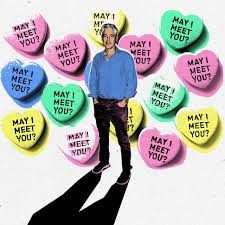 The way the fabled investor Bill Ackman sees it, he was born to move markets. It’s right there in the name: BILL-ionaire ACK-tivist MAN, as the 59-year-old always loves pointing out, whether in a New York magazine profile (in which Ackman also asserted that “I’ve met people named Hamburger that own McDonald’s franchises”) or on the social media platform X (where Ackman has racked up 1.8 million followers since he joined in 2017 with a Chipotle tweet). As a billionaire, an activist, and a man, Ackman built his fortune and his reputation by offering decades’ worth of unsolicited and even unwanted advice. Most of it has been directed toward the various big stagnant corporations he always sought to improve or the stubborn nations he still hopes to influence. But recently, Ackman has attempted to proffer his offbeat wisdom to us smol bean, stick-in-the-mud civilians, too.
And more frequently, that wisdom has extended far beyond the field of finance.
“Just two cents from an older happily married guy concerned about our next generation’s happiness and population replacement rates,” Ackman posted this past weekend, using the same confident, conversational tone you might find in one of his hedge fund investor letters. “The online culture has destroyed the ability to spontaneously meet strangers. As such, I thought I would share a few words that I used in my youth to meet someone that I found compelling.”
More here.
Enjoying the content on 3QD? Help keep us going by donating now.
Sunday Poem
The Case of Courage
No quality has ever so much addled the brains
and tangled the definitions of merely rational sages.
Courage is almost a contradiction in terms.
It means a strong desire to live taking the form of
a readiness to die.
‘He that will lose his life, the same shall save it,’
is not a piece of mysticism for saints and heroes.
It is a piece of everyday advice for sailors or mountaineers.
It might be printed in an Alpine guide or a drill book.
This paradox is the whole principle of courage;
even of quite earthly or brutal courage.
A man cut off by the sea may save his life
if he will risk it on the precipice.
He can only get away from death by
continually stepping within an inch of it.
A soldier surrounded by enemies,
if he is to cut his way out, needs to
combine a strong desire for living with a
strange carelessness about dying.
He must not merely cling to life, for then
he will be a coward, and will not escape.
He must not merely wait for death, for then
he will be a suicide, and will not escape.
He must seek his life in a spirit of furious
indifference to it; he must desire life
like water and yet drink death like wine.
by G.K. Chesterson
Enjoying the content on 3QD? Help keep us going by donating now.
Friday, December 12, 2025
A Pragmatic View of AI Personhood
Paper by Joel Z. Leibo, Alexander Sasha Vezhnevets, William A. Cunningham, and Stanley M. Bileschi:
 The emergence of agentic Artificial Intelligence (AI) is set to trigger a “Cambrian explosion” of new kinds of personhood. This paper proposes a pragmatic framework for navigating this diversification by treating personhood not as a metaphysical property to be discovered, but as a flexible bundle of obligations (rights and responsibilities) that societies confer upon entities for a variety of reasons, especially to solve concrete governance problems. We argue that this traditional bundle can be unbundled, creating bespoke solutions for different contexts. This will allow for the creation of practical tools—such as facilitating AI contracting by creating a target “individual” that can be sanctioned—without needing to resolve intractable debates about an AI’s consciousness or rationality. We explore how individuals fit in to social roles and discuss the use of decentralized digital identity technology, examining both ‘personhood as a problem’, where design choices can create “dark patterns” that exploit human social heuristics, and ‘personhood as a solution’, where conferring a bundle of obligations is necessary to ensure accountability or prevent conflict. By rejecting foundationalist quests for a single, essential definition of personhood, this paper offers a more pragmatic and flexible way to think about integrating AI agents into our society.
More here.
Enjoying the content on 3QD? Help keep us going by donating now.
Australia’s world-first social media ban is a ‘natural experiment’ for scientists
Rachel Fieldhouse & Mohana Basu in Nature:
 For Susan Sawyer, a physician-researcher specializing in adolescent health at the Murdoch Children’s Research Institute in Melbourne, Australia, the start of the social-media ban this week meant entering the next phase of her research. Over the past two months, Sawyer and her colleagues interviewed 177 teenagers aged 13–16 about their social-media use, screen time and mental health before the ban came into effect. She and her colleagues plan to survey the teenagers again in six months, to see whether the ban has affected their use of the platforms or their mental health. The researchers will also survey the participants’ parents about problematic Internet and social-media use by their children.
Another research collaboration between the Kids Research Institute Australia, the University of Western Australia and Edith Cowan University, all in Perth, will examine whether the ban is presenting new parenting challenges and what family conflicts have arisen as a result.
Amanda Third, a researcher at Western Sydney University in Australia who studies how children use technology, says the ban is an opportunity to collect data about the effect of policies that restrict young people’s access to the Internet and social media.
More here.
Enjoying the content on 3QD? Help keep us going by donating now.
Normal distribution vs Power Laws
Enjoying the content on 3QD? Help keep us going by donating now.
Charles Dickens: A Short History with Tom Crewe
Enjoying the content on 3QD? Help keep us going by donating now.
For many years, Zheng Xiaoqiong has collected the stories of the workers whose migration to Guangdong powered China’s manufacturing revolution
Translated from Chinese by Eleanor Goodman, intro by Kaiser Kuo at Equator:
 I first encountered Zheng Xiaoqiong’s writing in Iron Moon, a collection of Chinese worker poetry skilfully translated by Eleanor Goodman (2016). What struck me then about her poetry, and what remains true in this prose selection, is Zheng’s attentiveness to the texture of migrant-worker life. She restores dignity not through political theatrics, but through rigorous sensory detail: the clang of metal, the sting of dust, the smell of dirty socks, the fluorescent fatigue of factory nights, and cramped dormitories where shirtless men play cards and chainsmoke. She records the world as it is felt by the people who move through it. In doing so, she opens a space in which they can be seen as individuals – complicated, vulnerable and never reduced to symbols.
These subjects are caught in a trap that has structured millions of lives over the past four decades. On one side lies the village: impoverished, agrarian and socially stifling. On the other lies the city: dazzling and modern, but also cold, precarious and brutally indifferent. Zheng’s writing captures the psychic tension of that in-between space – the feeling of being suspended between two worlds, belonging fully to neither.
More here.
Enjoying the content on 3QD? Help keep us going by donating now.
The Persistence Of Religion
Kwame Anthony Appiah at Aeon Magazine:
 We tend to think of religion as an age-old feature of human existence. So it can be startling to learn that the very concept dates to the early modern era. Yes, you find gods, temples, sacrifices and rituals in the ancient Mediterranean, classical China, pre-Columbian Mesoamerica. What you don’t find is a term that quite maps onto ‘religion’.
What about the Romans, to whom we owe the word? Their notion of religio once meant something like scruples or exactingness, and then came to refer, among other things, to a scrupulous observance of rules or prohibitions, extending to worship practices. It was about doing the right thing in the right way. The Romans had other terms as well for customs, rites, obligations, reverence and social protocols, including cultus, ritus and superstitio. Yet they weren’t cordoned off into a realm that was separate from the workaday activities of public life, civic duty and family proprieties. What the Romans encountered abroad were, in their eyes, more or less eccentric versions of cultic life, rather than alien ‘religions’, in our sense. It was assumed that other localities would have other divinities; in times of war, you might even summon them, via evocatio, to try to get them to switch sides. But the local gods and rites of foreigners could be assessed without categorising them as instances of a single universal genus.
more here.
Enjoying the content on 3QD? Help keep us going by donating now.
George Orwell: Life and Legacy
Dorian Lynskey at Literary Review:
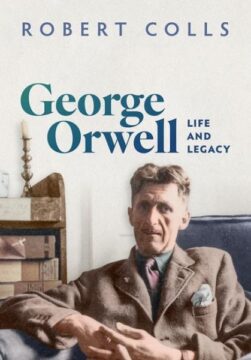 Peck focuses on what Orwell got brilliantly right – about fascism, communism, imperialism, nationalism, the abuses of new technology and the lies people tell themselves without necessarily realising. But even when Orwell was proved wrong, which was often, he was wrong in a sincere and interesting way. To quote his disclaimer in Homage to Catalonia, ‘I warn everyone against my bias, and I warn everyone against my mistakes. Still, I have done my best to be honest.’
Truth-seeking was Orwell’s creed. As Colls writes, ‘all his life Orwell would charge his enemies not so much with evil but with fraud … All swindlers. All a racket. Down with rackets.’ He trusted things he had personally seen, heard or felt while wrinkling his nose at theory and rhetoric. This justifies Milan Kundera’s blunt claim, as seen in Peck’s film, that Orwell ‘hated politics’. He developed his own organic English socialism by pitting the cheerful solidity of the working classes against the dishonest contortions and sterile fads of the intellectuals.
more here.
Enjoying the content on 3QD? Help keep us going by donating now.
Friday Poem
The Sloth
In moving-slow he has no Peer.
You ask him something in his ear,
He thinks about it for a year;
And, then, before he says a Word
There, upside down (unlike a Bird),
He will assume that you have Heard—
A most Ex-as-per-at-ting Lug.
But should you call his manner Smug,
He’ll sigh and give his branch a Hug;
Then off again to sleep he goes,
Still swaying gently by his Toes,
And you just know he knows he knows.
by Theodore Roethke
from To Read a Poem
Harcourt Brace, 1982
Enjoying the content on 3QD? Help keep us going by donating now.
Jon Stewart Starts His Talk Show Career
Enjoying the content on 3QD? Help keep us going by donating now.
India’s Season of Sadness
Anurag Verma in The New York Times:
 After the long, torturous summers that bake northern India in 40-degree Celsius (104 degree Fahrenheit) heat, winter should be welcomed as a reprieve. Instead, it is our season of sadness. The annual pollution emergency faced by hundreds of millions of Indians is upon us — three months of physical and emotional suffocation. I live in Delhi, one of the most polluted major cities in the world, which is wrapped during winter in a dull sepia more befitting a vintage photograph than a place alive in the present. The air smells toxic, leaves a metallic burn in the throat and stings the eyes.
This health crisis has become a built-in feature of life, as predictable as the annual choreography of public fear and government paralysis that comes with it. Once again, Delhi’s pollution levels have repeatedly blown past the upper limits of the government’s air quality index into hazardous territory, or more than a hundred times what global health bodies say is safe.
More here.
Enjoying the content on 3QD? Help keep us going by donating now.
Thursday, December 11, 2025
Julien Crockett speaks with Blaise Agüera y Arcas about the various ways that LLMs keep surprising scientists and how our definition of intelligence should be more complex than people generally think
Julien Crockett at the Los Angeles Review of Books:
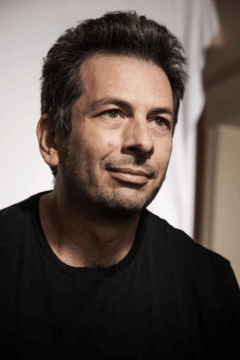
“At least as of this writing,” Blaise Agüera y Arcas begins his new book What Is Intelligence? Lessons from AI About Evolution, Computing, and Minds, “few mainstream authors claim that AI is ‘real’ intelligence. I do.” Gauntlet thrown, Agüera y Arcas lays out his thesis, which is simple—in the way that profound remarks or universal theories can be—yet with enormous implications: because the substrate for intelligence is computation, all it takes to create intelligence is the “right” code.
What Is Intelligence? is a wide-ranging defense of this argument. Agüera y Arcas takes us from the emergence of life to Paradigms of Intelligence, his research group at Google, where he studies biologically inspired approaches to computation. Importantly, given the rapid development and deployment of AI today, What Is Intelligence? makes us question what is so “artificial” about artificial intelligence.
In our conversation, we discuss definitions of life and intelligence, cultural attitudes toward AI, whether we should have been surprised by the success of large language models in the early 2020s, and the implications of AI on society.
More here.
Enjoying the content on 3QD? Help keep us going by donating now.
Which door would you choose?
A story by @magnushambleton at X:
 I chose the green door ninety-three days ago. At the time, it seemed obviously correct. Not even a close call. The red door offered two billion dollars immediately—a sum so large it would solve every material problem I’d ever face, fund any project I could imagine, and still leave enough to give away amounts that would meaningfully change thousands of lives. But two billion is a number. It has a fixed relationship to the economy, to the things money can buy, to the world. The green door offered one dollar that doubles every day. I remember standing there, doing the mental math. Day 30: about a billion dollars. Day 40: over a trillion. Day 50: a quadrillion. The red door would be surpassed before the first month ended, and after that, the gap would grow incomprehensibly fast. Choosing the red door would be like choosing a ham sandwich over a genie’s lamp because you were hungry right now. So I walked through the green door. The first few weeks were unremarkable.
I had a dollar, then two, then four. By day ten I had $512, which felt like finding money in an old jacket. By day twenty I had over a million, and I started getting calls from financial advisors I’d never contacted. By day thirty-one I had crossed the two-billion threshold—officially richer than I would have been behind the red door. I didn’t understand what was happening until around day sixty.
More here.
Enjoying the content on 3QD? Help keep us going by donating now.
John Jumper: The Protein-Folding Challenge to Nobel Prize
Enjoying the content on 3QD? Help keep us going by donating now.
15 Minutes of Ronny Chieng
Enjoying the content on 3QD? Help keep us going by donating now.
Actors took big swings in 2025. Here are some of the best
Wesley Morris in The New York Times:
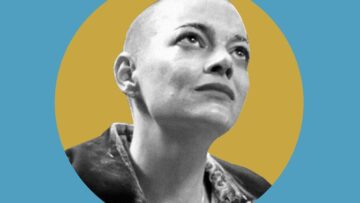 On today’s show, Wesley reveals his favorite film performances of the year — but his list is not an ordinary best-of list. He zeroes in on the specific details that make a performance great. Like, who did the best acting in a helmet this year? Who were the most convincing on-screen best friends? And who refused to play it safe? Find out in our first annual Cannonball Great Performers special.
More here.
Enjoying the content on 3QD? Help keep us going by donating now.
Kathleen Raine: Novalis & William Blake
Enjoying the content on 3QD? Help keep us going by donating now.