
Ian Millhiser in Vox:
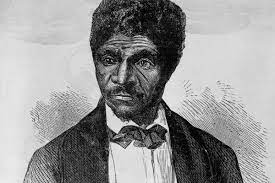 Two events occurred Monday night — one historic, the other rather insignificant — which placed an unflattering spotlight on the Supreme Court of the United States. The historic event was that Politico published an unprecedented leak of a draft majority opinion, by Justice Samuel Alito, which would overrule Roe v. Wade and permit state lawmakers to ban abortion in its entirety in the US. Alito’s draft opinion is not the Court’s final word on this case, Dobbs v. Jackson Women’s Health Organization, but the leaked opinion is the latest in a long list of signs that Roe may be in its final days. The other event that also occurred last night is that I sent two tweets. One praised whoever leaked Alito’s opinion for disrupting an institution that, as I have written about many times in many forums, including my first book, has historically been a malign force within the United States. And a second celebrated the leak for the distrust it might foster in such a malign institution.
The former tweet was phrased provocatively, and it attracted some attention from those on the right, including Sen. Ted Cruz (R-TX). So let me clarify that I do not advocate arson as a solution to the Republican Party’s capture of the Supreme Court. I metaphorically compared the leak of Alito’s opinion to lighting the Court on fire because, as Chief Justice John Roberts noted in his statement on the leak, the Court has extraordinarily strong norms of confidentiality that it zealously protects. The fact that someone inside the Court’s very small circle of trust apparently decided to leak a draft opinion is likely to be perceived by the justices, as SCOTUSBlog tweeted out Monday night, as “the gravest, most unforgivable sin.”
More here.
 Russian impresario, Sergei Diaghilev, trained his spyglass on modernism, plotless ballets of pure motion with cubist sets and minimal costumes, but he also knew box office when he saw it, and because his Ballets Russes was a touring company that never performed in the country for which it was named, he also presented fantastic ballets that audiences loved, happy to be cast under the spell of Scheherazade, the Firebird, Giselle. Diaghilev, always ready to go overboard, staged a version of The Sleeping Princess with huge trompe l’oeil sets and over three hundred costumes. Courtiers and princes wore jewelled plumed turbans, ladies of the court were dressed in ornate gowns with trains and capes and gold-buckled shoes. The evil Carabosse had bony arms that ended in claws, a long haphazardly leopard-spotted cloak, conical hat, and in silhouette, she looked like a rat. Critics called the productions a gorgeous calamity. In London, in 1921, it wasn’t Aurora, Keynes fell in love with, but the Lilac Fairy, the creature who put the kingdom to sleep, so as to delay the effects of the jilted fairy’s curse. The Lilac Fairy was danced by Lydia Lopokova, and when attendance fell off, he made sure to sit in empty box where she would notice him.
 I have a story in my book about Greenberg that relates to this idea of charms and to formalism. In his book Sade, Fourier, Loyola (1971), Barthes talks about the style of a great writer as the writer’s “charm.” Once, after Greenberg had died, I was asked to be part of a panel at Harvard University in honor of the 80th anniversary of Greenberg’s birth. Heading to Boston on the train I thought, “I can’t be part of this panel celebrating Greenberg and trash him.” I had trashed him, for instance, in The Optical Unconscious — the last part about Jackson Pollock was meant to demolish Greenberg. So, I asked myself, what can I say about Greenberg at Harvard that won’t be hypocritical but will be positive? Then I thought about Barthes’s notion of charm.
 Why is the Anglo-Saxon world so individualistic, and why has China leaned towards collectivism? Was it Adam Smith, or the Bill of Rights; communism and Mao? According to at least one economist, there might be an altogether more surprising explanation: the difference between wheat and rice. You see, it’s fairly straightforward for a lone farmer to sow wheat in soil and live off the harvest. Rice is a different affair: it requires extensive irrigation, which means cooperation across parcels of land, even centralised planning. A place where wheat grows favours the entrepreneur; a place where rice grows favours the bureaucrat.
 Evolution has equipped species with a variety of ways to travel through the air — flapping, gliding, floating, not to mention jumping really high. But it hasn’t invented jet engines. What are the different ways that heavier-than-air objects might be made to fly, and why does natural selection produce some of them but not others? Richard Dawkins has a new book on the subject,
  Among the many
  Theologians sometimes argue that, without the existence of God, life would be meaningless. Some secular people agree. For instance, in his
 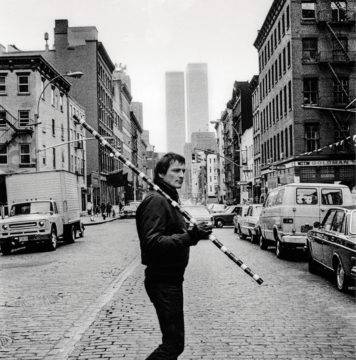 The incompatibility of his enterprise: as he brought one of his homemade object-acts, uninvited, into a gallery or museum opening, gently leaned it against a wall or gently dropped it on the floor, amid the other artists’ works on view, only to be jettisoned, exiled, often, more often than not, artist and stick, abruptly from the proceedings; or purposefully yet leisurely walked with a stick down the street or into a conference; or nestled it in a pastry shop window, something strange and sweet amid the sweets; or let it vogue in Le Grand Chic Parisien, oblique or (even) obtuse to the 1930s fashions, objets, and jewels; tapped it like a kind of herald to conversation in a pub; or slanted it against the fence while guys enjoyed a pickup game of hoops on the other side. He was, wasn’t he, fucking with the contingencies, regimented, rigged, of inside and outside, and of who decides what comes into focus when something uninvited or unacknowledged radiates its difference?
 Music, Jude Rogers realises towards the end of her perceptive and moving book, The Sound of Being Human, is a “portal”. The term, borrowed from Nina Kraus, an academic who studies the biology of auditory learning, has a scientific meaning: a portal is the part of an organism where things enter and exit, often with transformative effects. Music does that too. “It is a grand, exhilarating entrance to something,” Rogers writes. It allows us to access and express our innermost feelings, and to communicate with others when alternative channels are unavailable.
 Homo sapiens have big brains. We use those brains to develop new technologies, which enable us to produce more stuff and support larger populations on the same amount of land. Higher population density makes possible greater specialization and increases demand for innovation. As a result, cultural attributes that favor education and innovation become more valuable, so families with those attributes are more likely to reproduce, resulting in a population that is more favorable for further technological development.
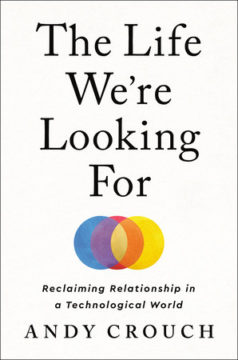 In thinking about technology, three questions are fundamental. What is technology for? What are we for? And how is our answer to the first question related to our answer to the second?
 The health workers try to explain to Dolhare that his relative succumbed to Covid-19, and that he, too, should be inoculated to protect himself from infection. “But how will I get corona if it doesn’t exist?” he asks, repeating the false claim.
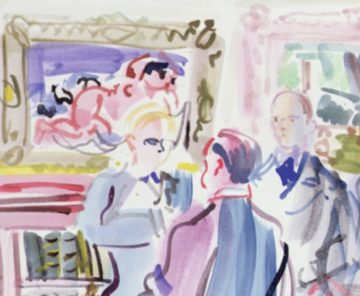 For years, I played basketball with a humanities skeptic. He was an endowment manager at the Ivy League university from which he had graduated with a degree in economics. He knew I was a professor of literature, and one day he asked what I taught—and did I by any chance teach Moby-Dick? I nodded, and he said, “You don’t believe the hype, do you?” His proudest moment in college had come when, required to read the novel for a first-year class, he developed a firm belief that Moby-Dick’s reputation was explainable chiefly by its obscurity. The emperor had no clothes: The novel was taught because it was revered, and revered because it was taught. Baffled readers took their incomprehension as a sign of its elusive greatness. Teachers followed blind tradition and enjoyed the aura of solemn stupefaction.
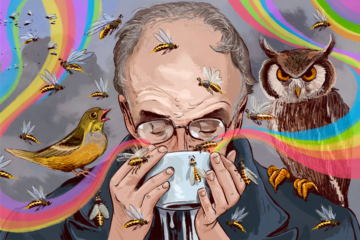 A reader who opens a volume of Šalamun to any page is likely to find a startling line: “Bees rustle like a fifth column”; “I am a volcano that needs no sandals.” His images cascade in bewildering but thrilling torrents: “Wreaths shut in butter, shut in a glassy / casket in the hydra’s snout under the tree-tooth, / left shadow, microbes, blown up by / Job, flushed tender shivering gelatinous / Law morphing into socage.” Tonally, he can shift abruptly from the silly (“the soul of earth jacks off the skeleton key”) to the breathtaking (“My heart / beats like the heart of a hare who will die of fear”). He is a poet of wild and strange delights; to love Šalamun, readers must want to be invited into uncharted territory.
 Owen Hatherley blithely claims that this massive tour de force is ‘a guide to the place … you’re visiting, or a place you want to visit’. Pull the other one, squire. The notion of Owen Hatherley, Tripadvisor, is sheerly preposterous, though it may appeal to a tremulous publisher figuring out how to market this behemoth. He is really a polemicist, ready to take issue with anyone, including himself. His insistent invitations to look are heavy with allusions, catholic comparisons and quiet asides. The result of his tireless labour is an oblique, partial, lopsided survey of Britain throughout the long modernist century; and no matter what a platoon of celluloid collars and triple-breasted waistcoats may have wished for, modernism did triumph, in many guises. Its variety goes unnoticed by its antagonists, who have no ability to discern the kinship of much modernist architecture to its medieval and Victorian precursors. What they do have, in abundance, is torpid prejudice. This approximate gazetteer will not convince the obstinate to change their minds. But that really is not its point. It is a gorgeous treat for the already converted and, maybe, for those impaled on the spikes of equivocation. Hatherley’s only historical blunder is to describe Art Nouveau as ‘a mechanized sub-species of the Arts and Crafts’. The latter was pretty much exclusively English; the former was its flashy contemporary in places such as Belgium, Catalonia and Nancy. They hardly infected each other.