
Yascha Mounk in Persuasion:
Yascha Mounk: You’ve been writing and talking a lot about free speech and the threats to it on campus, but also in American public life more broadly. How would you describe the current situation and why should we care about it?
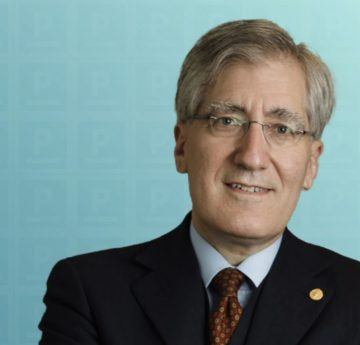 Robert P. George: The current situation is one in which people in general—including people on college campuses, not only students, but faculty, not only untenured (and therefore, in a certain sense, insecure) faculty, but tenured faculty who are secure—are censoring themselves. All the studies that have been done on this subject reveal that people are not saying what they truly believe, or not raising certain questions they’d like to ask, because they fear the social or professional consequences of “saying the wrong thing,” or saying the right thing in “the wrong” way. Well, this, in my opinion, is terrible for institutions of higher learning, colleges and universities. It makes it impossible for us to prosecute our fundamental mission, the mission of pursuing knowledge of truth, but it’s also terrible for a democratic republic.
More here.

 I
I In an interview with the Guardian, filmmaker John Waters — creator of cult classics “Pink Flamingoes” and “Female Trouble” — lamented the rise of
  Liza Featherstone in The New Republic:
 Colin Burrow on Stanley Cavell’s Here and There in the LRB:
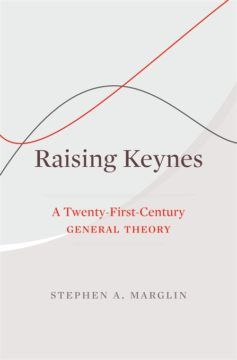 Nina Eichacker in Phenomenal World:
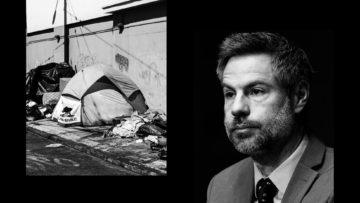 SAN FRANCISCO—Michael Shellenberger was more excited to tour the Tenderloin than I was, even though it was my idea. I was nervous about provoking desperate people in various states of disrepair. Shellenberger, meanwhile, seemed intent on showing that many homeless people are addicted to drugs. (If that seems callous to you, Shellenberger would say you’re in thrall to liberal “victim ideology.”) He told me not to worry. “You seem like a tough Russian chick, right?” he said as we walked up narrow sidewalks where
 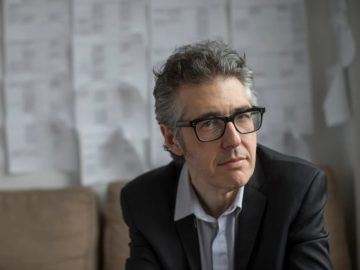 Ira Glass worked through and missed our scheduled Zoom interview. “It’s really just been like a normal work week, but I just didn’t manage it as ideally as I could have,” he told me, apologetically, when we chat a few days later. He missed the call because that week’s episode of This American Life, the podcast and radio show he founded in 1995 and still hosts today, had to be completely re-edited and recorded. “Stuff just has to get done… it gets very complicated.”
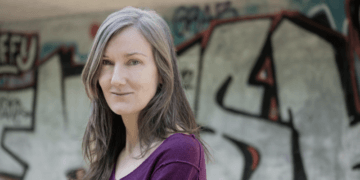 I was reading the kinds of essays, in German, that academics write about the kinds of things that Peter is obsessed with. But my big reading event of that period was the diaries of Victor Klemperer—one of the great reading experiences of my life. It’s like if Proust were not about venal parties. It’s nonfiction, and takes place from 1933 to 1945 in Germany, from the point of view of a middle-age Jewish intellectual who survived it all out in the open, because he had a so-called Aryan wife who stood by him. He lived without having to go to a camp. And it’s so incredibly moving, because it’s a diary, so as he’s writing it, he doesn’t know what’s going to happen. There are constant bits like, Hitler’s going to get voted out. He’s going to lose the war. Everybody secretly hates him, nobody takes this guy seriously. The Americans will be here next week. It’s the most magnificent book.
 O
O W
W Digital stethoscopes provide better results compared to conventional methods to record and visualize modern
  In molecular biologist David Sinclair’s